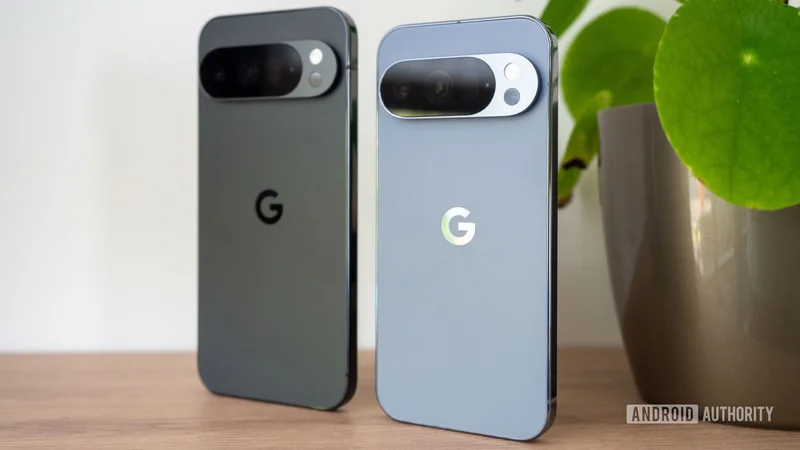
I’ve used every Pixel Tensor chip. Here’s where Google went wrong — and what I hope comes next
Jul 25, 2026 — 6:00 AM ET
First impressions matter, and Google’s learned that the hard way with its Tensor chipsets. We’re weeks away from the introduction of the company’s sixth-generation custom SoC, and there appear to be more questions than answers. Our recent survey found that users are frustrated and wary of buying a Pixel 11 until it’s clear what the Tensor G6 can do.
I’ve used every Tensor chipset, and my outlook is different from the voters in our poll. The road hasn’t been perfect, and market circumstances have boxed Google in with the upcoming Pixel 11, but it hasn’t been the disaster some make it out to be. Here’s where Google went wrong with Tensor, and what I hope happens in the (very) near future.
Are you done with Google's Tensor chipsets?
Google got off to a rough start
Whenever I write positively about Tensor chipsets, I’m met with a fair amount of backlash. I usually try to ask a couple of questions, and digging a little deeper often reveals the people commenting are disgruntled Pixel 6 and 7 owners, and I get it. Like many others, I got sucked into the fanfare surrounding the Pixel 6. It felt like Google finally had a coherent vision for its smartphones, complete with a custom chipset that would get it across the finish line.
Unfortunately, the reality was far from perfect. The first-generation Tensor constantly overheated, throttling performance and shortening battery life. Subsequent updates dialed it in slightly, and the Pixel 6 recovered, but it was a few months of pain before that happened.
The Tensor G2 in the Pixel 7 series wasn’t much better. It took a bit more to get that chipset to overheat, but it still happened. The phone’s polished aluminum frame often got hot to the touch during use, and I wouldn’t care if battery life didn’t suffer again. Google was off to a poor start, and many buyers wrote off Pixels (and Tensors).
The Google Pixel 8 turned things around
I was impressed was released. It was the first Pixel phone I could remember that delivered the battery performance I expected from a flagship. The overheating wasn’t completely gone, as many users still complained of hotter Pixels, but it was significantly reduced. Tensors never benchmarked as well as their Snapdragon flagship equivalents, but that didn’t matter on the Pixel 8 Pro. The user experience was (and is) silky smooth, and Google’s software extras were enough to keep fans happy.
I’ve had similarly pleasant experiences with both my Pixel 9 Pro XL and Pixel 10 Pro XL. Google improved its modems, and each Tensor generation has been better than the last. The current Tensor G5 has been excellent in my usage. Yes, I understand that it doesn’t deliver the same gaming performance as other flagships, but many make it seem like you can’t game on a Pixel. That isn’t true. Most AAA mobile games run smoothly on my Pixel 10 Pro XL, but I notice a bit of lag at max settings.
Pixels aren’t meant for enthusiasts. I understand that’s frustrating to some, especially given the phones’ flagship prices. But Pixel buyers are much more satisfied than they used to be. And while we might sit here and read benchmarks that don’t quite stack up to the competition, the only thing I’ve heard from numerous casual Pixel users is how much they love that Quick Share now works seamlessly with Apple’s AirDrop. The user experience is solid, and that’s what Google aimed to accomplish with Tensor.
Unfortunately, the market is shifting.
The Tensor G6 doesn’t get the same luxuries
Rising prices put Google in an awkward spot with the upcoming Pixel 11. I respect what the company is trying to do, but when you push your pricing right up against Samsung’s Galaxy S26 Ultra, which offers many of the same AI capabilities and Android features, it becomes tougher to justify any gap in value based solely on a better user experience. Yes, I prefer Google’s Material 3 Expressive design, and Android 17 has been fantastic on my Pixel 10 Pro XL, but buyers shelling out close to $1,400 are right to ask for everything.
Leaks suggest Google understands this and is aiming to make the Tensor G6 more powerful, but it’s hard to believe the company can successfully change course and please buyers in only one generation. I hope Google can, because I love the progress it’s made over the last few years. Pixels are genuinely enjoyable to use, even if they don’t exactly fit the mold for every buyer. But to be successful, Google will need to get the Tensor G6 just right out of the box.
It hasn’t been an easy road for Google with its Tensor chipsets, and I don’t blame a single person who was burned by the company’s early efforts. However, I can only review what’s put in front of me. Pixels have legitimately gotten better, and it’s unfair to make Google pay for its sins forever. The Pixel 11 will have a lot to prove, especially if it comes in at a much higher price, but I’m overall pleased with what Google’s done with its chipsets.