TechRadar Verdict
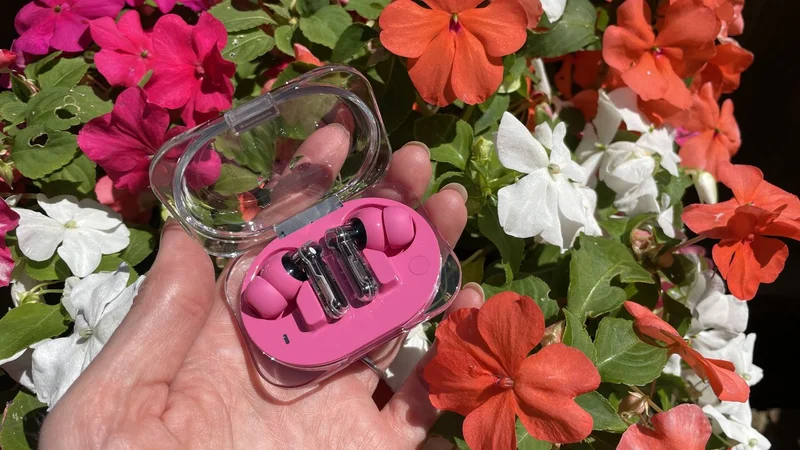
Rarely have I felt so blindsided by the direction a company has taken with its affordable "(a)" lineup. These are Nothing's mid-range buds, designed to invoke a "sense of play" for the "young, creative, and engaged". So, with the (3a), I had hoped the company might throw fans a bone by including its top-tier sound curation profiles — especially since they're exactly the audience Nothing says these models are made for. No? OK, how about wireless charging support? Or perhaps the ceramic driver unveiled in the company's more expensive Ear (without the "a") model in 2024? Still no. Instead, you get a pink colorway, a driver that's 1mm larger, a curvier case with a three-LED status light, Nothing's static spatial audio profile, and two new features: Audio Snapshot and Call Recording. And those last two features is where I take issue. Why? Because in the same way as you'd have to spot the little light on a set of smart glasses that indicates it's recording, during a phone call, the only indication here that you're being recorded may be a brief beep. Unless you know what it means, it's up to you to realise you're being recorded and ask the caller to stop. Nothing tells Ear (3a) buyers to get consent before recording calls, bust I suspect that won't happen in practice. In yet another case of "I never gave my consent to this and it's already happening", as a woman I feel unable to let the tech baked in here go without admonishment. Whether it's branded as an "Audio Snapshot" or not, covert recording of private conversations is a serious issue.
Pros
- +Fun, upfront audio quality
- +Slight ANC uptick (and it was no slouch before)
- +Curvier case and useful LED lights
Cons
- -Still no wireless charging support or flagship hearing tests
- -Battery life has taken a hit
- -We need to talk about Call Recording
Why you can trust TechRadar
Nothing Ear (3a): Two-minute review
Sometimes, reviews are written with a heavy heart, and this is exactly that. I've championed Nothing's affordable "(a)" earbuds for well over two years — with the updated pink set for 2026 appearing to be right up my strasse. But all is not as it first appears.
The issues don't concern their cost. Like before, they come in at just under $100 and are therefore a candidate for our best budget earbuds guide.
Bizarrely, for the review star rating, I also have very few bones to pick with audio quality, which is still best pals with LDAC and now with Bluetooth 6.0 for a stronger connection. I recommend you tweak the sound profile from the box, mind — it's overly bassy by default — but that's hardly unheard of for earbuds at this level, and it can be rectified with a little effort.
It would have been lovely if Nothing had allowed its special sonic tests (for personalised EQ profile curation done by Nothing's software, rather than you tweaking sliders or blobs yourself) to be made available here, but the company has clearly decided that its three-minute hearing test is flagship only — although there is a new "Advanced" 8-band EQ tab with "Q factor" (more on this later).
What of the comfort levels and overall build quality? Here you get everything you'd expect of Nothing: rock-solid, colorful, and with just a couple of new flourishes to enjoy. Battery life has taken a knock, but that might possibly be down to having to work a bigger driver.
So what's the main problem? Actually there are two: Call Recording and Audio Snapshot (sometimes referred to as Audio Capture in Nothing's extensive marketing). Nobody asked for these features and, honestly, they're not the USP I wanted — even as a journalist who interviews people regularly.
None of the best noise-cancelling earbuds we recommend come with these features, but that's hardly a problem in itself. Such tech exists in the world, obviously; I point you to the Viaim RecDot, for example. But the Viaim's buds publicise their raison d'etre; there's a visible "record" button on the case, a light for in-person meetings, and a business-class $249.99 / £185 price tag. That's not the case with Nothing's version, where a surreptitious squeeze of the stem kicks off audio capture of your current call (or whatsapp voice note) in a set of buds that otherwise seem to scream "I'm a bit of fun!"
Sign up for breaking news, reviews, opinion, top tech deals, and more.
As with the RecDot, Nothing offers tech to transcribe your recordings (and not just on its own phones, either) — to a point. You get three months of its Pro Transcription service for free, with 120 minutes to use each month. And after the trial? Nothing tells me official pricing hasn't yet been finalised, but will be decided in August. If it was hard to recommend such a package before, it's even harder now when one doesn't know how much it will cost.
I can't help but feel that Nothing has taken a wrong turn here. I'd much rather have seen fan-favorite features such as personalised sound profiles and/or wireless charging rather than in-call recording. Some TechRadar team members have suggested I make like Elsa and just Let It Go, but in a year when consumer tech already feels uncomfortably intrusive (Meta, I'm looking at you with those smart glasses), adding call and voice note recording feels like a step too far. It's important to question where these features are taking us.
At $99 / £99, the price is definitely right. I'm just not sure the feature set is…
Nothing Ear (3a) review: Price & release date
- Released on July 7, 2026
- Priced $99 / £99 / around AU$192, same as the 2024 Ear (a)
The Nothing Ear (3a) cost the same as their predecessor, priced at $99 / £99.
Although the name might suggest otherwise, these are the direct successors to the excellent, five-star Nothing Ear (a) from 2024 – there was never a Nothing Ear (1a) or Nothing Ear (2a). They also slot nicely alongside the still-current but more expensive Nothing Ear (3), with the shared 3 denoting that they're part of the same generation.
The Ear (a) are some of the best budget earbuds I've ever had the pleasure of testing, and I'd looked forward to their update ever since word was out that it was coming.
Key rivals to the Nothing Ear (3a) include the Apple AirPods 4, which offer gesture control alongside a few other iPhone-exclusive features, or, for a little less, the five-star Cambridge Audio Melomania A100. If you're tempted by open earbuds instead, the Huawei FreeArc or even clip-style SoundPEATS Clip1 can both be picked up for less than the Nothing Ear (3a) right now, making them excellent-value alternatives.
Nothing Ear (3a) review: Specs
| Drivers | 12mm custom driver |
| Active noise cancellation | Yes |
| Battery life | Up to 6 hours (ANC off); up to 4.5 hours (ANC on); up to 25 hours with case (ANC off) or up to 18 hours (ANC on) |
| Weight | 4.53g per earbud |
| Connectivity | Bluetooth 6.0 with LDAC, USB-C |
| Frequency range | 20Hz – 40kHz |
| Waterproofing | IP54 |
| Other features | Wideband Active Noise Cancellation up to 45dB, 3 MEMs mics per earbuds with AI ENC, Nothing X App support, Custom 8-band EQ, Find My Earbuds, Low Lag mode, auto-off, Dual Connection, extra ear-tip, Audio Snapshot and in-call recording |
Nothing Ear (3a) review: Features
- Bluetooth 6.0 (15m range) with LDAC support
- Improved ANC (cancellation up to 45 dB, effective to 5 kHz)
- Pinch stems for Call Recording/Audio Snapshot, no Nothing phone required
It would be easy to say, "Look, you don't like the cutesy branding of Nothing's new 'Audio Snapshot' offering? Don't use it — there's still plenty to like for $99!" but let's dig in to see why the take is not so simple.
Firstly, we should get granular on what Audio Snapshot and Call Recording do, and what they cannot do. I mentioned above that as a journalist, I regularly record interviews, often over Zoom, Google Meet or even Microsoft Teams. When set up as an interview, my subjects usually take it as a given that I will be recording — and where I reside in the UK, it is legal to record calls, even without consent from the other party. I still always ask.
In the US, however, the laws on recording phone calls are different, varying from state to state. For calls crossing state lines, the stricter 'two party consent' law (as per the Federal Wiretap Act) applies, where both parties on a call must consent to a recording.
So what is Nothing doing about it? In its reviewers' guide, the company says it "aligns with internationally recognised privacy standards ISO 27001, ISO 27701 and EN 18031". To this end, during setup, the Nothing X app also displays a short tutorial reminding users to obtain permission before recording calls — as shown below.
Interestingly, on a traditional phone call made in the UK, the "prompt" Nothing promises will be played to everyone on the call is a simple beep. On Google Meet, a female voice announces "This call will be recorded in 3, 2, 1", presumably so anyone not OK with that can scream "Oh no you don't!". From smartphone to smartphone, there's no vocal.
Thanks to the Nothing Ear (3a)'s 32MB of onboard storage, you can start recording with just a pinch of the stems, storing up to two hours of audio on the earbuds themselves. You can also record and transcribe voice notes from apps such as Instagram or WhatsApp — and from August, Nothing says it will add summaries of call recordings, speaker identification and the ability to create calendar reminders based on what was discussed.
What these earbuds can't do is record conversations that take place around you, or indeed your own voice. So, thankfully, there's no scope for eavesdropping around the water cooler.
However, my thoughts on this are clear— I'm not wholly OK with it. It puts the onus on buyers to adhere to laws, and opens the door for flouting rules of consent. I tried muting my mics to see whether the beep could be silenced, but it still plays for the person on the other end of the call to signal that recording has begun. Nevertheless, I think I've made my concerns around this feature clear.
Elsewhere, you get Bluetooth v6.0 and LDAC support for hi-res audio (the Sony-developed codec that lets you stream high-resolution audio up to 32-bit/96kHz over Bluetooth at up to 990kbps, if your device supports it and the file is up to scratch). While the predecessor did also include the latter, it remains a valuable inclusion here.
There's also onboard spatial audio, albeit of the "static" variety rather than head-tracked spatial audio that keeps the sound anchored to your source device as you move your head. It adds a little extra depth and height to the presentation, but for me, the effect is decidedly light-touch compared to what you get from pricier earbuds.
Note that you don't get the Ear (3)'s splendid personalized hearing tests, or the useful "walkie-talkie" Super Mic. That said, there's in-ear detection (to pause music when you remove the buds and resume it when they're in), a low-lag toggle for gaming, seamless pairing, multipoint to two devices, an ear-tip fit test and a Find My Earbuds feature, which emits a rattlesnake-style sound from whichever bud you're trying to locate, to help you find it.
Nothing's Transparency mode is decent. It's a little warm, but it still delivers a more three-dimensional presentation than many buds at this level. I could hear the placement of the TV, voices in my home and a dog outside, rather than all of these sounds appearing tinny, omnipresent and seemingly on top of one another.
When deploying ANC (rather than "Transparency" or "Off"), you can once again select from High, Mid, Low, and Adaptive noise-nixing profiles. High is decent: Nothing tells me performance is up to 45dB (effective to 5 kHz), which equates to a 17.1% improvement compared to the Ear (a), thanks to a software upgrade and improved architecture regarding where the mic sits.
The issue in 2026 is the existence of the AirPods Pro 3 and Bose QuietComfort Ultra Earbuds (Gen 2). Although it would be unfair to compare like for like, owing to the chasm in pricing, you can get better if you're willing to pay for it. That said, the ANC here is no slouch, giving a fairly clean, largely uninterrupted and issue-free neutral background for my music.
If you have a Nothing Phone, the Nothing X app and the ChatGPT app, then you can once again you can also access ChatGPT access via the Ear (3a)'s stem; simply squeeze and talk.
The new EQ tab is now an eight-band offering (up from three in the older buds), as well as the more basic audio splodge Nothing made its own — and which I rather like since it reminds me of Nura True Pro's visual depictions, rather than a mixing desk. You also get five presets in the Advanced tab, and four in the Simple tab — but you can create your custom EQ using whichever system you prefer.
And I think you'll need to get familiar with these, as I'm about to explain…
- Features score: 4 / 5
Nothing Ear (3a) review: Sound quality
- LDAC support represents value
- Fun, V-shaped sound — if a little quiet
- A little bass-heavy from the box, but you can fix it
As was the case with their siblings, it would be wrong of me to knock Nothing Ear (3a) in the sonic department for this money. The sound quality is easily worthy of the outlay.
That said, there are a few points to bring to your attention.
Those with a Sony or Samsung smartphone (I used a Sony Xperia) will find much to celebrate in LDAC music streaming. In My Chemical Romance's The Ghost of You, guitars snake from my left to right ear in a cohesive mix — with Gerard Way's vocal central, petulant and every bit as emotive as I remember it in the mid-noughties.
Even when I stream Apple Music songs from my iPhone, the Nothing Ear (3a) offer ample width as my playlist continues to Thank You For the Venom and the intro guitars find a spacious home in my left ear. There's room around every stem in the mix to shine, but they're all held properly in check, even in this fast-paced and challenging song.
It's a little bass-heavy at times, though. Fleetwood Mac's The Chain is a good test of a regimented low-end, and alongside the kick-drums, I did lose just a little of Stevie Nicks, Christine McVie, and Lindsey Buckingham in that glorious upper harmony through the chorus. It seems to be Nothing's modus operandi to offer a bassy listen generally, and while I did find that the new Advanced EQ tab helped, I think the enhanced low-end went a little far here.
Nothing offers a "Q Factor" in addition to what you've just tweaked in the 8-band tab, to control the width or sharpness of your adjustment. So, imagine it as a "quality factor" (because that is what it stands for), where the number you select between 0.1 and 10 determines how wide or narrow of a frequency range is boosted or cut — all of this specific to your chosen frequency. Selecting a low Q Factor will generate a wider, more gentle curve to your adjustment, where a high Q Factor will make the change narrower, steeper and more effective around that specific frequency augmentation (or reduction).
I eased off the bass and selected a Q Factor of 3.2, but you must of course play with these things yourself — and sadly, Nothing hasn't included its hearing tests here, to check how perceptive your ears are within this particular tuning.
For dynamics and nuance, the Nothing Ear (3a) are perhaps a shade less engaging and arresting than I'm used to, owing to their volume. Once criticism often levelled at Nothing's budget earbuds is they don't go especially loud, and I frequently found myself listening above 50% volume. Also, since battery life is measured at that volume, it did mean the quoted "4.5-hour battery life with ANC deployed" claims although bang on, were still disappointing.
- Sound quality score: 4 / 5
Nothing Ear (3a) review: Design
- Curvier case
- That 1mm bigger driver is sucks up power
- And the battery life isn't great
Hold the Nothing Ear (3a) earpieces and case next to their older Nothing Ear (a) and you'll certainly struggle in a game of spot the difference. There's the color, obviously — also available in black, white and a slightly different yellow to the hue I love in this older set — and the 50% curvier case. There's also a trio of LEDs on the case that deliver a total of six status indications for battery status, pairing status, charging levels and so on.
For further tweaks, we have to look deeper.
The driver is now 12mm rather than 11mm and features an "aerospace-grade diaphragm". You also get an extra set of ear-tips in the box, four in total, and although the XS will appeal to owners of small ears, the actual earpieces here aren't tiny, despite being lighter in weight than Ear (a), at 4.53g versus 4.8g. The actual design of the tips has been finessed, too: they're a little thicker and more flared across the outer wall. I found the buds very secure, if a little big to accommodate comfortably over my small-ish ears over the course of long listening sessions.
I've said it before now and I'll say it again: I think we've reached a point of diminishing — perhaps even negative — returns when it comes to ever-larger earbud drivers. Every new release seems to tout a bigger driver without adding weight, as if bigger automatically means better. But where does it end? 13mm drivers? 15mm drivers? To my ears, the Ear (3a)'s 1mm larger driver hasn't negatively impacted the sound, but I don wonder if it's contributed to sthe shorter battery life. In my briefing, I was told the buds themselves would last 10 hours — but that turned out not to be the case.
While the battery in each earpiece — along with the larger driver and onboard 16MB flash drive — works hard to power the buds, it's only good for up to 6 hours without ANC, or 4.5 hours with ANC turned on. And remember, I had to pump the volume up higher than 50%, which the level at which those measurements are typically taken. With the case, you'll get up to 25 hours with ANC off, or up to 18 hours with it on.
None of these stats is much to write home about. Take Nothing's own Ear (a), which offered up to 9.5 hours of playback on a single charge with ANC off, and about 5.5 hours with ANC on. Now, consider the very inexpensive Cambridge Melomania A100, which offer 11 hours per charge or up to 39 hours with the case, along with aptX Lossless. I know which I'd rather take on long road-trips…
Again, Nothing's pinch-to-control stems return here, and while volume controls aren't enabled by default, you can assign them in the Nothing X app — provided you're happy to sacrifice another shortcut in the process.
While I'm here, a quick note on call-handling. It's absolutely clear and clean as a whistle, thanks to the 3 MEMS mics per bud.
- Design score: 4 / 5
Nothing Ear (3a) review: Value
- Still very good-looking earbuds
- Decent ANC; not so great for stamina
- LDAC adds value, but call-recording (for me, at least) is a no
Before now, I've always championed Nothing's "(a)" buds — and while the basics in the (3a) are fine, there are a few issues that are hard to ignore.
The Call Recording feature is top of the list here. More than any technical limitation, it's the privacy implications that concern me. Much as seeing someone wearing smart glasses now makes me wonder whether I'm being recorded, these earbuds leave me asking why someone might want to capture our conversations. I appreciate that some readers may see this as an overreaction, but it's a genuine concern for me, informed by my own experiences as a woman and former dancer who had to deal with overly familiar fans.
I think the audio quality here is perfectly acceptable for $99 / £99, but the stamina and feature set can be bettered. Even in the open earbuds market, I'd happily direct you to the cheaper Huawei FreeArc or SoundPEATS Clip1 over these earbuds.
- Value score: 4 / 5
Should I buy the Nothing Ear (3a)?
| Section | Notes | Score | Header Cell - Column 3 |
|---|---|---|---|
| Features | I can't get behind Call Recording — although the ANC is good enough | 4/5 | Row 0 - Cell 3 |
| Sound quality | An fun listen that's easy to tweak if the bass proves a bit much. Just a tad quiet overall | 4/5 | Row 1 - Cell 3 |
| Design | Good-looking buds let down by disappointing stamina | 4/5 | Row 2 - Cell 3 |
| Value | It's hard for me to write it, but the smart money isn't always with Nothing | 4/5 | Row 3 - Cell 3 |
Nothing Ear (3a) scores
Solid generally, but with battery concerns and a potentially problematic call recording 'feature'
| Product | Features () | Sound Quality () | Design () | Battery Life () | Noise Cancellation () | Value () | Overall () |
|---|---|---|---|---|---|---|---|
| Nothing Ear (3a) | 4 | 4 | 4 | 2.5 | 4.5 | 4 | 4 |
Buy them if...
**You want buds that say "look at me" **
The pink colorway is super-striking and fun, especially against their black/transparent stems.
You have a Sony or Samsung phone
LDAC support for $99 / £99? That's good stuff.
**You want to record your phone calls **
These buds do offer the option to record and transcribe up to 2 hours of audio from calls, songs or voice notes — and you don't need a Nothing source device to do it.
Don't buy them if...
You want extra-special spatial audio
Nothing adds its "static" spatial audio profile here, for a slightly more immersive sound profile to your music. For me, though, it's a little bit lightweight.
**You have bijou ears **
This design just about works for my smaller ears with the small ear-tips (there's even an XS option included now), but if your concha or ear-well is particularly diminutive, then you may still find these earpieces a little big.
The idea of covert surveillance bothers you
As a journalist, I have no issue with recording when everyone has consented. My concern is Nothing's playful marketing if in-call recording as a lifestyle feature, despite the obvious privacy implications.
Nothing Ear (3a) review: Also consider
| Header Cell - Column 0 | Nothing Ear (3a) | Cambridge Audio Melomania A100 | Huawei FreeArc |
|---|---|---|---|
| Price | $99 / £99 / Approx. AU$192 | $149 / £119 / AU$TBC (but around AU$249) at launch, discounted now | £99 (roughly $130, AU$200) but discounted now |
| Drivers | 12m custom | 10mm Neodymium dynamic | 17mm x 12mm (open earbuds) |
| Active noise cancellation | Yes | Yes | No |
| Quoted battery life | Buds: 6 hrs (without ANC) or 4.5 hrs with ANC; Total with case: 18 hrs with ANC (or 25 hrs without ANC) | 11 hours per charge; up to 39 hours with the case | 7 hours (earbuds), 23 hours (total) |
| Weight | 4.53g | 4.7g | 8.9g |
| Connectivity | Bluetooth 6.0, LDAC, USB-C (no wireless charging) | Bluetooth 5.4 with LDAC and aptX Lossless | Bluetooth 5.2 |
| Frequency range | 20 Hz – 40 kHz | Not stated | Not stated |
| Waterproofing | Yes, IP54 | Yes, IPX5 | Yes, IP57 |
| Other features | Audio Snapshot and Call Recording; auto-off, static spatial audio, ChatGPT with a Nothing Phone | 7-band EQ, ANC, DynamEQ for optimised tuning, wireless charging, 3 mics per bud | Huawei AI Life app, 10-band EQ, audio presets, find your earbuds |
Huawei FreeArc
Up for taking a punt on affordable and great-sounding open earbuds? The FreeArc are available at a generous discount right now — but in all honesty, we loved them even at full price. Read more on this in our full Huawei FreeArc review
Cambridge Audio Melomania A100
These June 2025-release earbuds didn't get the fanfare they deserved, unless you count our glowing five-star review, of course. They don't look as flamboyant — but oh, do they sound good, and the ANC is great too. Did I mention they've been discounted recently? Highly recommended for their current price. Learn more in our in-depth Cambridge Melomania A100 review** **
How I tested the Nothing Ear (3a)
- Tested for two weeks, listened against the Ear (a), Bose QuietComfort Ultra Earbuds (Gen 2), Technics EAH-AZ100 and AirPods 4
- Listened in the office, walking along a beach, on a train into London, into Central London and at home
- Listened to Tidal Masters, Apple Music Lossless tracks and Spotify on an iPhone 15 Pro, MacBook Pro and Sony Xperia smartphone
The Nothing Ear (3a) became my primary musical companions for well over two weeks — after a 48-hour run-in period.
They accompanied me to work (walking brusquely to our Paddington office and on the London Underground to various press events) and even walking on a beach at sunset.
To assess comfort levels, ANC and battery life claims, I followed TechRadar's meticulous methodology testing and found much of note — including slightly disappointing stamina.
To check the audio quality across the frequencies, I listened for several hours to my own reference playlists on Apple Music and Tidal, alongside TechRadar's reference tracks, plus podcasts and movies. Additionally, I wore them to watch YouTube tutorials from my MacBook Pro.
I’ve been testing audio products for well over seven years, full-time. As a dancer, aerialist and musical theater performer in another life, sound quality, fit, and user experience have always been a priority for me, but having heard how wonderful ANC can be when done well, I know what I'm listening to here, too.
- First reviewed: July 2026
Becky became Audio Editor at TechRadar in 2024, but joined the team in 2022 as Senior Staff Writer, focusing on all things hi-fi. Before this, she spent three years at What Hi-Fi? testing and reviewing everything from wallet-friendly wireless earbuds to huge high-end sound systems. Prior to gaining her MA in Journalism in 2018, Becky freelanced as an arts critic alongside a 22-year career as a professional dancer and aerialist – any love of dance starts with a love of music. Becky has previously contributed to Stuff, FourFourTwo and The Stage. When not writing, she can still be found throwing shapes in a dance studio, these days with varying degrees of success.