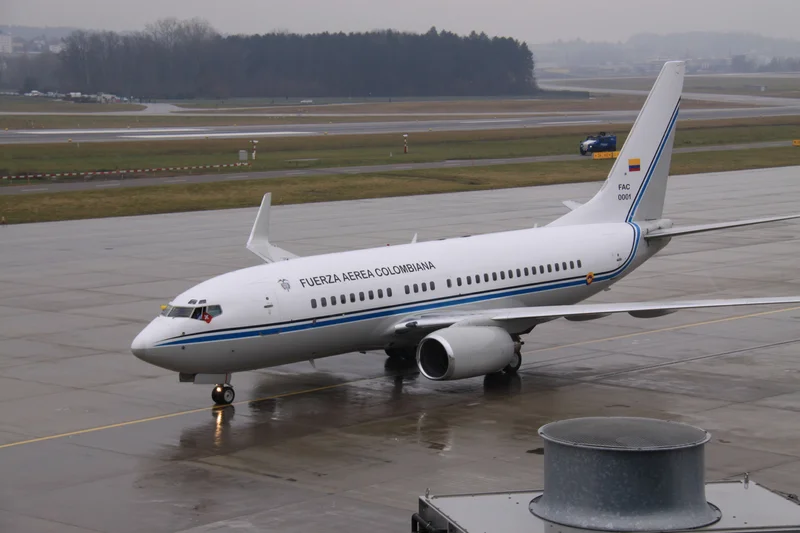
Colombia Military Aircraft: 310 Out of Service, Transition Report Finds
Colombia · Defense
A transition report has found that Colombia military aircraft and police aircraft face a severe readiness crisis, with 310 airframes listed as non-operational or out of service. The figure represents exactly half of the 620 public security force aircraft reviewed, signaling deep maintenance and logistical challenges for the incoming administration of President Andrés de la Espriella.
Colombia military aircraft: Breakdown of the Grounded Fleet
The transition document, cited by local media including Infobae, detailed that 283 of the non-operational aircraft belong to the Fuerzas Militares, Colombia’s combined military forces. A further 27 aircraft are tied to the Policía Nacional, the country’s national police force.
The report did not provide a public disaggregation of the military figure among the Fuerza Aeroespacial (Colombian Aerospace Force), Army aviation, and Navy aviation. It confirmed only that the 283 total combined all three service branches.
Official Ministry Response and Inventory
In response to the findings, Colombia’s Defense Ministry released a broader official inventory framework. This larger count tallied 731 total aircraft across the security forces.
Within that official number, only 298 aircraft are considered fully operational. The ministry classified 223 aircraft as being in maintenance or non-operational maintenance states.
A further 210 aircraft were listed as not available because they were accidented, under disposal processes, or awaiting resources. The ministry explicitly stated the readiness issues were not due to a reduction in the budget.
Maintenance, Budgets, and Supply Chains
The Defense Ministry attributed the low readiness rates primarily to scheduled and unscheduled maintenance cycles. External supply-chain disruptions were also cited as a critical factor limiting the return of aircraft to service.
Specifically, 99 aircraft are waiting for resource assignment. The ministry framed this backlog as accumulated inventory pending investment, rather than a consequence of a new budget collapse.
The situation is complicated by legal impossibility in some cases. The ministry pointed to the Russian-made Mi-17 helicopter fleet, where maintenance has been blocked by contractor failures and international sanctions-related constraints.
The Mi-17 Sanctions Problem
The Mi-17 fleet represents a specific geopolitical headache for Colombia’s security forces. These Russian-designed transport helicopters have been widely used for troop transport and humanitarian missions in remote areas.
Due to Western sanctions imposed on Russia, Colombia has faced severe difficulties sourcing original spare parts and certified maintenance contractors. The Defense Ministry reported it is pursuing legal action and technical inspections over Mi-17 maintenance failures.
This legal impossibility means some aircraft cannot be legally serviced under current international compliance frameworks, effectively grounding them permanently regardless of budget availability.
Context for Foreign Investors and Observers
For foreign investors and expatriates monitoring security dynamics in Latin America, the readiness of state aircraft is a direct indicator of state capacity. Colombia’s military aviation is crucial for responding to natural disasters, providing rural security, and countering illegal armed groups.
A fleet where 50% of reviewed aircraft are non-operational may impact operational response times in remote regions. The incoming Espriella administration will inherit a fleet where the operational rate hovers around 40% based on the broader 731-aircraft inventory.
While the Defense Ministry insists the crisis is logistical and not fiscal, the distinction between budget cuts and resource assignment delays may be semantic for end-users. Aircraft awaiting investment are effectively grounded until procurement processes are completed.
The reliance on foreign-manufactured fleets, including U.S.-made Black Hawks and Russian Mi-17s, exposes Colombia to geopolitical supply-chain risks. Diversifying suppliers or developing local maintenance, repair, and overhaul capabilities could be long-term solutions.
Looking Ahead
The transition report sets the stage for a major defense procurement and maintenance review. The incoming government will need to address the 99 aircraft awaiting resources while navigating the legal deadlock on sanctioned Russian equipment.
International partners, including the United States, have historically supported Colombia’s security forces through funding and equipment transfers. A recent U.S. funding freeze, reported by The Bogotá Post, has added external pressure on Colombia’s security budgets.
The Defense Ministry’s framing of the problem as an inventory and readiness issue, rather than a financial collapse, suggests the solution lies in bureaucratic efficiency and international negotiations. Replacing or legally servicing the Mi-17 fleet remains a priority.
Frequently Asked Questions
How many Colombian military aircraft are out of service?
According to the transition report, 283 military aircraft are non-operational out of 620 reviewed. The Defense Ministry’s broader inventory of 731 aircraft shows 298 operational, with 223 in maintenance and 210 not available.
Why are Colombian Mi-17 helicopters grounded?
The Mi-17 fleet is grounded due to external supply-chain disruptions and legal impossibility linked to international sanctions on Russia. Colombia cannot easily source spare parts or certified contractors for these Russian-made helicopters.
Is Colombia’s aircraft shortage caused by budget cuts?
The Defense Ministry explicitly stated the readiness crisis is not due to a reduction in the budget. It attributes the problem to maintenance cycles, supply-chain disruptions, and legal constraints, though 99 aircraft are waiting for resource assignment.