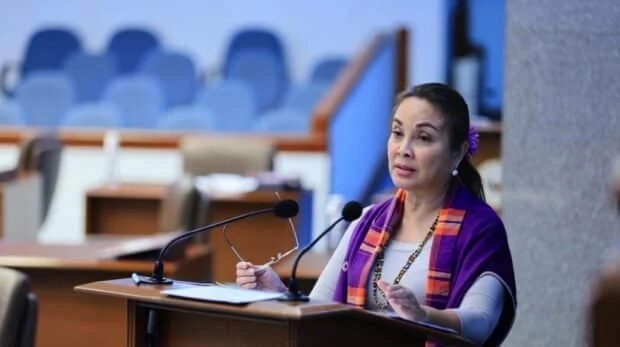
Legarda: 5th Sona must bridge growth and Filipino lives
MANILA, Philippines – As President Ferdinand Marcos Jr. prepares to deliver his fifth State of the Nation Address (Sona), Senator Loren Legarda said the Filipino people deserve an honest account of where the country stands after years marked by economic uncertainty, rising prices, corruption controversies, climate disasters, threats to national security, and widening anxiety over the future.
Legarda said the SONA on July 27, 2026 must speak directly to families who have endured one crisis after another, often without enough savings, stable income, or reliable public services to absorb the next shock.
Seems like the country emerged from the pandemic only to face continuing food inflation, geopolitical conflicts, volatile fuel prices, supply disruptions, destructive typhoons, and renewed uncertainty in the global economy.
Article continues after this advertisement
READ: Marcos teases new chapter in corruption fight
“Sa loob ng ilang taon, ang pamilyang Pilipino ang paulit-ulit na nag-adjust. Nagbawas sila ng pagkain, nagtipid sa gamot, nagpaliban ng bayarin, at naghanap ng karagdagang trabaho. Habang tumataas ang presyo, sila ang unang nasasaktan at sila rin ang pinakahuling nakakaramdam ng pagbangon,” Legarda said.
The ongoing Middle East crisis shoots local prices up. This issue has again shown how heavily the Philippines depends on imported fuel, causing a conflict thousands of kilometers away to inflate the cost of transportation, electricity, food, and other basic necessities at home.
“Sa social media pa lamang, halos araw-araw nating nakikita ang mga pamilyang umiinda o nagagalit sa biglang taas ng kanilang singil sa kuryente. Isang panibagong shock na naman ito habang hindi pa nga sila lubos na nakakabawi sa sunod-sunod na pagtaas ng presyo, pamasahe, at iba pang gastusin nitong mga nakaraang buwan. Ganitong realidad ang dapat kinikilala at sinasagot ng ating mga patakaran,” Legarda said.
As of June 2026, headline inflation remained at 6.4%, well above the government’s 2% to 4% target. The Bangko Sentral ng Pilipinas has raised interest rates amid persistent price pressures and projects full-year inflation at 6.4%, citing the effects of a prolonged global supply shock and elevated oil prices.
Article continues after this advertisement
Legarda stressed that these external pressures have been made more painful by weaknesses within government, particularly corruption, wasteful spending, delayed projects, poor enforcement, and the absence of accountability for public funds. The fifth SONA must now explain what structural reforms have been undertaken, who has been held responsible, how questionable transactions will be prevented, and how the government will restore public confidence in the use of taxpayers’ money.
The Senator also cautioned against treating the Philippines’ recent entry into the World Bank’s upper-middle-income category as a victory that requires no further qualification.
Article continues after this advertisement
The country was formally classified as an upper-middle-income economy beginning July 1, 2026, after its gross national income per capita reached US$4,850, slightly above the World Bank threshold of US$4,636. The Philippines now joins Indonesia, Malaysia, and Thailand in the same broad income classification.
Legarda said the reclassification recognizes economic progress over several decades. It also reveals how late the Philippines has been in reaching a milestone already attained by several of its regional neighbors.
“Our upper-middle-income status should give us perspective, humility, and a greater sense of urgency. We should have reached this point much earlier. Countries like Vietnam, which once lagged behind us, have now outpaced us in many sectors. They have built globally competitive industries, including in electric vehicles, with their products now entering international markets, including our own. They have also advanced in manufacturing, infrastructure, and education at a pace that reflects consistent policy direction and long-term investment. Our neighbors have moved faster in building reliable public transport, stronger industries, better classrooms, broader social protection, and more efficient public services,” she said.
She stressed that the classification is based on average national income and cannot, by itself, show whether prosperity is fairly distributed or whether Filipino families enjoy an upper-middle-income quality of life.
“Habang tumataas ang average na kita, sino ba talaga ang nagtutulak nito—lahat ba ng Pilipino, o ang iilang mayayaman na lalo pang yumayaman? Sa ganitong konteksto, ang tanong: ang payak na pamilya—umangat nga ba talaga ang antas ng pamumuhay, dama ba nila ito sa araw-araw?” Legarda said.
Official data show that 15.5% of Filipinos, or approximately 17.54 million people, were living below the poverty threshold in 2023. A 2026 study by the Philippine Institute for Development Studies found that 30% of Filipino households remain vulnerable to falling into poverty, with many facing unstable incomes and exposure to job loss, illness, price increases, and natural disasters.
Legarda said economic growth must be judged by its ability to provide secure livelihoods, fair wages, affordable food, accessible healthcare, quality education, safe communities, and opportunities for Filipinos to build their futures without having to leave the country.
The condition of Filipino children
Legarda said the condition of Filipino children is a clear test of whether progress is reaching families. One in four children below five is stunted, while the country still lacks more than 165,000 classrooms and over 51,000 aging classrooms may face condemnation by 2028.
“A child cannot be expected to overcome hunger, poor learning conditions, and weak foundations through perseverance alone. It is no surprise that our education system remains weak when learners themselves are already at a disadvantage, compounded by a problematic system of learning. When we fail children at the beginning of life, we weaken the country’s future,” she said.
Legarda called for coordinated action on nutrition, early learning, classroom construction, teacher support, and basic literacy and numeracy.
Communities repeatedly left at risk
Legarda said the landfill collapses in Cebu and Rizal show that the country’s solid waste problem is worsening, with unsafe facilities continuing to operate and new dump sites emerging despite long-standing environmental laws. A COA audit found that, as of 2021, Materials Recovery Facilities served only 39.05% of barangays nationwide.
Visit our Sona 2026 live coverage to stay updated with the latest #SONA2026 news and stories.