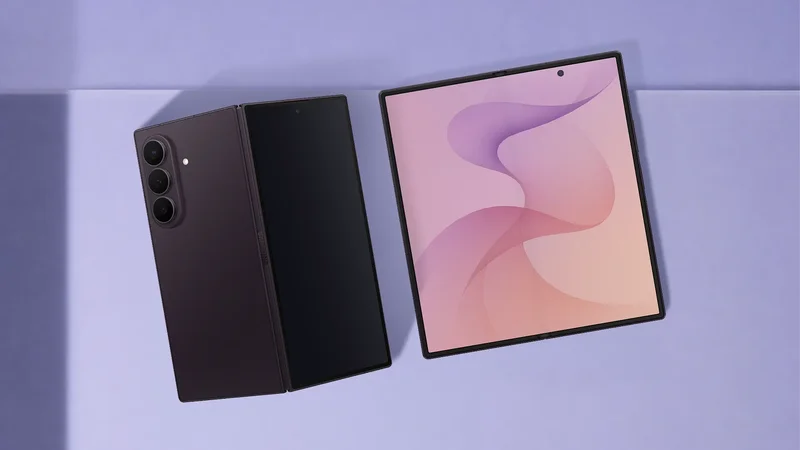
When choosing a new Android phone for my personal use, I give most specs only a cursory examination.
I can pick up any new , and its performance, battery life, and cameras will be more than sufficient for my needs.
However, the one element I regularly examine closely is the display technology.
It's the only area of smartphone hardware that I continue to see notable developments in, which is why I'm fascinated by Samsung's new display technology and considering a Samsung foldable for the first time.
Flex Titanium is something every foldable owner should care about
An upgrade that brings tangible, real-world benefits
The new Galaxy Z Fold 8 and its Ultra big brother feature a new display technology unimaginatively named Flex Titanium (because it uses a flexible titanium alloy).
Samsung has been steadily improving its foldable displays since the first Galaxy Z device. It's easy to dismiss Flex Titanium as another marketing gimmick shrouding another step forward.
But Flex Titanium isn't a step forward; it's a leap.
As we found with our and Z Fold 8 Ultra, the crease has almost completely disappeared.
This is the technology's most notable boon, but it doesn't stop there.
The new display also brings anti-reflective improvements, which make the device a breeze to use outdoors for media (more on that soon).
It boasts a peak brightness of 3,000 nits, a significant improvement over the Z Fold 7's 2,600 nits peak.
The new display also allows more space for internal components, including a 4,800mAh battery. That's a 400mAh improvement over its predecessor.
Charging speeds have also improved to 45W wired and 25W wireless, but I'm not sure this is thanks to Flex Titanium.
A hardware upgrade that brings improvements you'll notice every day
This is the kind of thing I want to see in a new phone
To be worth upgrading, a device should boast improvements you don't need to look for.
Performance upgrades are all well and good, but if they don't affect your phone in day-to-day use, do they really matter?
A near-invisible crease. A uniform display. Anti-reflective properties. Peak brightness improvements. A bigger battery.
These elements make a significant impact on using a foldable phone. Is Flex Titanium necessary for foldables? Technically, no. But it feels like it is.
The Galaxy Z Fold 8 is the first book-style foldable I would consider buying
A user-friendly design at last
The other notable feature of the Galaxy Z Fold 8 (perhaps its defining feature) is its new aspect ratio. It's ditched long in favor of wide, and gosh, it's so much more satisfying to use.
The aspect ratio of previous Z Fold devices was always a little awkward to use. But the black bars that plagued videos on the previous phone are lessened. Watching YouTube feels much more natural.
The benefits extend beyond videos. I read a lot of books on my phone, perhaps one a week. The experience is fine on my Google Pixel 10 Pro, but it would be stellar on the Z Fold 8 thanks to its book-style size.
The strange thing is that this is mostly an illusion.
Videos aren't any bigger on the Z Fold 8 than the Z Fold 8 Ultra (which retains the "old" aspect ratio). The black bars are just smaller. Reading is just as easy on a tall screen as a wide one.
But the Z Fold 8 feels better. Sure, it's a little awkward to use one-handed, but isn't that every new phone?
The Z Fold 8 isn't the first "wide" foldable.
, released earlier this year, boasted a similar design. The rumored iPhone foldable is also said to feature the same format. The Pixel Fold has featured a wider ratio in every iteration.
It's a clear shift in what manufacturers consider the "standard" for book-style foldables. The Z Fold 8 is the first foldable I've considered buying, but competition is about to get a lot stronger.
Price is still the biggest barrier to owning a foldable
It doesn't matter how good its design and features are; the Z Fold 8 Ultra's price starts at $2,100.
$2,100. For a phone.
If you're paying that much, you've missed out on one of the various deals currently available. For example, my carrier is offering the phone via a payment plan for a total of £1,476. That's a £500 saving.
So in a year or so, when the second-hand refurbished devices start filling the market, and Black Friday deals add even bigger discounts, I'll finally be able to enjoy the Z Fold 8 for personal use.
But until then, I'll instead.