'Hormuz Strait cannot return to pre-war status'
West Asia analyst says Iran must make aggression costly for US and its Arab allies
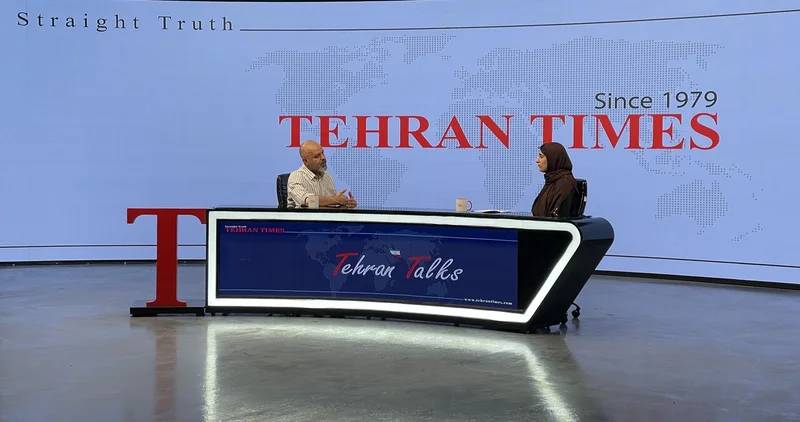
TEHRAN - In an interview with the Tehran Times, West Asia analyst Gheis Ghoreishi argues that the Strait of Hormuz is Iran's most valuable strategic card in its war with the United States, and that any return to the pre-war status quo would be a fatal mistake.
He also dismisses talk of a "comprehensive deal" with the West as an illusion, criticizes Iran's southern Persian Gulf neighbors for their role in the illegal war against Iran, and notes that the U.S. has reached its limits.
Below is the full text of the interview, edited for clarity and conciseness:
Iran and the U.S. signed an MoU in mid-June after almost 40 days of fighting. Washington, however, was neither willing nor able to uphold it from the very beginning, and it ended up attacking Iran again. Why do you think the Trump administration signed the MoU in the first place?
The intellectual class worldwide agrees that the limits of U.S. power became evident in this war. Accepting that agreement—with conditions mostly in Iran's favor—showed America wanted a pause, driven by domestic pressure and energy woes. Western Europe is America's key ally, and weakening Europe weakens America. The energy pressure Europe faced from the Hormuz closure—compounded by Russia cutting off supplies in 2022—was unsustainable. So the U.S. clearly wanted a breather.
But after resting, the 40-day war had already exposed America's ceiling. The U.S. used its best weapons and equipment against Iran, and its strategic reserves built for Russia and China were depleted anyway. Estimates suggest that between 30 and 55 percent of those reserves were used. The agreement's terms—stating that Israel should stop attacks on Lebanon and that Iran would control all shipping passage through the Strait—clearly favored Iran and showed U.S. desperation for a pause.
Now that America has caught its breath, its blows remain ineffective. Hormuz cannot revert to pre-war status, and Iran's new governing posture is irreversible. For the Trump administration, continuing the past course costs Europe, the Persian Gulf, and the U.S. itself heavily. Ending also carries security and political costs for the U.S., its Arab allies, and Israel.
For two decades, Iran was never America's top enemy—China and Russia were. If the U.S. cannot handle a middle power like Iran, its hegemony is questioned, because a hegemon must be able to give credible guarantees. Can America still do that? The reality is that if it tells shippers "come through Bab al-Mandab and Hormuz," no one listens. America's guarantee is now void, and since it could not resolve this conflict by force or diplomacy, its real troubles are just beginning.
The limits of American power were laid bare in this war. Iranians are now known worldwide as skilled players in diplomacy and asymmetrical warfare. It does not seem logical to wage another all-out war against Iran. There is nothing more the U.S. could do that it did not already do in the Ramadan war; it is not going to do anything much greater. We were surprised then, but we cannot be surprised anymore. The continuation appears to be a limited battle focused on Hormuz—not overthrow, regime change, or assassination. For now, the war to reopen the strait or take it from Iran's grasp does not seem to have any particular future. Ultimately, no ship passes without Iran's permission, and with Iran's threat, shipping companies are forced not to pass for economic reasons. On this basis, the future for the U.S. regarding Iran is truly ambiguous, and there appears to be no real operational goal.
What do you think Washington's goal and strategy is in its ongoing strikes against Iran's southern cities and ports?
By holding the Strait of Hormuz card, Iran holds the upper hand in any negotiation. According to the rules of negotiation, you lay out your cards beforehand so that your strengths outweigh your weaknesses. In any negotiation where Iran holds the Hormuz card, the U.S. will be in a weak position. In nuclear negotiations, with that card on the table, Iran certainly will not make significant concessions. Iran has gained the ability to transfer crises beyond its own region. This card is so strategically important that, logically, the U.S. must do everything in its power to either take it away from Iran or diminish its value, in order to regain the upper hand in future negotiations—whether over the nuclear issue or other matters.
For Iran, the Hormuz card is so valuable that it guarantees the upper hand; Iran would offer fewer concessions because it simply does not need to—it has already won this game. The U.S. came to weaken and contain Iran's power, but instead turned Iran into a global player. From this point forward, if any country wants to impose sanctions on Iran, Iran has the capacity to transfer the pain directly to the citizens of that country by blocking entry and exit through the strait. Therefore, it was not logical for the U.S. to gift the strait to Iran, nor is it logical for Iran to risk losing this historically invaluable card. Anyone inside the country who seeks to weaken this position is lying if they claim to have studied political science; and if they are officials, their judgment should be called into question. Your most important negotiating card with the West will be the strait. To relinquish or weaken it under the guise of ethics—claiming we should observe ethical principles in security conflicts while our enemy is completely unethical —is bizarre and amounts to complicity with the enemy. In at least the past 48 years, Iran has not possessed a negotiating card of this credibility.
Some who oppose Iran's insistence on holding the Strait of Hormuz card argue that by closing the strait for an extended period, Iran has already proven it possesses this card. They say that if another war breaks out, Iran can simply close it again. So perhaps Iran should not apply too much pressure now and should allow the situation to return to normal until a comprehensive deal is reached. What do you think of this view?
That is a lie. A comprehensive deal is an illusion—it is selling a fantasy. The real discussion is about whether Iran's role in the region is accepted or rejected. The Strait of Hormuz is Iran's card for securing that acceptance. If you go back and accept the previous regime, what effect does that have? You must impose the regime you want. The mistake is returning to a cost-free situation. If a war is waged against you, assassinations occur, infrastructure is hit, and you simply say, "It's fine, I'll go back to the previous status quo," that is a disaster. You must impose a cost. Does that mean every three or four years they can destroy infrastructure and we just return to normal? That is a strategic error. Anyone who says this—whether a politician or a civil activist who has suddenly become a geopolitics expert—is wrong.
When you have a card, turning it into a legal framework creates deterrence. Giving it away removes deterrence. If we have one chance to force the U.S. to halt operations again, it is the Hormuz card and the pressure it places on the energy sector. Oil went from $70 to $90; it will probably be $110 next week and $120 the week after. It will generate the exact same pressure that forced the U.S. to propose a ceasefire the first time—we did not propose it; the U.S. did, during the 40-day war. This card is valuable only as long as you have the will to use it.
The reality is that the Strait of Hormuz is Iran's winning card for extracting concessions and not giving any. If Iran loses this, we are back to square one, trapped in a vicious cycle. Two or three years from now, with our missile advancements, they will decide to attack again and expect us to reset the clock. The path the Islamic Republic has taken is rational. Asserting its will and relying on the strait and the legal regime it wants to establish is the right thing to do.
Security cannot be bought with money. The issue is not about Iran taking a toll fee. If the world accepts Iran's conditions and Iran's regime, there is no need for billions. The world must accept that this strait is secure only as long as Iran's security is maintained. When Iran is not secure, the strait becomes insecure. As long as the world's energy passes through here, Iran must not be under siege. Why should we be under siege while letting others benefit? For 47 years, we sat back while the societies and rulers of the southern Persian Gulf prospered, and we politely said, "Enjoy." In the end, HIMARS are fired at our children from the UAE and Kuwait, and AWACS and refueling planes take off from Saudi Arabia. Exercising that much restraint was a strategic error. Lowering the cost of action against yourself so much that anyone can treat you however they want leads to disaster. Iran has paid enough for these ethical behaviors. We need to draw a line. We must make the utmost use of the predicament the U.S., the southern Persian Gulf countries, and Europe are in. Why should we just hope for no war? A war happened, our Leader was assassinated, thousands were martyred and injured, over a hundred thousand housing units and infrastructure were destroyed. This is the moment we feared; it cannot get worse. So the prevailing mindset should be: if we are not allowed to prosper and sell our oil, no one else should sell theirs either.
The Ansarullah in Yemen has joined the fray by banning Saudi ships from Bab al-Mandab Strait, removing another four to five million barrels of oil from the market. With the energy crisis escalating again, where are these clashes heading? Will Trump launch another all-out war with greater destruction, or will he accept defeat?
Accepting defeat is genuinely difficult for the Americans. While Iran has always been secondary to their primary priorities, conceding to a secondary power traps the U.S. in its primary priorities. If the U.S. accepts defeat against Iran, its positions regarding China in the South China Sea and Russia in Eastern Europe will become highly critical. So the U.S. must look for formulas where it neither formally admits defeat nor suffers further damage.
Reports from respected American journals last week highlight a serious issue with U.S. strategic reserves—specifically, the lack of replacement capacity. If a certain missile is produced at 12 units per year, replacing expended stock takes time, even at four times that capacity. Trump may claim to quadruple production, but if you expended a decade's worth of stockpile in 40 days, even quadrupling will take years to replenish. This limitation, combined with the potential for further exposure of U.S. vulnerabilities, is critical.
Consider Bab al-Mandab. The Yemenis acted delicately and precisely to avoid accusations that they are closing it solely for Iran; they were looking for an excuse, and the Saudis provided one. This is recognized as a legitimate right even in the Arab world. After 12 years of Saudi blockades, they are saying enough—a blockade for a blockade. Either the Saudis lift their blockade on Yemen, or Yemen blocks Saudi oil, the most important commodity exiting Bab al-Mandab. The Yemenis issued a warning without explicitly stating they are helping Iran: if the war escalates, Bab al-Mandab will also close. This doubles the pressure on the U.S. economy. Economists argue that closing Bab al-Mandab pressures the U.S. even more than Europe, whereas Hormuz harms Europe more. Thirty-four percent of the global economy and 25 percent of global energy pass through Bab al-Mandab, and the U.S. has a significant share.
Given this, continuing the current trend and escalating tensions would lead to a worse outcome than the first conflict, especially since Europe's strategic energy reserves are depleted and two months were insufficient to replenish them. Europe warned in April that it had only 20 percent of its strategic reserves left. No matter how much they try to buy and store, consumption means they have not yet reached a safe level; the warning lights are still flashing.
I do not think it is logical for the U.S. to start another 40-day war in the region against Iran over that oil. The first war was already proven foolish. Elite circles in West Asia often mistakenly attribute wisdom to Western leaders' foolishness, but within Europe and the U.S., this war was viewed as foolish. It exposed America's weaknesses. I often hear the Hormuz moment compared to the Suez moment—the end of the British and French empires at Suez, and the end of U.S. hegemony at Hormuz. So if the war's results are ambiguous or end up like day 39 of the Ramadan war, it defies logic for the U.S. to repeat it.
Ultimately, a situation must arise where Iran proves itself in the region and is recognized as a global player, and the U.S. must concede this. I think Iranians can creatively construct a way out or a corridor for the U.S. to escape this crisis and end the war. This seems the most logical outcome: recognizing Iran as a regional power and global player, while we provide conditions for the U.S. to exit. This is far more foreseeable than heading toward a massive war where both Hormuz and Bab al-Mandab are closed. Also, the veil between Iran and its southern Persian Gulf neighbors has fallen entirely. Iran has the right—and Arab public opinion and Iranian public opinion grant it the right—to treat its southern neighbors as it sees fit. A massive war is not a desirable scenario for the U.S. or its allies.
In your remarks, you speak a lot about logic. Many argue that Trump and his administration do not seem very logical and are heavily influenced by Israel, often lacking a proper understanding of events. Do you think logic will ultimately dictate their behavior?
Compared to whom—Obama? Biden? They are completely illogical too. You are 100 percent correct. Even the seemingly foolish administration that started a war with bizarre maximum goals—destroying the Islamic Republic, partitioning Iran, changing borders—eventually realized by the fourth or fifth day that they had to accept the memorandum, even if everyone in the U.S. accused them of surrendering. Yes, individuals in the White House matter, and Trump may be a showman, but ultimately the numbers matter. If a gallon of gas hits $6 or $7, that matters to the American citizen. Entering a boundless international conflict matters. Midterm congressional elections matter. Trump may commit foolish acts and sustain them for 40 days, but eventually he will be forced to sign an agreement that Republicans will call a surrender document. The administration plays with bizarre risk factors and is highly illogical—having Mossad's reports dictate White House decisions is unprecedented. But after 40 days, Iran's level of power, deterrence, and resilience was proven, and its impact on the U.S. economy and partisan polling forced that same foolish administration to sign and yield to a unilateral agreement.
Regarding regional countries, Iranian Foreign Minister Abbas Araghchi recently noted that before the war, regional states tried to keep the conflict away, but Israel convinced them to help with an attack on Iran. How do you view the role of these countries and Washington's Arab allies now? Have they come to their senses, or will they continue, given that the U.S. is still attacking Iran from their soil?
It is painful to say this about our historical neighbors, but the culture of the southern Persian Gulf rulers is deeply flawed. All veils have been torn. They could not have committed a greater crime against Iran. We must fundamentally revise our approach to them. This level of tolerance has no logical basis anywhere in history. A Persian Gulf ruler must realize that entering any security or economic coalition against Iran will carry such an immense cost that they will think 30 times before saying yes. If we do not transfer this pain, the situation will continue.
I do see a shift in Persian Gulf elite thinking—it used to be rare to hear Saudi or Kuwaiti elites say the U.S. is of no use, but those murmurs have started. However, their behavior depends on ours. The extremism of calling them "brothers" must end. What brotherhood exists with someone whose soil is used to kill your children? The southern Persian Gulf states have learned their lessons. From now on, it is up to us whether to give them the chance to join coalitions against us or to behave properly. They realized their energy infrastructure could be destroyed in two days and sent back to the Stone Age. If Iran's policy pairs flexibility with severity, they will behave. If we continue the absurd rhetoric of "Arab brothers," nothing will change. A country that allows missiles to be fired from its soil at you is not a brother. From now on, Iran's behavior will dictate how the Emirates, Saudis, Qataris, and Bahrainis act. Treating them based on diplomatic protocols—matching bitterness with bitterness and respect with respect—is necessary. For these rulers, fear works better. Iran's power is undoubtedly greater than Israel's, yet look at how respectfully they treat Israel versus how they treat us. We must treat them firmly so they know the cost of insolence toward Iran is immeasurable.
What is your opinion on the positions of Russia and China over these past few months?
Their legal and political positions have been good. They stood firm before and during the attacks. During the war, it became clear that their covert assistance—satellite and security data—was far more significant than their overt political stances, which naturally denied involvement. This help was highly effective, for example, in targeting assets like AWACS. We have not independently reached the point of satellite-guided drone strikes on AWACS, so that likely came from Russia and China.
In international relations, allies are often hesitant. But when a country like Iran emerges standing from a war against global and regional powers, hesitant allies set their doubts aside. From now on, we will likely see much more active and comprehensive relations between Russia, China, and Iran. There is a difference between your deterrence being in doubt versus proven—whether through the Strait of Hormuz, missiles, or a resilient society. Iran did not ask for much, and both China and Russia will likely note that. The Persian Gulf states are explicitly disappointed with China's behavior, realizing China will never choose them if they stand against Iran.
Moving forward, Iran needs to be more creative in presenting attractive packages to China and Russia. Historically, China has never attacked Iran, staged a coup, or conducted security operations against us, unlike Western countries that attacked us months ago. We should lean toward active and creative relations with China, which is the future of the world. Western media tells us we "sold Iran to China," but they omit that China is the largest trading partner for the EU, the U.S., the Arab League, Saudi Arabia, and the UAE. We need to listen to our real elites and think tanks—not celebrities or YouTubers—to create incentive packages. The West will not work with us; there is no space for it. We are in a transitional phase between one hegemon's decline and another's rise. Until the global geopolitical landscape settles—especially the upcoming U.S.-China tension in the Far East—the West will not accept us no matter how much we concede, as seen with the JCPOA. So our relations with Russia and China should be rational, not based on blind trust. Why refuse to engage with a historically harmless country with economic ties just to appease an enemy that attacked you four months ago? China and Russia's positions, even as hesitant partners, were vastly better than those of our neighbors, the EU, or the U.S. We should diversify our relations and add economic and military creativity to our packages, especially with China, where the scope for multidimensional cooperation is immense.
As a final question, how do you think this war will change the future of the international order?
If this war, as many observers have noted, has exposed the limits of American power, the U.S. will face severe crises in resolving its near-future challenges. If America, with all its regional alliances—where every southern Persian Gulf state except Oman directly assisted the U.S., and Israel was a partner—could not bring Iran to its knees, dealing with China and Russia will be exceedingly difficult. Looking at the security and geopolitical landscape, I believe that in 10 to 15 years, historians will write about this moment as a "Suez moment." The Suez moment was when the British Empire, on which the sun never set, realized it could no longer solve challenges by force, leading to the rapid loss of its colonies between 1954 and 1964. I think 10 to 20 years from now, similar assessments will be written about the U.S. regarding this moment, just as they were about Britain, France, and the Suez crisis of 1954.