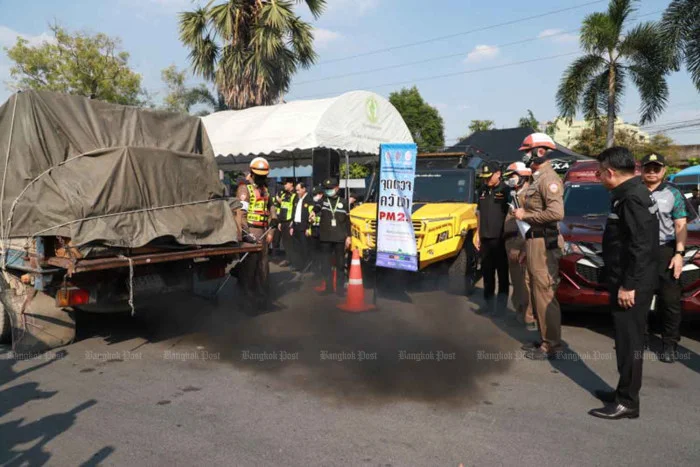
Bangkok will establish environmental inspectors to strengthen law enforcement, reduce pollution risks and improve public health across the city.
Deputy governor Pornphrom Vikitsreth said the initiative will bring environmental, health, law enforcement and digital agencies under a unified framework. It will use common operating procedures, performance indicators and a shared reporting platform across all 50 districts.
Speaking after a project meeting, he said the Bangkok Metropolitan Administration (BMA) is developing the system to ensure agencies work to efficiently curb pollution.
The Environment and Health departments will draft standard operating procedures. The City Law Enforcement Department will run field operations, while the Strategy and Evaluation Department will set key performance indicators. The Digital Department will develop a central platform linking inspection and enforcement data. Other agencies, including the Public Works and Drainage and Sewerage departments, may join later.
Inspectors will initially focus on smoke-emitting vehicles, construction sites and open burning.
District offices, working with the Environment Department, will inspect vehicles by preparing black-smoke testing equipment, training officers and carrying out inspections in high-risk areas, Mr Pornphrom said. Results will be uploaded to a central system to help curb emissions, a major source of PM2.5 pollution.
Construction sites, including projects requiring environmental impact assessments, will face stricter inspections. Officers will use standardised checklists to verify dust-control measures. Developers breaching regulations will be ordered to rectify problems or face action under building control laws.
The system will monitor open burning, rubbish burning and agricultural fires using hotspot data, air quality information, Traffy Fondue complaints and AirBKK data to identify priority locations before dispatching teams.
The meeting also discussed improving restaurant cleanliness through stronger cooperation between district, environmental and health offices, including better food waste management and sanitation to reduce the risk of rat-borne diseases.
The BMA expects the inspectors to become a key mechanism for proactive law enforcement, using integrated digital data to improve monitoring and raise public health standards across Bangkok, he said.