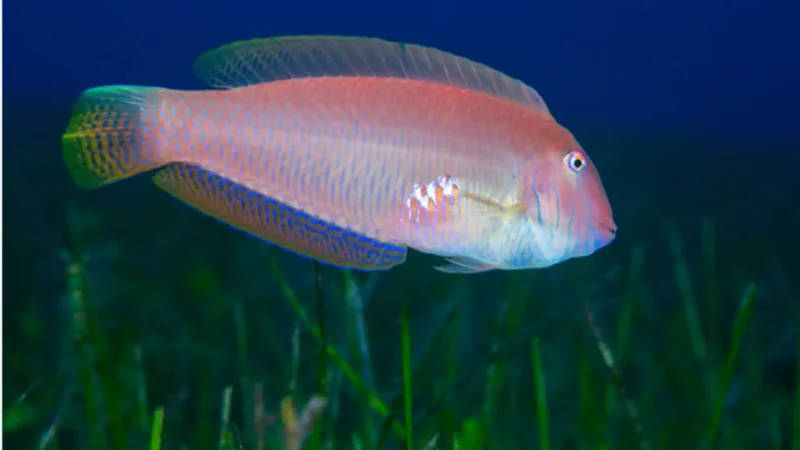
Fishing is known to reduce fish populations and change the size and age of fish found in the wild. But a new study suggests that the effects may go much beyond.
Researchers have found that heavy fishing may be changing the biology of the pearly razorfish at the molecular level. The study says intense fishing pressure is linked with changes that may affect how the fish's genes work.
The findings, published in the journal Philosophical Transactions of the Royal Society B, Science X reported, offer some of the first evidence that fishing could influence epigenetic changes.
The pearly razorfish
The pearly razorfish (Xyrichtys novacula) is a small marine fish that lives in sandy coastal waters. It feeds on small sea animals such as shrimp and other tiny creatures found in the seabed.
CJP Jantar Mantar Protest Updates
According to National Geographic, every pearly razorfish is born female. As it grows, some naturally change into males. The dominant male defends a territory shared with several females, helping maintain order in the group and reducing early sex changes among younger females.
In Spain's Balearic Islands, the fish is locally known as raor. It is considered a popular seafood. Every year, many local fishers and families take part in the fishing season to catch it.
Because of its popularity, the species experiences heavy fishing pressure in some areas. Scientists wanted to find out whether this pressure affects the fish in ways that go beyond reducing its numbers.
Protected vs fished areas
To study this, researchers collected 120 pearly razorfish from three different regions in the Balearic Islands. Each region included two types of locations.
In the first area, fishing is allowed and the fish are regularly caught. The second area is a protected marine reserve where fishing is restricted.
Scientists collected small fin samples from the fish and examined the DNA and the epigenetics in the lab.
Locally known as raor, the pearly razorfish is a favourite seafood in Spain's Balearic Islands.â
DNA vs Epigenetics
DNA contains genetic information that is passed from one generation to the next. Epigenetics, meanwhile, adds small chemical marks that can control how active certain genes are. These marks act like switches that can turn genes on or off or change how strongly they work.
One common type of epigenetic change is DNA methylation. DNA methylation happens when a small chemical group called a methyl group attaches to DNA.
This can influence how a gene functions and can sometimes help organisms respond to changes in their environment.
DNA differences
When the researchers compared the fish from protected areas with those from heavily fished areas, they found no evidence that the two groups had become genetically different. Meaning, heavy fishing had not changed the actual DNA sequence of the fish.
However, the study did find that fish living in heavily fished areas had lower genetic diversity than those inside marine reserves.
The researchers also found that the fish living inside protected areas were generally larger and older than fish from places where fishing was common.
Although the DNA itself remained largely the same, the researchers discovered important differences in DNA methylation.
They identified 291 specific locations in the DNA where these chemical tags differed between fish from protected waters and those from heavily fished areas.
According to the researchers, "This represents one of the first lines of evidence demonstrating that fisheries can potentially shape epigenetic variation."
The findings suggest that fishing may be linked with changes in the way genes are regulated, even if the genes themselves remain unchanged.
Fishing not the only reason
The researchers said the study found a strong link between fishing pressure and DNA methylation, but it does not prove that fishing directly caused these changes. They suspect that other environmental factors could also be involved.
For instance, fish living in heavily fished areas may experience different population densities, food availability, or predator numbers which could influence epigenetic changes.
In the study, the DNA methylation patterns remained different even after taking population structure into account. This means that differences in the number or age of fish alone do not fully explain the molecular changes observed in the study.