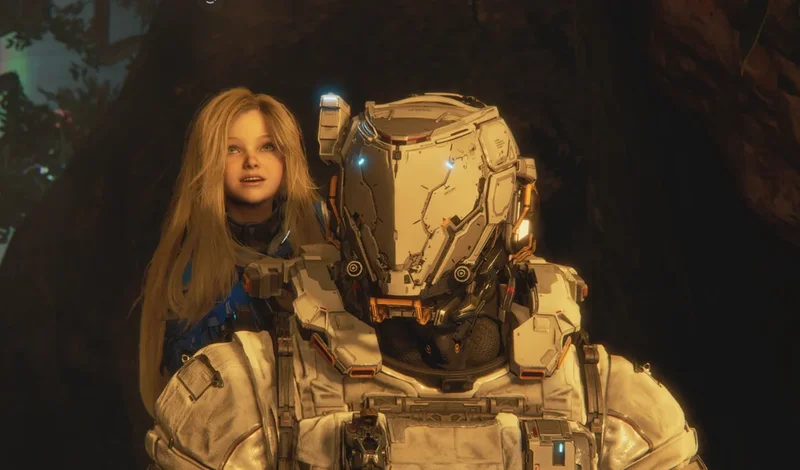
Major players around the gaming industry are in a spate of collapse. Years of poor management and short term trend chasing has cornered many big publishers, whose rapid compression is putting their future in crisis. Except for Capcom. Good olâ Capcom. Itâs been hard not to notice how a mix of playing the hits and scrappier original titles seems to be performing well for the beloved game makers. A new interview with producer Masachika Kawata confirms this equilibrium is intentional, allowing Capcom to pursue riskier projects like Pragmata.
Speaking with Game Informer for their new Onimusha issue, Kawata says the insatiable appetite for Resident Evil has kicked off a new golden age for Capcom. Remakes, retrofitting existing stories and structure with modern engines, is proving dependable for development cycles and sales.
“Being able to revisit older games and remake them helps Capcom meet that goal of releasing a Resident Evil title each year,â says Kawata, âbut it also allows the team to continually challenge themselves and hone their craft. Thatâs not to say the remakes are any less important. In fact, theyâre just as important as the mainline titles. Capcom is lucky enough to have found this cycle.â
Resident Evil Requiem is one of the highest selling games of the year, but the series has stirred for nearly a decade now since 2017âs Resident Evil 7. Through the last ten years, a blend of remakes like 2023âs Resident Evil 4 and new entries like 2021âs Village has kept the studio active and the series front of mind for players. Itâs an enviable situation for other studios, whose mainline series can go a decade between additions, if not longer.
Itâs not just Resident Evil that benefits from Resident Evilâs success. Kawata specifically cites Pragmata, this yearâs original action sci-fi game, as a beneficiary to this release model. Amid a steady clip of new Street Fighter and Monster Hunter games, weâve also been treated to the criminally overlooked action-strategy hybrid Kunitsu-Gami and longshot sequel Dragonâs Dogma. Next year weâll be getting a remake of Code Veronica, and who knows what future projects thatâll buoy.
Itâs an open secret that most major publishers have one cash cow supporting everything else. Amid the mayhem at Microsoft, it was revealed that Minecraft has basically kept the lights on, while Final Fantasy XIV accounts for nearly half the take at Square Enix. Of course, such singular tent poles can make things incredibly precarious, and the pursuit of games that generate everlasting returns can be more devastating than spreading resources more evenly.
Kawata clarifies that Capcom isn’t swimming in infinite resources, and the direction is surgical enough that fans shouldnât expect the deluge of spin-offs we saw in Resident Evilâs original heyday. Still, this fosters an ideal book balancing for any institution. Safe bets that generate huge revenue and keep your audience coming back. New ideas that can inspire. Retaining experienced staff and training fresh talents. Itâs comparable to the output of film companies like A24, who make bank with horror and genre films to facilitate what should be the main goal of any outfit: New Kelly Reichardt movies, which never make money but do make the world worth living in. Hereâs hoping they donât screw that up eh!