- See more Daily Mail on Google - save us as a Preferred Source
From Colin and Chris Weir to Adrian and Gillian Bayford, there are plenty of examples of apparently happy marriages which ended after a massive National Lottery win.
Others such as Britain's youngest winner Callie Rogers and the notorious 'lotto lout' Michael Carroll have been declared bankrupt after rapidly blowing all the cash.
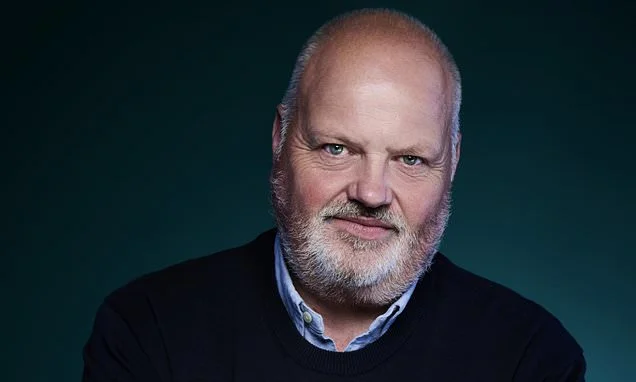
But Andy Carter, an adviser who has helped guide more than 2,500 winners over 20 years, is among a team who help Brits try to stop a jackpot ruining their life.
The father-of-two works as a lottery 'fixer' who spends his time speaking to winners in the hours after they learn about any prize from £50,000 to £195million.
Asked what the biggest mistake a winner can make in the days and weeks that follow a payout, Andy has a clear answer - 'they are just trying to be too generous'.
He tells the Daily Mail: 'People want to help out. And it must be difficult to get on this rollercoaster when you start off. So if anything, they are too generous too quickly.'
Andy points out that the National Lottery's operator Allwyn provides a financial planning service with experts who help winners make calculations for the future.
He says: 'They will say, well, "you can give this money to this, this money to that and you can go to buy a big house, but this is what you're left with and we've put it all in this computer and here you are at 80", or the money runs out when you're 56 or 62, which isn't enough.
Andy Carter is the National Lottery's 'fixer', an adviser who has helped guide 2,500 winners
'Or they might be able to say "you can do that, but if you work for another five years". If you stop working now and you give all this money away, it will run out at 62.
'If you work for another five years you could absolutely do everything you want to do and they've got a balance then, haven't they? So they think "do I want to go to work, do I want to give this money away or is there a sort of part-time thing?".'
He says the advisers help people determine how long they would need to work to ensure they have enough money, even after a big win.
Andy explains that many winners feel very generous and might want to give a huge amount of money to a son or daughter, but a solicitor might advise them to consider whether this is wise if they have concerns about their partner.
'It's all about enabling the winner to do what they want to do,' he adds.
Andy also points out that he often finds 'family dynamics' very interesting, in terms of whether a wife or husband has financial control – or who has the power in a workplace syndicate.
Winners often talk about gifting huge amounts of money to children or other relatives, but a regular piece of advice is to give someone a 'little bit' such as buying them a weekend away – before they 'take some advice and work out the proper way of doing it'.
Andy says he also advises winners to be 'equal in rank' with gifts, such as giving each of your three children the same amount of money.
Colin and Chris Weir, from Largs, North Ayrshire, won £161,653,000 on July 12, 2011. But they said in April 2019 that they were divorcing, and Colin then died that December, aged 71
Adrian and Gillian, from Haverhill Suffolk, won £148,656,000 in a EuroMillions draw on August 10, 2012. They bought a Grade II-listed estate but divorced 15 months after their win
He adds: 'Talk to them because they might say to you, actually my marriage isn't particularly right at the moment. And, if this goes wrong, do you want half that money going out the door? Or I don't need it now, but I might need it in a year's time.'
The National Lottery has awarded players over £103billion in prize money, creating more than 8,000 millionaires – but tens of thousands more people are estimated to have obtained that status through gifts given to them by winners.
Andy also explains why marriages and relationships can break down when people win the lottery.
He says: 'Sudden wealth will exaggerate how you are. So if you are very happy in your marriage, you'll have a lovely time. And if you are having a difficult marriage, it gives you something else to be difficult about.'
He further suggests that the majority of winners whose lives have been ruined come from the 'very early days' of the National Lottery because they had much less support than nowadays, adding: 'The advice probably wasn't in place. Society was different.'
Andy gives an example that someone who is involved in small charity projects locally will generally start doing this on a much bigger scale if they win.
He cites the example of Frances and Patrick Connolly from Hartlepool who landed a £115million jackpot in 2019 and donated more than half their winnings.
The firm operates wellbeing courses to try to help people manage their win, but Andy says he also advises people to keep communicating with other winners.
Britain's youngest lottery winner Callie Rogers, from Cumbria, won £1.88million in 2003 when she was 16, but her life soon went on a downward trajectoryand she went bankrupt in 2021
Michael Carroll - dubbed the 'Lotto lout' - collected his £9.7million winnings in 2002 wearing an electronic tag for drunk and disorderly behaviour. He was declared bankrupt in 2010
There are only three couples in the top ten biggest winners of the National Lottery who have gone public - and two of the marriages did not last.
One of them is Colin and Chris Weir, from Largs, North Ayrshire, who won £161,653,000 on July 12, 2011, making them the biggest UK winners at the time.
But they said in April 2019 that they were divorcing, and Colin then died that December, aged 71.
The others are Adrian and Gillian Bayford, from Haverhill, Suffolk, who won £148,656,000 in a EuroMillions draw on August 10, 2012 but divorced 15 months later.
Britain's youngest lottery winner Callie Rogers, from Cumbria, won £1.88million in 2003. At the time she was just 16 and earning £3.60 an hour at a supermarket.
But her life soon went on a downward trajectory after spending her money on breast enhancements, clothes and gifts to friends - and she went bankrupt in 2021.
Michael Carroll became known as the 'Lotto lout' when he collected his £9.73million winnings in 2002 wearing an electronic tag for drunk and disorderly behaviour.
The self-proclaimed 'King of Chavs' hit the headlines as he frittered away chunks of his fortune, but also gave large sums to relatives. He was declared bankrupt in 2010.