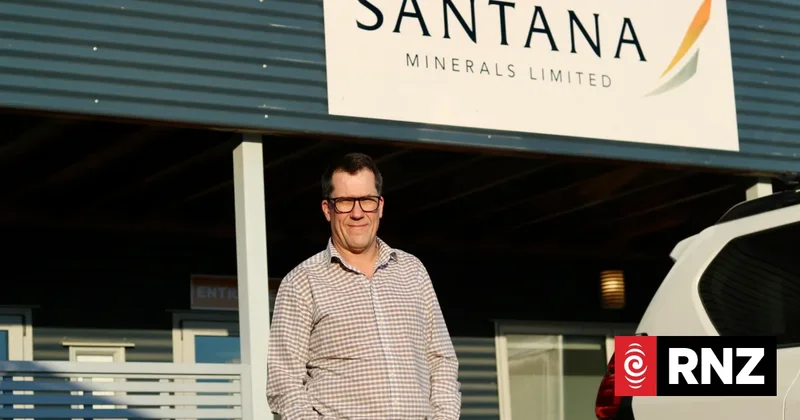
The Australian company planning a vast gold mine in Central Otago has agreed to work faster on a series of extra reports sought by a fast-track approvals panel.
Santana Minerals earlier paused its application for the Bendigo-Ophir gold mine near Cromwell while it prepared a social impact assessment, best and worst-case economic forecasts, a lizard protection plan and other responses to a 30-point request for information.
If approved, the mine would be among the country's largest, consisting of a 1000 metre by 850 metre open pit, three smaller satellite pits and a tailings dam in the Dunstan Mountains.
Some locals have voiced concerns that the project could harm the environment and damage existing industries, while others have welcomed it as a major economic opportunity for the region.
After pausing its fast-track application in June, Santana Minerals gave the panel an estimated resumption date of 17 August and said it would have the extra information ready by 11 September.
Last week, however, panel chair Matthew Muir KC warned that those timings would "considerably impede" the panel's work.
To stay within the statutory deadlines for a Fast-track decision, the panel would then have to work within very tight timeframes, Muir said.
"The panel therefore requests that MGL [Santana Minerals subsidary Matakanui Gold Ltd] reconsider its provisional resumption date with a view to it coinciding (substantively) with the date on which the fully workshopped conditions are published," he said.
In an update to shareholders on Monday, Santana Minerals said it had agreed to provide the information by 28 August and would not be seeking any more pauses.
Santana Minerals chief executive Damian Spring said the company appreciated the clarity from the panel.
"The project continues to advance through the fast-track process, and the finalisation of consent conditions in August will allow the panel to move into substantive deliberations on its decision. We remain confident that Bendigo-Ophir is well positioned to receive a positive outcome and, subject to approvals, commence development activities early 2027," he said.
The company had spent $17.7 million on the Fast-track process to date, "including NZ$1.9 million on the expert panel, EPA, hearing and regulatory assessment fees, NZ$10.1 million in environmental, technical and supplementary forensic investigations, NZ$1.0 million on cultural values and NZ$4.7 million in legal, planning and specialist advisory services".
Spring said the company continues to adapt to, and fulfill, the "evolving requests and processes to support a rigorous assessment."
"This has included public hearings, 24 multidisciplinary expert conferences, multiple rounds of requests for information, expert workshops, and the commissioning of additional technical and specialist investigations to further strengthen the evidential record."