As summer temperatures soar, many gardeners face the annual dilemma of leaving their beloved plants vulnerable to scorching heat and drought during holiday periods.
However, with a warming climate, experts suggest a range of resilient species can flourish even in arid conditions. Julian Palphramand, head of plants at British Garden Centres, the UK’s largest family-owned garden centre group, highlights suitable options.
He advises: "Anything Mediterranean, from lavender to lamb’s ear (Stachys byzantine) through to cistus should be fine. Herbs such as rosemary and anything with slightly furry grey leaves tend to tolerate heat and drought quite well. Succulent types like sempervivums, echeverias, aloes or aeoniums are pretty resilient."
Here, he offers his top five drought-resistant plants.
1. Agapanthus
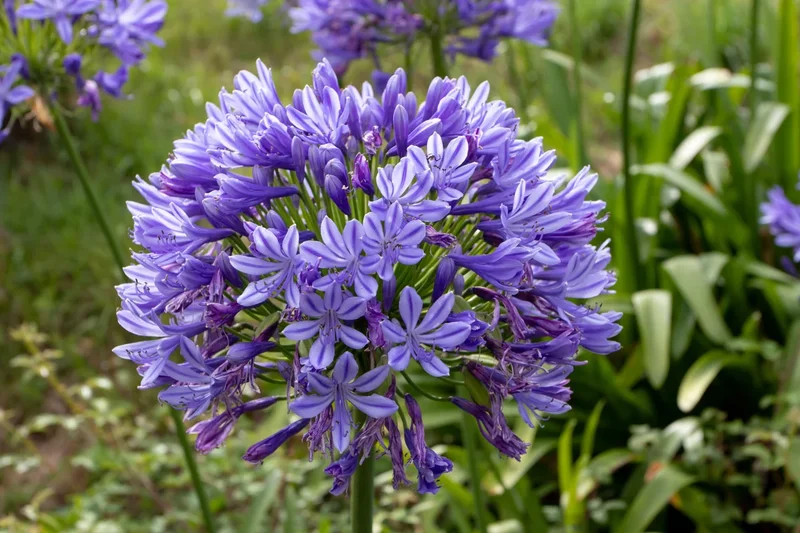
The South African perennial, known as the African lily, produces large blue drumstick-headed flowers in summer, although there are also white and pink varieties.
“It has relatively fleshy leaves, loves heat and doesn’t like cold or wet, so the hotter the better, and the less moisture that’s in and around the top of the roots for any long periods is a good thing.
“Agapanthus like to be constricted in their root structure, so pots are perfect. If you’ve a real hot, sunny location on a patio or at the front of the house, agapanthus is a perfect one and the flowers last for ages.”
2. Achillea (yarrow)
“This is a classic perennial that adores full sun and well-drained soil, so not much water. It is drought-tolerant and the flowers just keep going. If you cut it back after flowering – do the Chelsea chop – you’ll probably get two, if not three, flowering repeats.”
Wild common yarrow is a spreading native wildflower with flat heads of small white, cream or pink flowers in summer, but breeding has introduced other colours including terracotta oranges and golds.
“There are varieties that are bred to be a bit more compact for pots, such as the Milly Rock series, and others that are a bit looser, taller, more middle-of-the-border traditional, like the standard Achillea millefolium.”
3. Sedum
“Sedums to some people are a bit of a Marmite plant, a bit like euphorbias. People sometimes don’t like the fleshiness of them but I love them, and so do garden pollinators.
“They provide lots of much-needed pollen when a lot of other plants are going over through the late summer and autumn and there are many varieties to choose from.
“They will tolerate being in full sun with very little water. They remain upright. There are more rockery-type varieties and there are more upright ones like ‘Autumn Joy’, then you’ve the crawling, rambling varieties which stay close to the ground, the traditional stonecrop varieties.”
“Sedums won’t flower as prolifically if there isn’t much sun,” he continues. “The sunnier it is, the more flowers you’ll get and the longer the flowers will last.”
4. Eryngium (sea holly) and echinops (blue globe thistle)
These spiny, architectural perennials thrive in full sun with very well-draining, poor to moderately fertile soil which can be gravelly, sandy or chalky. They develop deep taproots providing drought tolerance and stability, forming clumps which get larger each year.
Both are blue types loved by bees throughout summer and are cottage garden perennials which thrive in full sun and are tolerant of drought.
5. Certain herbs
Lavender, rosemary, oregano and thyme love the sun and are a magnet for pollinating insects. You can easily grow them in pots, but, if you’re going away, move them to a semi-shaded area while you are away to give them a little protection.
“They won’t suffer from being in the sun, but they will suffer from a lack of water if you are away longer than a week,” Palphramand warns.
“You might even consider bringing them inside and treating them like a houseplant while you’re away because there’s not going to be any heating on and the house might not be as hot as the sunny location outside.”
Find a north-facing windowsill that’s bright without being in full sun to place your herbs while you’re on holiday.
Tips for plant care when you’re on holiday
-
Try to find a friend or neighbour who will water your plants for you.
-
Gather pots together and move them to a shady, north-facing side of the house.
-
Give plants a really good soaking before you go, rather than little and often.
-
Stand patio pots on garden saucers or trays, to catch any runoff from watering, which they can take up from their roots at the bottom of the pots.
-
Apply organic mulch to borders, particularly in gaps between plants which will otherwise dry out. Use straw, woodchip or compost to help prevent plant roots becoming scorched.
-
Use shade netting or shade cloths temporarily on prized plants to stop leaves scorching.