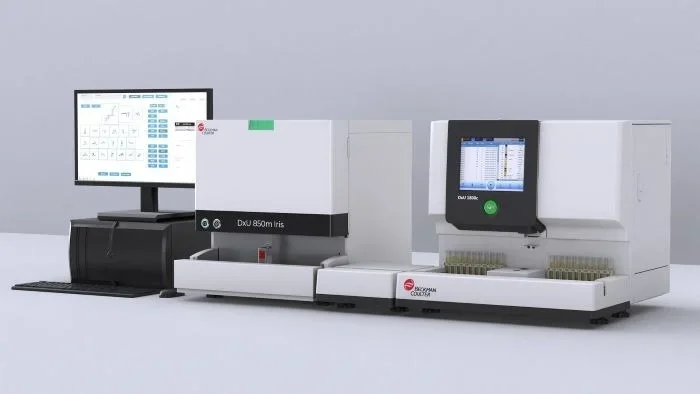
Beckman Coulter Diagnostics, a Danaher company and a global leader in clinical diagnostics, today announced the U.S. launch of the DxU 1800 System, a fully automated urinalysis solution that combines a new chemistry analyzer and consumables with proven microscopy technology. Unveiled at the Association for Diagnostics & Laboratory Medicine (ADLM) Annual Scientific Meeting & Clinical Lab Expo, the system is designed to help laboratories deliver standardized results at scale, enabling clinicians to move from testing to decision making with confidence.
Urinalysis is among the most widely utilized diagnostic tests across care settings. In United States emergency departments, roughly 1 in 3 patient visits include a urine test and nearly half of admissions involve urinalysis. In non-acute care, up to 87% of primary care patients receive urine testing, as urinalysis is consistently among the top 10 most ordered tests, underscoring its critical role in timely triage, diagnosis, and patient management.
Despite urinalysis's essential role and growing volume trends, many laboratories still rely on workflows requiring manual review, fragmented processes or separate chemistry and microscopy systems, As testing shifts to larger core and reference labs, these inefficiencies can create bottlenecks, variability and staffing strain. The DxU 1800 System helps standardize testing, increase throughput and reduce manual microscopy, empowering laboratories to deliver consistent results that enable confident clinical decisions at scale."
Matthew Rhyner, Vice President and Managing Director, Hematology and Urinalysis Business, Beckman Coulter Diagnostics
Urinalysis plays a critical role in detecting and monitoring disease progression and treatment response across infections, kidney disease and metabolic disorders such as chronic kidney disease (CKD), diabetes and urinary tract infections (UTIs). In the United States, diabetes prevalence has more than doubled over the past 50 years, now affecting 12% of the population, while CKD prevalence has steadily increased to nearly 14–15% of adults. At the same time, UTIs continue to drive nearly 10 million clinical encounters annually, with recent trends showing more severe outcomes. Together, these factors are increasing testing demand and expanding urinalysis use across care settings.
Advancing workflow efficiency
As part of Beckman Coulter Diagnostics' connected ecosystem, the DxU 1800 System combines the new DxU 1800c Chemistry analyzer with a DxU Iris Microscopy analyzer to deliver a fully automated, integrated urinalysis platform. Together, these technologies unify chemical analysis and particle imaging within a single high throughput system, helping laboratories scale operations with greater consistency and control.
The integrated solution streamlines end-to-end urinalysis by reducing manual handoffs and enabling more standardized workflows across chemistry and microscopy. By automating and connecting these processes, the DxU 1800 System leverages the DxU Iris automated urinalysis solution streamlines workflow by reducing manual microscopic review rates to less than 3%, helping laboratories improve throughput, reduce variability, and redeploy staff to higher-value tasks.
As a standalone, the DxU 1800c Chemistry analyzer can process up to 300 samples per hour, supports expansive result storage of up to 2,000,000 samples and 100,000 strip images, and displays onscreen strip image results for easy review.
Additionally, an expanded chemistry menu is planned to include creatinine and microalbumin assays may provide additional kidney function insight as part of routine screening testing without requiring changes to existing laboratory workflow.
Beckman Coulter Diagnostics will showcase the DxU 1800 Urinalysis System at the Danaher Booth (#3237) during the ADLM 2026 Annual Meeting. Together with fellow Danaher companies, Beckman Coulter Diagnostics is helping demonstrate how Danaher is a connected ecosystem accelerating ideas to real-world impact, bringing together complementary technologies and expertise to advance laboratory innovation and improve patient care.