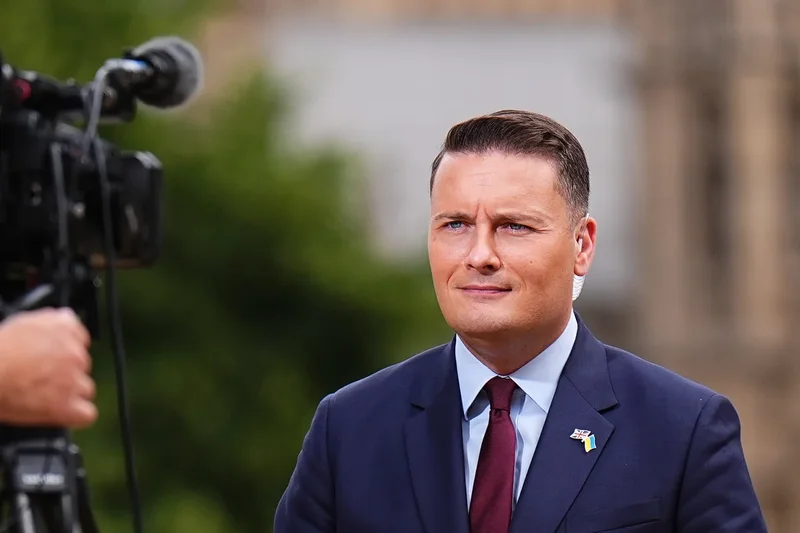
Wes Streeting has vowed to resign as defence secretary if Andy Burnham does not spend enough on defence to plug a £4.7bn black hole in Britain’s military spending.
The defence investment plan (DIP), published last month, committed £15bn towards a spending uplift, but it emerged under the last government that almost £5bn of the amount promised was unfunded.
The new defence secretary has now promised that the DIP would be “fully funded”, saying chancellor John Healey will set out plans to do so at future fiscal events.
Asked whether a failure to fulfil those spending plans would cause him to resign, Mr Streeting told Times Radio: “It is. It is absolutely for me a matter of principle.”
But he also suggested he sought assurances that enough money would be spent on defence before accepting the job.
“If I did not believe this prime minister and this chancellor were committed to investing what we need in defence, I wouldn’t have accepted this role”, he said.
Mr Healey quit as Sir Keir’s defence secretary earlier this year after accusing the prime minister of being “unwilling to commit the resources” needed to keep Britain safe. He suggested the final funding settlement for defence of 2.7 per cent of GDP was not enough and urged the government to set out a target date for the UK to spend 3 per cent on defence.
Mr Streeting’s latest remarks come just days after Mr Burnham failed to commit to Mr Healey’s demands for defence spending to increase to 3 per cent of GDP by 2030, raising questions about how quickly he will allocate funding to Britain’s military.
Asked about Mr Healey’s previous demands, the prime minister’s official spokesperson said: "As the prime minister said yesterday, we will honour our commitments on defence to our international partners, and as I say, we’ll set out more on defence in due course.
“He told the Nato secretary-general the appointment of John Healey as chancellor is a signal of his intent.”
Mr Healey has also previously indicated he would consider the use of “defence bonds”, borrowing allocated specifically for the military, to help boost its financial resources.
But Mr Burnham’s government is understood not to be looking at this as a solution to pay for higher defence spending.
However, Mr Streeting said he believes the Ministry of Defence has a “firm friend” in Mr Healey.
Speaking alongside his Japanese, Italian and Canadian counterparts last week in his first press conference in the role, he vowed Britain would “stick by” its international commitments, referencing Britain’s promise to spend 3.5 per cent of GDP on defence by 2035.
“My focus is on maximising our deterrence and ensuring that, should deterrence fail, we’re ready to fight and win alongside allies,” Mr Streeting said.
“That means reindustrialisation and building back up our production capacity, so we can give our armed forces the kit they need, as well as building and buying British, so that we deliver good jobs in communities in every part of our country.
“It also means pushing the frontier of defence innovation, exactly as we are doing today, and it means keeping our people at the heart of defence.”