Everyone wants to drive a car that smells nice. That’s important for everyday ownership since you actually want to enjoy your daily commute. It’s also crucial if you want to sell your car because a bad smell is an immediate red flag for any buyer. If your car doesn’t smell good, potential buyers will either reduce their offers or won’t make offers at all.
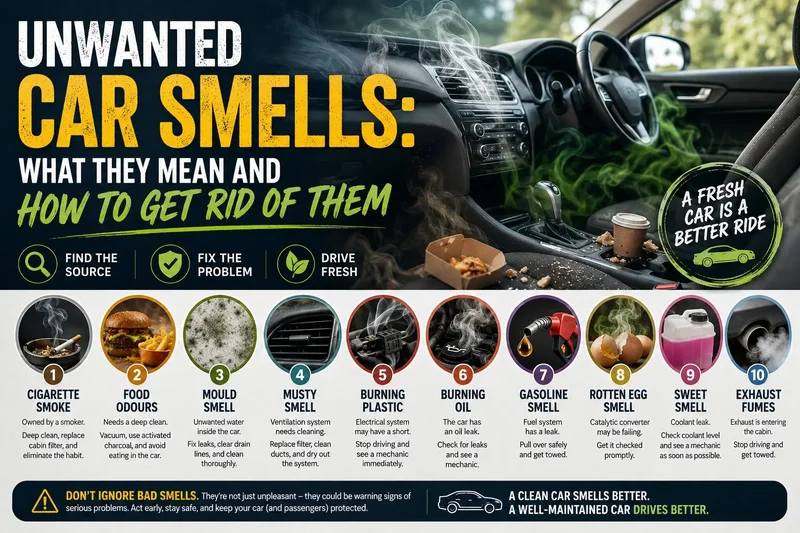
You can only get rid of a bad smell in your car if you know what’s causing it and how to trace it back to its source. In this guide, we’ll walk you through the 10 most common bad car smells and explain what they mean.
Cigarette Smoke
What it means: The car has been owned by a smoker.
About 15 percent of South Africans smoke, which means it’s safe to assume that about 85 percent of potential car buyers would prefer to own a car that doesn’t smell like cigarettes. If you’re interested in selling your car, you need to get rid of the smell as quickly as possible.
What to do:
· Stop smoking in the car. No amount of cleaning will matter if you go right back to smoking in the car afterwards. The average Elf Bar price is lower than ever, making it easy to switch to an odour-free alternative.
· Vacuum the car thoroughly. You can absorb much of the smoke smell by sprinkling baking soda on the upholstery and leaving it there overnight before vacuuming.
· Replace the cabin air filter. Since the air in the car recirculates through the filter, it probably smells very foul. Your car’s cabin air filter is most likely behind the glove compartment, and you can replace it yourself.
· Clean the hard surfaces such as the dashboard and the insides of the windows. Use white vinegar, which helps to neutralize odour-causing molecules.
Food Odours
What it means: The car needs a deep cleaning.
It’s tempting to eat in your car when you’re taking your lunch break and only have a limited amount of time before you have to return to work. Your car is a very small space, though, and it’s not really conducive to eating since there’s no table to catch the crumbs.
What to do:
· Vacuum the car and replace the cabin air filter as described above.
· Use activated charcoal. Home improvement stores typically sell it inexpensively in small bags. You can place the bags under your seats. The charcoal will help to absorb any lingering food smells.
· Avoid eating in the car. There’s really no way to guarantee that crumbs won’t collect on the floor and in the seats.
· Discard rubbish when leaving the car. Food and drink containers will start to smell if they’re left in the car overnight.
Mould Smell
What it means: Unwanted water has entered the car.
A mouldy smell is a sign that water is getting inside your vehicle. This is a problem that you need to handle promptly because severe mould damage is very difficult to remediate. Long-term water ingress can also potentially lead to electrical issues that might be quite expensive to fix.
What to do:
· Clear the drain lines. Your car has drain lines that channel water away from the roof, and those lines can become clogged with dirt and plant matter.
· Check the weather seals. Cracked seals around the windows or boot can lead to unwanted water entry.
· Clean the car thoroughly after you’ve eliminated the source of water entry. If the mould smell is severe, you might want to consider hiring a professional cleaner to run an ozone generator in the car.
Musty Smell
What it means: The ventilation system needs cleaning.
A musty smell in an older car is usually a sign that the ventilation system needs cleaning. It’s normal for moisture to collect in the ducts from the air-conditioning system, which means that periodic cleaning may be necessary.
What to do:
· Replace the cabin air filter. In some cases, this may remove the musty smell on its own.
· Hire a mechanic if the smell persists. It may be necessary to clean and disinfect the ducts.
· Run the fan for a few minutes before exiting the vehicle if you’ve been using the air conditioner for a while. The dry air will help to remove any residual moisture in the ducts.
Burning Plastic
What it means: The electrical system may have a short circuit.
A burning plastic smell is a potential sign of a major electrical issue. In the event of a short circuit, the wires in your car’s electrical system may become hot enough to burn the outside insulators. Bring your car to a mechanic as soon as possible.
Burning Oil
What it means: The car has an oil leak.
A burning oil smell means that your car is leaking oil. An oil leak could manifest itself as a dark stain under the car after it’s been parked for a while, or you could detect a burning smell if the oil touches the hot exhaust system. Bring your car to a mechanic as soon as possible.
Gasoline Smell
What it means: The car’s fuel system has a leak.
If you smell gasoline in your car, you should pull over immediately and have the car towed to a mechanic. A gas leak is a serious fire risk.
Rotten Egg Smell
What it means: The car’s catalytic converter is failing.
A rotten egg smell usually indicates that your car’s catalytic converter is failing, but it can also have other causes such as a faulty oxygen sensor. You should bring your car to a mechanic promptly because fixing this issue early may help you avoid a more costly repair later.
Sweet Smell
What it means: The car has a coolant leak.
A sweet smell typically means that antifreeze is leaking from your car’s cooling system and hitting a hot engine component. You should have a mechanic examine your car as soon as possible and must keep a close eye on the coolant level in the meantime. If the coolant reservoir is low, top it up before driving the car. Lack of coolant can cause catastrophic engine damage.
Exhaust Fumes
What it means: Engine exhaust is entering the vehicle.
If you notice a persistent exhaust smell in your car’s cabin, you should stop driving immediately and have the car towed to a mechanic. This is an urgent safety issue because exhaust fumes contain lethal gases like carbon monoxide.