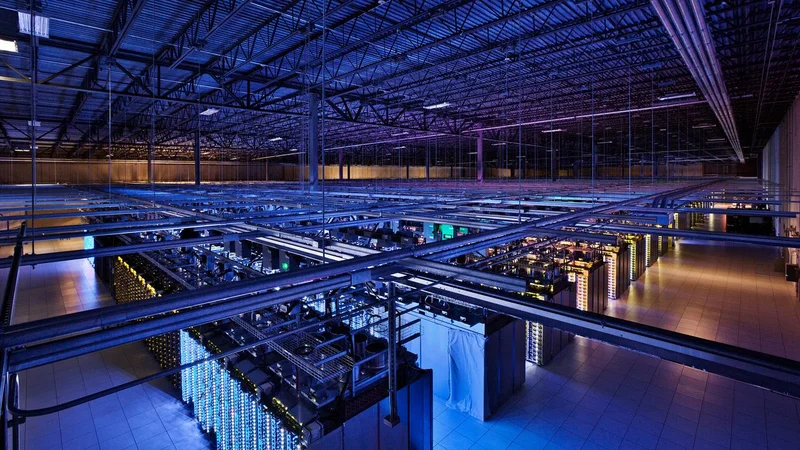
Imperial Valley Computer Manufacturing has filed a lawsuit in a bid to gain access to Colorado River water, 287 million gallons of which it says it needs to cool a 330-megawatt data center, which would be the largest in the state. Despite only representing a fraction of the region's water supply, the buildout of the data center may affect the local farming and adjacent industries and terminate hundreds, if not thousands, of positions, reports Business Insider.
After two cities in the region denied the California-based AI data center recycled wastewater for cooling, it filed a lawsuit demanding to get water from the Colorado River for cooling. The 330-megawatt facility was not only designed to be the biggest AI data center in California, but it specifically committed not to use water from the Colorado River because it was promised wastewater. But now the owner of the data center is essentially asking to redirect water supply from agriculture to the facility.
Imperial Valley Computer Manufacturing — the owner of the 330 MW AI data center — is requesting access to approximately 287 million gallons of water per year after two cities — El Centro and Imperial — declined to supply reclaimed wastewater for cooling. The Imperial Irrigation District (IID), which distributes Colorado River water throughout Imperial Valley, also denied the company's request. The Colorado River supplies water to roughly 40 million people across seven western states and serves as the valley's sole freshwater source for roughly 180,000 people. Agriculture consumes about 80% of California's allocation from the river, while roughly 95–97% of the water IID delivers goes to agriculture.
The data center is seeking roughly 287 million gallons per year (about 750,000 gallons per day, or ~880 acre-feet per year), whereas the Imperial Irrigation District (IID) holds rights to approximately 3.1 million acre-feet of Colorado River water annually, which means that the data center demands only a small fraction — 0.028% — of IID's total water supply.
Sebastian Rucci, a Huntington Beach attorney who leads the project, claims that the facility's water consumption would be comparable to that of a 160-acre farm and will require no additional Colorado River allocation. In fact, he states that the facility would not increase pressure on the river because the company intends to purchase nearby farmland together with its associated water allocations.
Under the proposal, irrigation on those properties would cease, thus transferring the existing water quotas to be redirected to the data center cooling, at the expense of local farming output and associated jobs. "There's a lot of resistance in any agricultural community to 'buy and dry' because that's jobs," a senior fellow at the Pacific Institute focused on Colorado River Basin water use told the outlet. According to them, local resistance to the plan is less about the amount of water, and more about buying up farmland and reallocating it for industrial use.
The approach, of course, differs from the earlier plan that intended to avoid using Colorado River water altogether. However, after the data center was denied wastewater from two cities, it does not have a choice if it wants to go ahead with the buildout.
Get Tom's Hardware's best news and in-depth reviews, straight to your inbox.
Rucci reportedly indicated that the project would provide substantial economic benefits for the local community, including 1,688 construction jobs, more than 100 permanent positions, and an estimated $2.95 billion in economic impact over 30 years. For a region where unemployment stood at approximately 17% in May, the economic diversification is essential. However, the big question is whether 100 permanent roles could offset the lost positions in the farming industry and industries tied to agriculture.
Water policy specialists interviewed by Business Insider said that the debate extends beyond the project's annual consumption. Instead, they questioned whether converting irrigated farmland into industrial use is an appropriate long-term direction for the region, which has historically depended on farming. The experts also warned that although landowners could benefit from selling land or water rights, surrounding rural communities may lose employment and business activity adjacent to agriculture, which includes equipment suppliers, repair shops, and sellers of fertilizers. Another factor mentioned by the experts was the U.S. reliance on farms around Imperial, California, and Yuma, Arizona, as they were the main suppliers of certain agricultural products in winter.
Anton Shilov is a contributing writer at Tom’s Hardware. Over the past couple of decades, he has covered everything from CPUs and GPUs to supercomputers and from modern process technologies and latest fab tools to high-tech industry trends.