Start with the number, because the number moved fast.
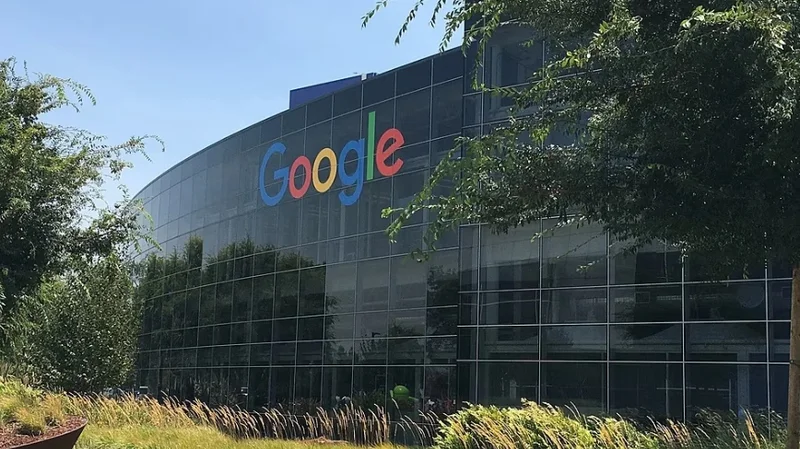
Google has agreed to cover as much as $44bn of lease payments on data centres owned by other people, should the tenant default. It disclosed the figure last week. At the end of September the same commitment stood at $6.5bn, The Information reported.
That is close to seven times larger in nine months.
The promise is simple to state and hard to price. Google does not own the building. It does not occupy the building. It has told the lenders that if the company renting the building stops paying, Google will.
Why a search company is underwriting other people’s rent
The answer is chips. Google wants customers for its tensor processing units, the in-house silicon it is pitching as an alternative to Nvidia.
A guarantee from a company with Google’s balance sheet lets a data-centre developer borrow more cheaply. Cheaper debt makes the project work. The project buys TPUs. Anthropic rents them.
Readers here have seen the mechanism. In June we reported how Google borrowed Nvidia’s own playbook, including a $3.2bn guarantee at Lake Mariner in western New York, $7bn at River Bend in Louisiana and $1.4bn in Texas.
What is new is the total, and the speed. Those individual guarantees have now consolidated into a single disclosed figure that has grown almost sevenfold since September.
A different kind of balance sheet
Until a year or two ago the giants had simple accounts. Cash covered debt several times over. That is no longer the shape of the thing.
Now they use techniques long familiar on Wall Street, expanding the business without carrying all of the risk themselves. The guarantee is the purest example. It commits nothing today and everything in the wrong scenario.
We have covered the aggregate before. Five US giants carry $1.65tn of off-balance-sheet AI debt, more than they report outright. This is the same story told through one company and one line item.
The machinery, and why it is legal
Moody’s set out the mechanics earlier this year. The five biggest US hyperscalers had amassed $969bn of future lease commitments by the end of 2025. Some $662bn of that had not yet commenced, so none of it sat on a balance sheet, Fortune reported. That hidden portion equals 113% of the five firms’ adjusted debt.
The cause is the kit. Data-centre leases used to run 10 to 15 years. AI hardware is useful for four to six. So tenants now demand short leases with options to renew, and landlords demand security before they will build.
The security is usually a residual value guarantee. If the tenant walks away and the building is worth less than an agreed threshold, the tenant pays the difference.
Accounting rules let that sit off the books. A renewal counts as a liability only if it is “reasonably certain”, a test above 70%. Since nobody can say what AI hardware will need in 2031, firms can argue the renewal is likely without being certain, and the guarantee stays in a footnote.
Meta shows the scale. It disclosed data-centre leases starting in 2029 worth about $12.3bn, alongside a residual value guarantee with a $28bn threshold. It judged a payout not probable, so no liability was recorded. Its $50bn Hyperion campus in Louisiana runs on a version of the same structure.
‘Every nook and cranny’
The reason for all this creativity is that the money required has outgrown the ordinary ways of raising it.
John Greenwood, Goldman Sachs’s global head of infrastructure and real asset finance, said he is “looking for capital in every nook and cranny” to support an expected $7.5tn of spending on chips, data centres and power over the next five years, The Information reported.
The hunt does not stop there. Much of that spending goes on chips that need replacing every few years, so the bill arrives again.
The thing money cannot buy quickly
Capital is not the only bottleneck. Nvidia says the harder constraint is physical.
“What’s limiting the access to compute capacity is the fact that it’s very hard to find powered data centers, powered land,” said Raj Mirpuri, Nvidia’s vice president of global AI clouds and infrastructure.
That is why the guarantees exist. A promise from a trillion-dollar balance sheet is the fastest way to turn a plot of land with a grid connection into a building full of chips. Nvidia is now doing the same thing, using its own balance sheet to help customers afford chips and help partners finance the halls to put them in.
Why it matters on Wednesday
Meta and Microsoft report on Wednesday. Amazon and Apple follow on Thursday. Alphabet went first last week and lifted its capital-expenditure guidance to $205bn.
The reported debt will look manageable. The guarantees will not be in the headline numbers.
Investors are already uneasy. Meta is down about 10% this year and Microsoft about 21%, while Apple, which barely spends on AI, is up 23%. Microsoft is short of compute and rationing it. Amazon has guided to roughly $200bn of capital spending against about $185bn of expected operating cash flow, according to S&P Global Market Intelligence, which means dipping into reserves it has topped up with bond sales.
It is in talks to backstop about $250bn of OpenAI’s financing, and it just put $1bn into Korea’s Naver alongside $9bn from Brookfield. The guarantee has become standard equipment.
None of it is improper. The disclosures exist. Moody’s analysts David Gonzales and Alastair Drake made the narrower point that these obligations are not missing, only early. They have not yet been triggered, but they will be.
Their warning was about what the accounts cannot show. “The accounting liability is unlikely to reflect certain plausible future scenarios,” they wrote.
A guarantee costs nothing at all, right up until the moment it costs everything. Google has written $44bn of them in nine months, on buildings it will never own.
Get the TNW newsletter
Get the most important tech news in your inbox each week.