Oil falls 9.5% in steepest drop in months as Iran, US pause attacks
Iran says it is still in control of the Strait of Hormuz and not seeking to resume peace talks with the United States after President Donald Trump halted a two-week bombing campaign.
Oil prices fell by as much as 9.5% on Monday, the steepest drop in two months, after the US stopped bombing Iran over the weekend and Tehran vowed to pause attacks.
What happened: At 9:07 a.m. EDT, Brent crude stood at $90.82, down 7.68% from the previous day. Earlier on Monday, it fell more than 9.5%, as low as $87.62, before rising again. Brent had hit $100 on Thursday for the first time since May. Over the last month, Brent has risen by more than 22% as key Middle Eastern energy trade routes faced disruptions.
Iran said on Monday that it was still in control of the Strait of Hormuz and was not seeking to resume peace talks with the United States after President Donald Trump halted a two-week bombing campaign on the Islamic Republic.
Reuters noted that multiple media outlets in Iran, quoting an informed source, reported that Tehran had forced back six ships trying to transit the Strait of Hormuz on Monday as they did not have clearance.
“As previously announced, the traffic route in the Strait of Hormuz is the route specified by Iran, and other routes are contaminated,” the source told the outlets.
After 13 nights of intensified bombing from the US and Iran firing on American military bases in the Middle East in response, Trump paused the campaign over the weekend and Tehran said it would suspend its attacks.
However, there were signs on Monday that Iran was not keeping its word. Jordan reported shooting down two drones and Iraqi security sources said a drone struck a base of Kurdish opposition fighters in northern Iran, Reuters reported.
Why it matters: The de-escalation has given oil prices rare relief after their mainly upward trajectory since the fighting began on Feb. 28. Before the conflict, Brent crude was hovering at around $70 a barrel. The price peaked at nearly $115 at the height of the conflict in early May.** **
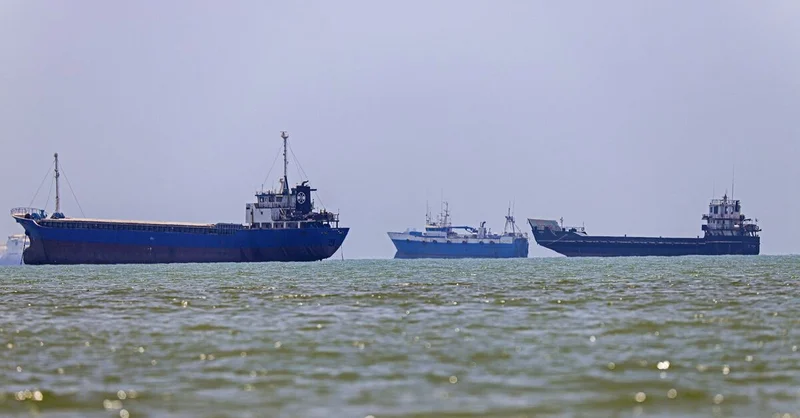
The Strait of Hormuz, which has been nearly totally closed since the beginning of the war, is a critical waterway for energy exports to Europe and Asia. Before the war, between 130 and 140 ships traversed the Strait of Hormuz a day, carrying around a fifth of the world’s oil and liquefied natural gas shipments. Since the fighting erupted, however, traffic through the waterway has been close to nonexistent amid attacks on vessels by Iran’s Islamic Revolutionary Guard Corps and a US naval blockade imposed in mid-April.
Fewer than 10 commodity ships transited the strait daily over the weekend despite the pause in strikes, Kpler data shows.
Know more: A new front opened on July 20, when the Iran-backed Houthi rebels in Yemen imposed a blockade on Saudi Arabia’s Red Sea ports.
Ship traffic through the Bab el-Mandeb Strait — which lies south of Saudi Arabia’s Red Sea ports and is at the start of the cargo route to East Asia — fell on Sunday after the Houthis attacked Saudi oil installations along the kingdom’s western coast.
Just 11 commodity ships passed through Bab el-Mandeb on Sunday, the lowest level in months, data from shipping analytics firm Kpler showed Monday.
Last week, the Houthis claimed attacks on two Saudi oil tankers in the Red Sea, causing prices of physical crude cargoes in the Middle East, Europe and Africa to jump to two-month highs.