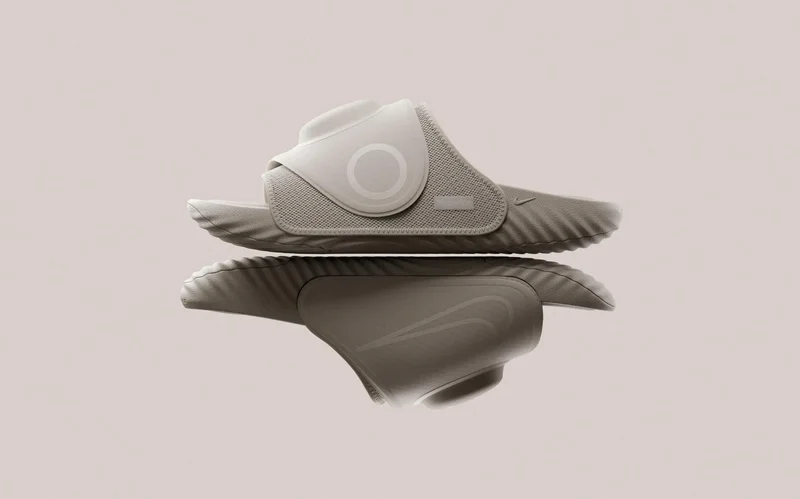
The slide represents a ubiquitous piece of footwear across the world of sports. Hyperice and Nike have teamed to make the slide more than simply a slip-on accessory, announcing the Sept. 29 launch of the Hyperslide.
The original Hyperice and Nike connection surfaced in 2024 when the Hyperboot debuted to Olympians ahead of the Paris Olympics. It hit the retail market in May 2025. The product offered a fresh approach to mobile recovery. Now the two brands hope to build upon same idea, but in a more mainstream manner.
“We built the Hyperslide because recovery shouldn’t require athletes to choose between convenience and performance,” Jim Huether, CEO of Hyperice, tells me. Instead of asking athletes to add another device to their routine, crafting the Hyperslide replaces a format they already use with one loaded with recovery technology.
“It’s the natural next step after the Hyperboot proved that heat and compression technology could live inside footwear people actually want to wear,” Huether says. “This is about meeting athletes where they already are, not asking them to change their behavior to get the benefit.”
While the Hyerboot offered full foot compression and heat using a high-top boot packed with the brand’s Normatec bladders bonded to warming elements, the $249 Hyperslide performs with a single pod worked into the strap across the top of the foot. The slide features Nike Air Zoom cushioning underfoot. Still, Huether is convinced it packs the power to provide recovery. “Don’t underestimate what a smaller footprint can do,” he says. “The feet carry an enormous amount of fatigue after training or competition, and the Hyperslide is built to deliver targeted heat and vibration exactly where that fatigue lives.”
Thanks to the design of a slide, Huether says athletes can wear the product longer and more often than the boot, whether directly following a workout or competition, during travel or around the house at the end of the day. With that, Hyperice expects to see people grab the Hyperslide for immediate relief directly following a training or competition, during travel when recovery is tricky and for people looking for help after a long day.
“While we keep the athletes top of mind, the Hyperslide is not just for the elite competitors,” he says. “That’s really the philosophy behind this product: recovery technology that doesn’t require a dedicated recovery session to use. It fits into life rather than demanding time carved out of it.”
Hyperice and Nike worked with Dutch soccer star Virgil van Dijk and American track athlete Tara Woodhall on the project because their recovery routines fit the Hyperslide ethos. Hyperice also built on what they learned from the boot, especially how to engineer their technology into a wearable form without sacrificing comfort or durability. Huether says they learned about battery placement (the Hyperslide battery lasts approximately one hour, depending on the setting), durability of materials, implementing technology into extremely tight footprints and how athletes actually behave after a workout. That all carried into the Hyperslide design.
“It also confirmed something important: that athletes will adopt new recovery formats quickly when the technology actually works and doesn’t get in the way of their routine,” Huether says. “The Hyperslide is a more focused product, but it stands on the shoulders of everything the Hyperboot validated.”
Rolling out a second product roughly two years after the first was introduced is proof, Huether says, that the partnership has moved well past a single product moment. “Nike and Hyperice are carving a new path together,” he says, “building a genuine line of wearable recovery technology, and this is the latest chapter in a longer story about where we think recovery fits into training more broadly.”