A key question remains over the landmark U.S.-Saudi nuclear deal announced with much fanfare on July 22, 2026: Will it allow a nation long suspected of having nuclear weapons ambitions to enrich uranium?
U.S. President Donald Trump has already shifted the sands of the agreement, adding a major caveat requiring Saudi Arabia to normalize relations with Israel first. He also posted that there would be “no enrichment.”
But it is unclear whether either condition is included in the signed deal, something that has nonproliferation experts like me worried.
Allowing enrichment in any form would be a major step. Moreover, it would deviate from past experience. In 2009, the U.S. government signed a civilian nuclear cooperation agreement with the United Arab Emirates. Called a 123 agreement, it prohibited uranium enrichment and spent fuel reprocessing – both of which can produce fissile material for nuclear weapons – and is seen as the gold standard of such deals.
The nonproliferation implications of the new Saudi-U.S. deal are clear. Without limits on the kingdom’s nuclear wish list, Riyadh might gain access to key capabilities relevant to producing the fissile material needed for nuclear weapons.
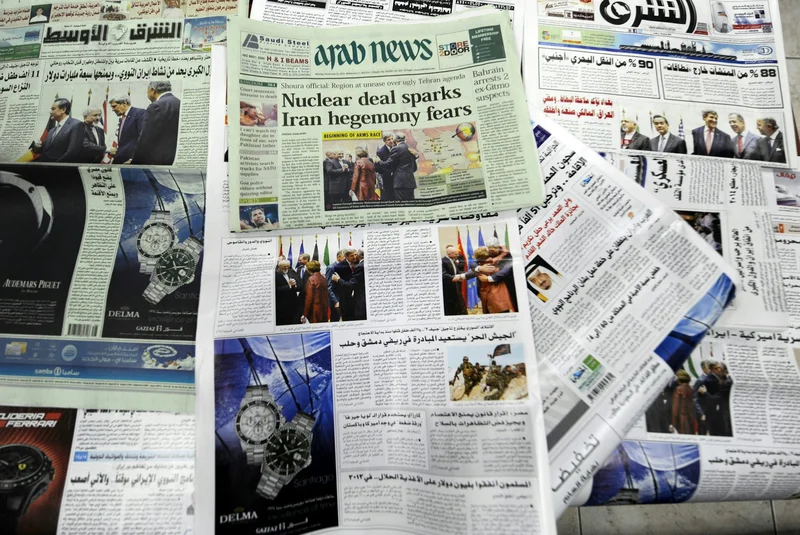
That could spark a nuclear arms race in the region, notably with Riyadh’s traditional rival for influence, Iran. In addition, the UAE has the right to renegotiate its 123 agreement with the U.S. should any other state in the region reach an agreement with Washington on more favorable terms.
Saudi’s nuclear ambitions
For years, senior Saudi officials have expressed interest in developing the full front end of the nuclear fuel cycle – meaning it would have the capability to undertake the key stages of the process, from mining to power generation.
The deal announced last week began with detailed discussions between Saudis and the U.S. during the Biden administration. Then, in January 2023, Saudi Energy Minister Prince Abdulaziz bin Salman noted the kingdom’s interest in using a complete fuel cycle to develop nuclear fuel for two planned commercial power reactors.
The key steps in the front end of the fuel cycle are uranium mining and milling, uranium conversion, uranium enrichment and fuel fabrication. Uranium enriched to about 3% to 5% uranium-235 is used to make fuel for civilian nuclear reactors, although some reactors use fuel enriched up to just under 20%. But a country can use expertise from a civilian program to further enrich uranium to weapons grade levels of more than 90%.
As such, mastering all of the processes involved in the front end of the fuel cycle – especially enrichment – would provide Saudi Arabia with the technical and industrial capability to produce weapons-grade uranium if it chose to pursue nuclear weapons.
Proliferation risks
The risk of Saudi Arabia having such capabilities for commercial purposes is high, given the kingdom’s de facto leader Crown Prince Mohammed bin Salman’s public stance that Riyadh would acquire a nuclear weapon if Iran did.
Especially relevant would be Riyadh’s potential pursuit of a “latent” nuclear weapons capability, meaning that Saudi Arabia would develop relevant technology and expertise to be able to produce a weapon quickly if it made the political decision to do so. Most experts agree that Iran has long had such a latent capability, after it halted its full pursuit of nuclear weapons in 2003.
Were Saudi Arabia to desire a nuclear weapons program, a domestic capability to enrich uranium would be key. Mohamed ElBaradei, former director of the U.N. nuclear watchdog International Atomic Energy Agency, warned in a December 2006 statement on nuclear power that countries with these capabilities are “only a short step away from a nuclear weapons capability.”
To enrich or not
Prohibiting uranium enrichment in the Saudi deal would be the most direct way to prevent the Gulf kingdom from using civilian nuclear cooperation to learn the intricacies of uranium enrichment operations.
After all, producing low-enriched uranium accounts for much of the separative work needed to produce weapons-grade material. And enriching to the lower enrichment levels needed for reactor fuel can “significantly reduce the time a country requires to make a nuclear weapon,” according to Pierce Corden and David Hafemeister, former State Department arms control experts.
Yet, the day before Trump’s comments suggesting “no enrichment,” U.S. Energy Secretary Chris Wright said U.S. companies could build a “black box” enrichment facility in Saudi Arabia. In effect, that would mean a U.S.-owned and operated enrichment site without direct Saudi input.
The U.S. will reportedly use a study focused on the commercial viability of a Saudi enrichment capability to determine whether to proceed with such a facility.
Precedent exists for building and operating a black box uranium enrichment plant to protect uranium enrichment technology. The driving principle is that the supplier country builds and provides the sensitive uranium enrichment centrifuges, while the recipient receives knowledge related to plant operations.
In one example, the European nuclear services consortium URENCO supplied the centrifuge technology for the U.S. National Enrichment Facility uranium enrichment plant in New Mexico. According to the Congressional Research Service, URENCO installed the centrifuges, but personnel from the U.S. operating company were prohibited from viewing “any details of the sensitive equipment as it was being assembled and installed.”
Limiting Saudi access to enrichment technology would make it more difficult for Saudi Arabia to acquire the technical expertise needed for domestic enrichment capability. It also reduces the risk of Saudi Arabia diverting low-enriched uranium from a civilian program and further enriching it to weapons-grade levels. But some experts have already said that maintaining a black box facility with no Saudi personnel or involvement over the long term is unrealistic.
Plutonium reprocessing
Saudi officials have not discussed plutonium reprocessing publicly. However, reports suggest that the new deal will allow Saudi Arabia to reprocess nuclear fuel.
Countries can use reprocessing to separate plutonium from spent nuclear fuel for use in nuclear weapons.
Preventing material diversion in reprocessing plants is difficult due to many factors, including their size and complexity and the large amount of nuclear material processing occurring. According to the IAEA, these plants present a unique problem because “most of the equipment (is) inaccessible during operation.”
The IAEA emphasizes the need to build safeguards into these facilities, such as measurement, surveillance and verification systems.
The need for a watchdog
Reducing the proliferation risk of Saudi nuclear capabilities would require robust implementation of IAEA safeguards – that is, the accounting, inspection and monitoring systems implemented by the international nuclear watchdog. It would also mean Saudi Arabia abiding by the terms of the IAEA’s Additional Protocol, which allows for a set of more intrusive measures, including short-notice inspections of facilities.
Yet press reports suggest the U.S.-Saudi deal does not require Saudi Arabia to abide by the IAEA’s Additional Protocol.
The most effective way to reduce the proliferation risk of the deal is prohibiting indigenous Saudi uranium enrichment and plutonium reprocessing. Should the U.S. allow enrichment, implementing a black box facility and stringent IAEA safeguards would mitigate any risk of Riyadh gaining expertise for a future nuclear weapons program.