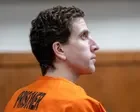
A man convicted last year of killing four college students in Idaho has filed to withdraw his guilty plea and seek a new trial, claiming he pleaded guilty due to bad legal advice.
Bryan Kohberger was convicted of breaking into a six-bedroom house in 2022 and killing four University of Idaho students in their early 20s. The victims – Madison Mogen, Kaylee Goncalves, Xana Kernodle and Ethan Chapin – were found dead with dozens of knife wounds. Goncalves also showed evidence of asphyxiation and blunt force trauma.
“I hereby declare my intention to enter a not guilty plea, and welcome the State the opportunity to prove their case at trial, as well as to, again, file for the death penalty,” Kohberger wrote in a statement shared with the New York Times. “My actual innocence is my truth, and the plea, hinged on by false promises and blatant disinformation, MUST be withdrawn.”
Kohberger formally filed for post-conviction relief Monday in Ada county district court. According to the docket, Kohberger is representing himself.
It is rare such serious convictions to be overturned after a guilty plea, though it is possible to challenge them on the basis of new evidence or negligent legal defense.
Gonclaves’s family sharply criticized Kohberger’s attempt to challenge his conviction, describing him as a “narcissist” and “the mosquito you just can’t seem to swat.”
“He chose not to leave his fate – or the facts of the case – to a jury,” reads the statement provided to KXLY. “He never cried foul, never claimed he was uninformed or pressured, and never suggested there were problems with the discovery materials he and his counsel had reviewed for two years that should have been challenged. He admitted his guilt.”
“My heart goes out to the families of Madison, Kaylee, Xana and Ethan, who have already endured unimaginable loss and now must face today’s deeply painful news,” Idaho attorney general Raúl Labrador said on social media. “My office stands ready to do whatever is necessary to ensure justice is fully carried out.”
Kohberger, a former Washington State University doctoral student in criminal justice, is currently serving four consecutive life sentences without the opportunity for parole, along with an extra 10 years for a burglary conviction in the same case. No motive for the killings has ever been established or provided by Kohberger.
Police found DNA matching Kohberger’s on a knife sheaf left at the murder scene. Surveillance video showed a white Hyundai Elantra like Kohberger’s passing multiple times around the house where the murders were committed. Kohberger’s cell phone was turned off at time the murders occurred.
He was arrested the month after the murders in Pennsylvania, where he was visiting his father for the holidays in late December. On his person and in the Kohberger family home, investigators found a pistol, two knives, black gloves, a black hat and a black facemask.
One of the survivors of the attack described witnessing a shadowy figure clad in black.