Itâs been a while since the internet felt like a place where you could be transported into another worldâwhere landing on someoneâs website meant entering a space shaped by their ideas and designed on their terms. Now everything feels so uniformâmade worse by the vibe-coding aesthetic that has mass-produced an explosion of visual sameness.
A good fix for that would be to return to a web where creativity reigns. A bad fix for it would be to slap filters that remind you of a better web on top of the modern internet and call it a day. Gem Browser, a hacked-together mobile web browser that allows users to change the look of any webpage, is the latter.
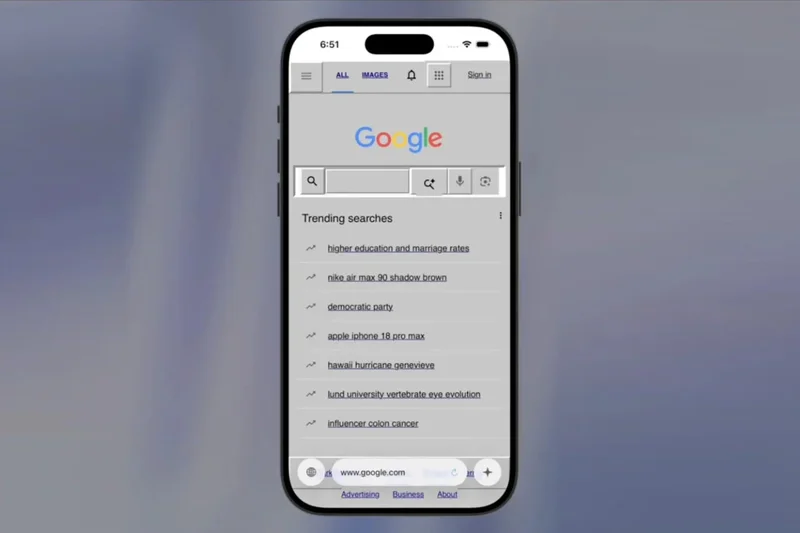
Vidy Thatte, a senior project engineer working for Google DeepMind, dropped Gem last week as an experiment. The extension uses Gemini 3.5-Flash Lite, one of Google’s AI models, to generate a new visual layer on top of any website that you land on. Want Facebook to look like a punk zine or Google Search to have more of a comic book vibe? Now you can, though maybe stop and ask why that’s a thing you wanted.
new update: you can now visit any (real) website and edit it using gemini â¨
testflight in comments https://t.co/yUQbNsWzo3 pic.twitter.com/DsxfCyVy7W
— vidy (@vidythatte) July 27, 2026
When Thatte first introduced Gem Browser, it had a slightly different premise. He reasoned in a post on X that, “With gemini 3.5 flash lite, thereâs almost no difference between loading a website and generating a new one on the fly.” So he created a browser that would generate a webpage no matter what URL you entered, even if it is one that doesn’t exist. If you entered an unclaimed URL, the extension would tap Gemini to generate an entire site on the spot to fill the void.
That’s a novel trick, and one that builds on the idea of Google’s Disco project, which was designed to take the information on a webpage and turn it into a web application that the user could interact with on the page. But it is also kind of the logical endpoint of the dead internet. Now you’re not just getting search results and social feeds filled with AI-generated content with little oversight for things like accuracy or authenticityâyou’re getting your slop generated in real time, on demand.
Even the filter idea is a bit suspect. Let’s say you land on an article on the New York Times. Odds are that some thought has been put into the way that story is presented visually. Slapping a filter on top of it kind of undermines the intentions of the author. There’s also no guarantee that Gemini doesn’t straight-up hallucinate some nonsense and inject it into the text of the story.
Gem Browser is currently just a beta app available in a very limited capacity through Apple’s TestFlight service for pre-release iOS apps. Ideally, it stays there.