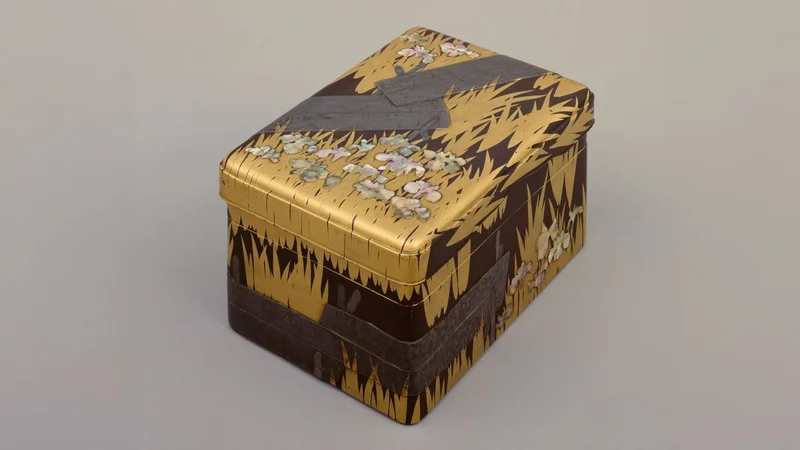
Makie: Japan’s “Sprinkled Picture” Technique for Creating Lacquer Luxury
Guideto Japan
Culture Artmakietechnique combines the deep black of lacquer with gold powder for a refined sense of luxury.
A Long Tradition
Makie is a decorative technique in which artisans create designs by sprinkling powder, often gold or silver, on patterns drawn in lacquer before it dries. The word literally means “sprinkled picture.”
Dating back to the eighth century, it has developed in many different forms. In the hira makie form, meaning simply “flat” makie, artists apply the metallic powder to a work with fresh lacquer applied to the parts where they want the design to appear, creating a two-dimensional look. There is also the togidashi (burnished) makie approach, where the powder is applied amid several coats of lacquer and the work is later polished to reveal the design. And there are raised taka makie designs, with charcoal or clay dust added to create three-dimensional depth in the works. Makie creations may also incorporate pieces of metal or mother-of-pearl.
The Japanese government designated the artisan Murose Kazumi as a living national treasure in makie in 2008.
The makie technique is commonly applied to small items, such as decorative trays, hair ornaments, and boxes for everything from tea to writing implements. It can also be seen on larger works like screens used to divide living spaces and Buddhist altars.
Data Sources
- About Makiefrom the Japan Tourism Agency
- (in Japanese) from the Agency for Cultural Affairs
(Originally written in English. Banner image: Yatsuhashi makie raden suzuribako [Writing Box with Eight Bridges], a national treasure made by Ogata Kōrin. Courtesy Tokyo National Museum/Colbase.)