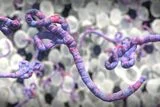
The WHO has updated the Ebola infection count to more than 3,200 during the Democratic Republic of the Congo's (DRC) latest outbreak that started in May 2026. Caused by the rare Bundibugyo species, the virus has spread alarmingly fast, reaching a growing number of provinces and crossing into neighboring Uganda.
With the current case count, WHO has described the outbreak as the third largest on record, and the outbreak has already claimed more than 1,400 lives.
Because no approved vaccines or treatments exist for this uncommon Ebola strain, several institutions are currently working on novel vaccines to contain the spread of this severe and often fatal illness.
The Ebola Outbreak Continues to Grow
The WHO reports that close to 90 percent of Ebola infections originate from the northeastern province of Ituri, sharing borders with the East African nations Uganda and South Sudan. But the virus is no longer confined to one region. It has now spread to five provinces, including two where cases have only recently emerged, as reported by Al Jazeera.
Health officials say expanded testing has helped identify more infections, though the growing numbers also reflect the outbreak's rapid spread. Aid workers say reaching affected communities remains a major obstacle. Along with transporting medical teams, UN Humanitarian Air Service (UNHAS) is also flying laboratory samples to support testing and disease surveillance.
The response has faced additional setbacks as strikes by healthcare workers demanding unpaid wages have disrupted operations at some hospitals. Experts warn the outbreak could continue for several more months.
Read More: How Legionnaires’ Disease Can Turn Deadly as Bacteria Multiply Inside Immune Cells
Why This Ebola Strain Is So Concerning
While therapies exist for other Ebola species, patients infected with Bundibugyo have far fewer options, as there are no approved vaccines or treatments for this particular strain.
Like other Ebola viruses, Bundibugyo is believed to circulate naturally in animals, particularly fruit bats. Researchers also warn that growing urbanization is bringing more people into contact with wildlife that carries the virus, increasing the risk of larger outbreaks.
Human outbreaks can begin when people handle or consume infected wildlife before the virus spreads from person to person through bodily fluids.
Symptoms usually appear between two and 21 days after exposure. Unfortunately, early signs, including fever, headache, and fatigue, can resemble the flu or malaria. With the progression of the infection, patients often vomit and have diarrhea, with severe infections leading to organ failure. Although Ebola is known for causing hemorrhagic fever, not every patient experiences internal or external bleeding.
The Bundibugyo strain may have a lower fatality rate compared to the more deadly variants (Zaire or Sudan), but due to its rarity, detectability is limited, allowing case numbers to be underestimated, and no approved vaccine has been licensed for the strain yet, as described by a Nature Communications paper.
New Vaccines Are Moving Forward
Ebola has already caused over 15,000 deaths across Africa within the last 50 years. Scientists continue to work quickly to close the treatment gap. In July 2026, the U.K.'s Medicines and Healthcare products Regulatory Agency (MHRA) authorized the first human trial of a vaccine designed specifically for the Bundibugyo strain, and Oxford University has already administered the experimental shot to its first group of volunteers.
The vaccine is built on the same technology used for the Oxford-AstraZeneca COVID-19 vaccine, allowing researchers to develop it just eight weeks after obtaining the virus's genetic sequence.
Meanwhile, many other vaccine candidates and experimental therapies are also moving through development, offering hope that new tools could eventually help control this rare but dangerous strain.
This
article is not offering medical advice and should be used for informational
purposes only.
Article Sources
Our writers at Discovermagazine.com use peer-reviewed studies and high-quality sources for our articles, and our editors review for scientific accuracy and editorial standards. Review the sources used below for this article:
- This article references information from the World Health Organization: Daily epidemiological update on acute public health events
- This article references information from Al Jazeera: Ebola infections in DR Congo surge to 3,200, with 1,405 deaths
- This article references information from the BBC: What is Ebola and why is stopping the latest outbreak so difficult?
- This article references information from a study published in Nature Communications:The current Ebola outbreak is a public health emergency of international concern