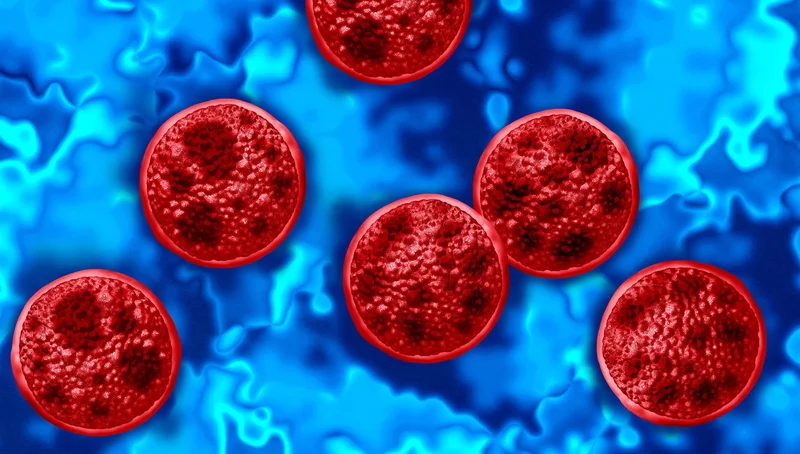
Cooking produce is the only 100% effective way to kill cyclospora, which is why raw salads are such a gamble right now.
wildpixel/Getty Images
After weeks of “produce paranoia,” with people clearing out their fridges and swearing off salads, there’s been another hiccup in the investigation into the multistate cyclospora outbreak. On Sunday, the US Food and Drug Administration appeared to flip-flop on claims that the foodborne pathogen had been found in iceberg lettuce from Taylor Farms, a global fresh produce company based in Salinas, California.
Cyclospora, which causes the gastrointestinal illness known for “explosive diarrhea,” has historically been linked to fresh produce such as berries and salad greens but is notoriously hard to trace. For several weeks, no specific food, brand, grower or supplier was conclusively identified as the source of the outbreak, which has led to panicking and a whole lot of memes on social media.
Last week, health officials announced they were investigating a link to Taylor Farms’ shredded iceberg lettuce served at Taco Bell locations in Indiana, Kentucky, Michigan, Ohio and West Virginia. As a result, Taylor Farms said it was voluntarily pulling iceberg lettuce sourced from central Mexico from the US market. There seemed to be, momentarily, a collective sigh of relief.
Then, on Sunday, when the FDA said that a lettuce sample that tested positive for cyclospora was actually a “false positive,” the search for the outbreak’s source appeared to reset to square one. Taylor Farms wrote in a July 19 statement on its website: “To be clear, at this moment, FDA has not identified a single positive product test result for cyclospora. ” Nonetheless, the recall of Taylor Farms iceberg lettuce grown and processed in central Mexico remains in place across 27 states.
A new twist came on Monday, when the FDA clarified on social media that the agency was still confident of a link to shredded iceberg lettuce from Taylor Farms locations in central Mexico. The FDA said in a post on X that the false-positive lab finding doesn’t alter the substantial epidemiological data backing Taylor Farms’ voluntary recall. Laboratory tests are just one piece of evidence, but not the decisive factor in the larger investigation of the current outbreak.
The Centers for Disease Control and Prevention says that more than 7,000 cyclospora cases have been either confirmed or are under investigation nationwide since May 1, with over 100 hospitalizations and no deaths to date. Cases have been reported across 34 states, with Michigan among the hardest-hit regions.
After what seemed to be a step toward resolution, the source of the nation’s worst cyclosporiasis outbreak remains something of a mystery, leaving more uncertainty about which foods to avoid. With any health scare, bad advice and myths spread just as fast as the actual illness. So we turned to health care experts to learn the facts.
“I wouldn’t necessarily suggest that people avoid produce,” said Dr. John Openshaw, an infectious disease physician and medical epidemiologist at Stanford University. “Even though the number of people involved in the current outbreak or outbreaks seems large, overall the risk remains very low to most people.”
What is cyclosporiasis?
Cyclosporiasis is caused by cyclospora cayetanensis, a microscopic parasite transmitted through fecal matter that infects the small intestine. According to infectious disease experts at Johns Hopkins, it takes only a few microscopic cyclospora eggs to hijack your gastrointestinal tract.
In the US, previous cyclospora outbreaks have frequently been associated with fresh produce, including bagged salad mixes, cilantro, basil, raspberries, snow peas and green onions. Any food that’s contaminated and eaten uncooked can theoretically transmit cyclospora.
Unlike some stomach illnesses, such as the norovirus, cyclosporiasis is unlikely to spread directly from one person to another. After the parasite leaves an infected person’s body, it generally needs at least one to two weeks in the environment before it becomes infectious.
Stomach cramps are a common sign of cyclosporiasis, an infection caused by the cyclospora parasite.
Jacob Wackerhausen/Getty Images
What are the symptoms of cyclosporiasis?
The most common symptom is watery diarrhea that can be frequent and, according to the CDC, sometimes “explosive.” Other unpleasant symptoms can include stomach cramps, nausea, loss of appetite, bloating and gas, fatigue, vomiting and a low-grade fever.
Unlike deadlier foodborne illnesses such as listeria or E. coli, cyclosporiasis isn’t usually life-threatening. The biggest risk right now during the hot summer months is dehydration. “People who are sick and are having trouble keeping hydrated should talk to a doctor,” Openshaw said.
Symptoms typically begin about one week after exposure, although they can appear anywhere from two days to two weeks or longer afterward. Dr. Timothy Henrich, professor of medicine at UCSF, said it’s typical for people to have “waxing and waning symptoms” over weeks to months. Others who are infected might have minimal or even no symptoms, he said.
Because symptoms can come and go, it’s important to get tested for cycolosporasis and talk with a doctor about treatment, which is generally well-tolerated and “may reduce the chances of further local fecal-oral spread,” Henrich said.
How high is the risk?
While cyclosporasis cases span a lot of the country, the outbreak’s highest concentration is in a small cluster of states, mostly in the Midwest. Jessica Steier, a public health scientist and CEO of Unbiased Science, said the risk remains low outside those areas, but that anyone who is “pregnant or immunocompromised might consider erring on the side of caution.”
The CDC says that only about 9% of people who contract the parasite require hospitalization, but the risk of severe illness and lasting complications is significantly higher for seniors, young children and others with weakened immune systems.
Health officials says it’s best to avoid bagged greens or precut mixes to stay safe during the current cyclospora outbreak.
Al Drago/Getty Images
How can you reduce your risk?
Although the voluntary recall of iceberg lettuce from Taylor Farms, sourced from central Mexico, remains in effect across 27 states, there is still no nationwide recommendation to throw away lettuce. However, Michigan health officials have issued more specific guidance for lettuce during the current investigation, including buying whole heads of lettuce instead of bagged lettuce or premixed salad kits (then discarding the outer three layers of leaves) and cooking leafy greens when practical.
Though washing fresh produce might reduce your exposure to cyclospora and other foodborne contaminants, it can’t guarantee the parasite will be completely removed.
“Washing produce does not meaningfully decrease the risk of cyclospora, and heat remains the gold standard for risk reduction,” Steier said. Cooking vegetables at an internal temperature of 158 degrees Fahrenheit or higher is the only surefire way to kill the parasite.
Experts also warn against using soap, bleach or household disinfectants on produce. Fruits and vegetables can absorb soap and detergent, which may make you sick, and the CDC says routine chemical disinfection is unlikely to kill cyclospora.
Household tools or countertop items such as UV produce washers, ultrasonic cleaners or ozone devices won’t make contaminated food safe to consume, either. Steier confirmed that none of those methods have sufficient real-world evidence to support their use in killing the parasite.
What should you do if you have symptoms?
Experts advise contacting a health care provider if you develop persistent watery diarrhea, especially if it is severe, lasts longer than a week or goes away and then returns. Drinking fluids is also important because prolonged diarrhea can cause dehydration.
Diagnosing cyclospora requires special lab testing, and the parasite isn’t included in routine stool testing. The CDC says patients sometimes need to provide multiple samples because cyclospora can be difficult to detect.
The standard treatment is the prescription antibiotic combination trimethoprim-sulfamethoxazole, commonly sold under the brand names Bactrim and Septra. People who are allergic to sulfa drugs should discuss other options with a medical professional.
The CDC hasn’t found a single source linking the outbreak.
sshepard/Getty Images
Why is it so hard to identify the source of an outbreak?
It often takes weeks or longer to identify the source of a parasitic outbreak because investigators have to compare what sick people ate, then trace the foods back through the supply chain. For cyclospora, that process is especially difficult because symptoms often begin days after exposure.
Public health agencies have also faced staffing cuts and funding reductions in recent years, making it harder to identify outbreaks quickly and to tell people which foods to avoid. A recent study found that states with more CDC support reported more outbreaks than those without those programs, suggesting that federal funding improves detection and management.
“Tracing any outbreak like this requires trained staff and resources – any cut to those elements of a public health response would impede efforts to trace an outbreak to a specific food item and identify how a pathogen like cyclospora got into the food supply,” Openshaw said.
Laura Michelle Davis
Senior Editor
Laura is a professional nitpicker and good-humored troubleshooter with over 14 years of experience in print and digital publishing. She has worn many different hats at CNET, covering personal finance, tech, and culture. She is currently assigned to the beloved copy desk, which she affectionately refers to as the editorial QA HQ. Before CNET, she worked as an English teacher, a Spanish medical interpreter, and a book proofreader. She is a fearless but flexible defender of both grammar and weightlifting, and firmly believes that technology should serve the people. Her first computer was a Macintosh Plus.
See full bio
With more than a decade of experience, Nelson covers Apple and Google and writes about iPhone and Android features, privacy and security settings, and more.
See full bio