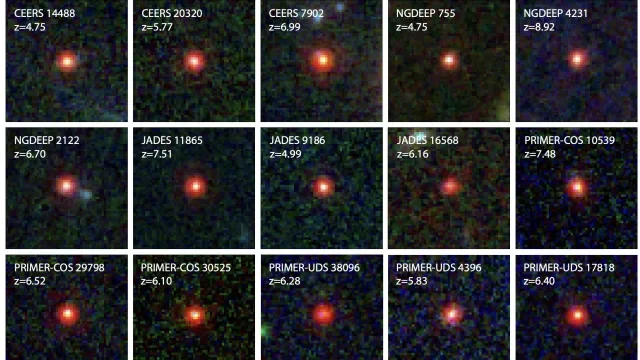
It’s hard to fathom just how far we’ve come in our understanding of the Universe over the past 200 years. Back in the early 1800s, we didn’t even know how far away the stars were, what they were made of, or how they worked. We didn’t know what the Universe was, how big it was, or even what the laws were that governed it. We were up to seven planets in the Solar System, with Uranus being discovered in 1781, and had uncovered several asteroids: objects in between the orbits of Mars and Jupiter. We didn’t know the nature of the Milky Way, or whether there was anything at all beyond it. And we didn’t know if the Universe was infinite and eternal, or finite across either space or time. All of those things have changed and more. Today, we not only know how stars and galaxies work, but can retrace our cosmic history back billions of years: to the Big Bang and even the inflationary period that came before it. We know not only of the matter that we ourselves are made out of, but also radiation, neutrinos, plasma, dark matter, and even dark energy. We see the Universe not only in visible light, but in wavelengths beyond what our eyes can see, as well as in particles and gravitational waves, too. Although these scientific advances have occurred through slow and careful research, there are giant leaps we’ve taken as well. From 200 years ago until today, here are 20 great achievements and discoveries from the past 20 years that have truly opened up the Universe to humanity. 61 Cygni was the first star to have its parallax measured and published (back in 1838), but also is a difficult case due to its large proper motion. These two images, stacked in red and blue and taken almost exactly one year apart, show this binary star system’s fantastic speed. If you want to measure the parallax of an object to extreme accuracy, you’ll make your two ‘binocular’ measurements simultaneously, to avoid the effect of the star’s motion through the galaxy. Gaia is exceptionally good at characterizing the orbits of nearby stars with small separations from their companion, but faces more challenges with more distant, wider binary systems. Credit: Lorenzo2/Astrofili forums 1830s: Parallax is discovered. If the Earth truly orbited around the Sun, then it should be possible to see the closest stars shift their apparent positions relative to the more distant background stars as the Earth changes its relative position by up to 300 million km over a calendar year. After centuries of not being able to see a parallax at all, Friedrich Bessel finally does it: for the star 61 Cygni in 1838. We later learn that Thomas Henderson observed Alpha Centauri in 1832-1833 and saw a parallax, but was too afraid to publish his findings until after Bessel did so, with Henderson only publishing his results in 1839. The Earth truly does orbit around the Sun. 1840s: Neptune is discovered. With a seventh planet to test Kepler’s laws against, astronomers noticed a major anomaly: it appears to violate Kepler’s 2nd law. Instead of making an ellipse that “sweeps out equal areas in equal times,” it first moves too fast, then goes at the right speed, and then moves too slowly. Several theorists explore the idea that a more distant, eighth planet is gravitationally tugging on Uranus, but Urbain Le Verrier gets it right and sends his predictions to the Berlin observatory, where Johann Galle and Heinrich d’Arrest discover Neptune the same night the letter arrives: September 23, 1846. It is the first-ever discovery of matter through its gravitational effects alone: “dark matter.” For decades, Uranus was observed to move too quickly (left), then at the correct speed (center), and then too slowly (right). This would be explained within Newton’s theory of gravitation if there were an additional, outer, massive world tugging on Uranus. In this visualization, Neptune is in blue, Uranus in green, with Jupiter and Saturn in cyan and orange, respectively. Credit: Michael Richmond/Rochester Institute of Technology 1850s: the Carrington Event occurs. Arguably the most important event in the history of solar astronomy and heliophysics, astronomer Richard Carrington was tracking a large, irregular sunspot when it suddenly made a “white light flare,” with unprecedented brightness, that lasted about 5 minutes. 17 hours later, the largest geomagnetic storm ever recorded on Earth occurred, with aurorae coming down to the equator, and early electrified systems (like telegraphs) activated and caught fire: the first electrical grid disruption. Solar astronomy has advanced tremendously since then, but a Carrington-like event today would be a multi-trillion dollar disaster. We have, frighteningly, put no substantive countermeasures in place at all. 1860s: spectroscopy enables the discovery of helium. In the early 1860s, astronomer William Huggins applied the technique of spectroscopy to starlight for the first time: splitting light into its component wavelengths. Just a few years later, in 1868, astronomers Pierre Janssen and Norman Lockyer detect an unknown spectral line in the Sun’s atmosphere: the first detection of helium, discovered in space before it was isolated here on Earth. (The first time this would occur for any element.) Today, spectroscopy is used to identify all sorts of atomic, ionic, and molecular fingerprints, but the 1860s marked the first time it was ever used for cosmic purposes, and with profound results. The visible light spectrum of the Sun, which helps us understand not only its temperature and ionization, but the abundances of the elements present. The long, thick lines are hydrogen and helium, but every other line is from a heavy element that must have been created in a previous-generation star, rather than the hot Big Bang. Credit: N.A.Sharp, NOAO/NSO/Kitt Peak FTS/AURA/NSF 1870s: stellar classification is pioneered. Although today we understand the complex relationship between a star’s color and temperature, as well as the relationship between spectral lines, composition, and ionization, it was a long, slow process that took us several decades before we settled on our modern scheme of it. But stellar classification began in the 1870s with the work of Angelo Secchi. Secchi created the foundational four classes: I: of white and blue stars with thick hydrogen lines, II: of yellow stars with prominent metal lines, III and IV: orange, red, and carbon-rich stars, dividing stars into classes based on measurable properties like color and spectra line prominence. Astronomer Hermann Vogel would shortly thereafter unify two of Secchi’s classes and subdivided categories to track fine differences in lines, also in the 1870s: the birth of stellar classification. 1880s: nebular and galactic astrophotography begins. Although photography had been around for decades, and the first photograph of stars was taken way back in the 1850s, it was the combination of telescopes and cameras that first began revealing structures in deep-sky objects too faint for the human eye to detect. Representing a huge improvement in the amount of detail that we were aware of in the Orion Nebula and, most spectacularly, the Andromeda nebula (now the Andromeda galaxy, including the discovery of its spiral arms), it set the stage for all of modern long-exposure astronomy, from photographic plates to today’s modern digital images. This 1888 image of the Andromeda Galaxy, by Isaac Roberts, is the first astronomical photograph ever taken of another galaxy. It was taken without any photometric filters, and hence all the light of different wavelengths is summed together. Every star that’s part of the Andromeda galaxy has not moved by a perceptible amount since 1888, a remarkable demonstration of how far away other galaxies truly are. Although Andromeda is a naked-eye object under even modestly dark skies, it was not recorded until the year 964, and was not shown to be extragalactic until 1923. Credit: Isaac Roberts 1890s: the discovery of the Lorentz transformations. Arguably the most important step on the road to relativity, the Lorentz transformations brought the earlier concept of the invariance of the speed of light (from Maxwell’s equations), the null results of the Michelson-Morley experiment, and the concept of length contraction (from FitzGerald) together, predicting time dilation for the first time and correctly detailing how velocities sum together when close to the speed of light: in defiance of Newton’s laws. This would pave the way for Einstein’s development of first special relativity and then general relativity, which would lead to our modern picture of reality in the 20th century. 1900s: high-energy astronomy is born. In 1900, in a laboratory experiment involving radium, physicist Paul Villard discovers gamma-rays: the highest-energy form of radiation of all, exceeding X-ray energy. Max Planck, that same year, proposed a solution to the puzzle known as the ultraviolet catastrophe: that energy is quantized, even energy in the form of light. Einstein’s photoelectric effect (in 1905) explained how we can quantify and measure it, and numerous theoretical predictions set expectations for radiation of all wavelengths to exist in space. The next decade, balloon-borne astronomy would begin measuring cosmic particles, and the rest of the 20th century would see astronomy develop in every known wavelength of light. The results of Arthur Eddington’s 1919 expedition, which confirmed and validated the predictions of Einstein’s general relativity, while disagreeing significantly with the alternative (Newtonian) predictions, was the first observational confirmation of Einstein’s new theory of gravity. The amount that starlight was deflected by during a total solar eclipse was a key prediction that was unique to Einstein’s new theory. Credit: London Illustrated News, 1919 1910s: a new theory of gravity is confirmed. In 1905, Einstein put forth special relativity into the world, and then after a decade of further work, general relativity: a new theory of gravity. Although there were indirect tests of relativity, like the orbit of Mercury, it would fall to a novel prediction — of starlight seeming to bend due to the Sun’s gravity during a total solar eclipse — to test the new theory directly. On May 29, 1919, expeditions across multiple continents, led by Arthur Eddington, conducted exactly that critical test. The results proved Einstein right and Newton wrong, and ushered in the era of general relativity. Over a century later, it’s still the finest description of gravity we’ve ever developed. 1920s: spiral nebula are proved to be galaxies outside of the Milky Way. Back in 1920, a great debate occurred, where the subject was the nature of spiral nebulae. Were they protostars, or other objects within our own Milky Way? Or were they galaxies unto themselves: “island universes” that resided outside of our own galaxy? The debate was only settled three years later: in 1923, when Edwin Hubble observed what were determined to be individual stars in Andromeda. That allowed us to calculate a distance, and determine how far away the object was: far beyond the distances of Milky Way objects. This would lead to many other such distance measurements, and eventually, to the discovery of the expanding Universe. Cosmology would never be the same. Perhaps the most famous photographic plate in all of history, this image from October of 1923 features the great nebula (now galaxy) in Andromeda along with the three novae that Hubble observed within them. When a fourth brightening event happened in the same location as the first, Hubble recognized this was no nova, but a Cepheid variable star. The “VAR!” written in red pen was Hubble having a spectacular realization: this meant Andromeda was an extragalactic object, located far beyond the Milky Way. Credit: Carnegie Observatories 1930s: the first hint of dark matter. All sorts of fascinating developments happened in the 1930s. The expanding Universe became well-accepted. Supernovae and supernova remnants were identified, and the name was coined. The original idea of the Big Bang, or “primeval atom” as it was called, was developed. But perhaps most importantly was the first hint of dark matter: discovered by observing the relative speeds of individual galaxies within a single galaxy cluster. The mismatch between: the mass inferred from starlight, or stellar mass, and the mass inferred from the motions of the galaxies, or gravitational mass, was severe, and represented the first evidence for dark matter. Although this wouldn’t be taken seriously until the work of Vera Rubin and the measurement of rotation curves of individual galaxies nearly 40 years later, the cosmological importance of Fritz Zwicky’s work can’t be overstated. 1940s: the Big Bang theory is developed. Although the idea of extrapolating the expanding Universe backwards had been around for a long time, it was in the 1940s that George Gamow and his collaborators, Ralph Alpher and Robert Herman, began working out the consequences of a hot, dense, rapidly expanding and much more uniform initial state. This led to a series of cornerstone predictions: a cosmic web of structure that forms hierarchically and galaxies that are more primitive in the past: with smaller-scale structures forming first and larger-scale ones maturing later on, a leftover bath of radiation — a primeval fireball — that redshifts and cools to create a background of low-energy radiation today, an early period of nuclear fusion, where elements heavier than hydrogen are formed, and even a relic population of neutrinos and antineutrinos, forming a bath that’s even colder than the leftover background of radiation. By today, all of these predictions have been confirmed, tracing their roots back Gamow and his colleagues: the first to explore these lines of thought. Artist’s illustration (left) of the interior of a massive star in the final stages, pre-supernova, of silicon-burning. (Silicon-burning is where iron, nickel, and cobalt form in the core.) A Chandra image (right) of the Cassiopeia A supernova remnant today shows elements like iron (blue), sulfur (green), and magnesium (red). Ejected stellar material can glow due to heat in the infrared for tens of thousands of years, and the ejecta from supernovae can be asymmetric and can have segregated elements within it, as shown here. In the right environment, this asymmetric material can be unevenly incorporated into future generations of stars. Credits: NASA/CXC/M.Weiss (illustration, left) NASA/CXC/GSFC/U. Hwang & J. Laming (image, right) 1950s: we make sense of the nuclear physics within stars. The Big Bang wasn’t the only game in town, however, as far as explaining how the elements came to be. Elements are also produced via nuclear fusion in stars, and for a long time, we didn’t know how. In the 1950s, a team of scientists figured it out. On the astronomical side, Martha and Geoffrey Burbidge team with Fred Hoyle on the theoretical physics side, and Willie Fowler on the nuclear experiment side to develop a theory for how heavy elements are built up in stars from hydrogen alone. The discovery of the triple-alpha process and the predicted Hoyle state of excited carbon validated the whole idea, and now we know, except for the lightest elements, stellar nucleosynthesis is what’s responsible for the majority of heavy atoms in the Universe. 1960s: the “smoking gun” for the Big Bang, the CMB, is found. In the mid-1960s, a new telescope, designed for radar, came online: the Holmdel Horn Antenna. While calibrating it, its operators — Arno Penzias and Bob Wilson — discovered an annoying hum, a source of noise, that appeared in all directions on the sky. They tried everything: recalibrating it, turning it off-and-on, pointing it at the ground (the hum went away), even cleaning it and removing roosting birds from it. Finally, they got a visit from a reviewer who pointed them to a paper by Bob Dicke’s group at Princeton: a paper that allowed them to identify this “hum” with the predicted background radiation from the Big Bang. The Cosmic Microwave Background, or CMB, had just been discovered, and the Big Bang has been with us ever since. This image shows Arno Penzias and Robert Wilson, co-discoverers of the cosmic microwave background (CMB), with the Holmdel Horn Antenna used to discover it. Although many sources can produce low-energy radiation backgrounds, the properties of the CMB, including its perfectly blackbody nature and uniform temperature in all directions, confirm its cosmic origin. As time goes on and the leftover glow from the Big Bang continues to redshift, larger telescopes sensitive to longer wavelengths and smaller number densities of photons will be required to continue to detect it. Credit: NASA, restored by Bammesk/Wikimedia Commons 1970s: the birth of inflation. Throughout the 1970s, many important developments occurred. Dark matter rose to prominence with the observations of rotating galaxies, the cosmic web began to be mapped out, the first imperfections were discovered in the CMB, and spaceborne telescopes began to be planned: accessing wavelengths that cannot be seen from the ground. But by considering puzzles about the Universe — things that we have observed but can’t explain or predict — like why it’s the same temperature everywhere, why the expansion rate and energy density balance so perfectly, and why there are no leftover high-energy relics, the idea of cosmic inflation was born. Although Alan Guth is normally credited as the founder of the idea (in 1979), the idea was considered by many others at around the same time: Robert Brout, Alexei Starobinskii, and Rocky Kolb among them. Today, it has superseded the Big Bang as our ultimate cosmic origin story, but the idea goes all the way back to the late 1970s. 1980s: the birth of neutrino astronomy. Back in the 1980s, we built enormous tanks of liquid surrounded by photomultiplier tubes: not to detect neutrinos, but rather to search for decaying protons. Of course, the proton didn’t decay, so all we were seeing was the “background” of solar neutrinos. Then, an unprecedented event occurred: a supernova went off in the Large Magellanic Cloud, a satellite galaxy just 165,000 light-years away. Dozens of neutrinos arrived in the detector, and did so a full 4 hours before the first light from the supernova arrived. Just like that, it was no longer solely light that we were detecting, but particles as well. At present, we’ve extended our reach to many millions of light-years away, and neutrino astronomy is a bona fide science all unto itself. A neutrino event, identifiable by the rings of Cherenkov radiation that show up along the photomultiplier tubes lining the detector walls, showcase the successful methodology of neutrino astronomy. This image shows multiple events, and is part of the suite of experiments paving our way to a greater understanding of neutrinos. The neutrinos detected in 1987 marked the dawn of both neutrino astronomy and the rebranding of nucleon decay experiments as neutrino detector experiments. Credit: Super-Kamiokande Collaboration 1990s: the accelerating Universe and dark energy. The Universe is expanding, sure. But would it expand forever, or would it stop expanding and someday recollapse? By measuring standardized objects at a variety of distances, we could track the evolution of our cosmic expansion, and arrive at the answer. By using type Ia supernova data, two independent teams first arrived at the answer in the late 1990s. Surprisingly, they found that not only would the Universe keep expanding, but the expansion itself was accelerating: demanding a new form of energy that dominates the cosmic energy budget, known as dark energy. Although we’ve pinned down dark energy’s properties very well here in the early 21st century, it was its 1998 discovery that marks the greatest cosmic advance of the 1990s. 2000s: detailed measurements of the CMB reveals our cosmic inventory. What is the Universe made out of? To answer this, we can look at the imperfections — just microkelvin-level variations in a ~3 K background — in the cosmic microwave background, and how those imperfections correlate on a variety of cosmic scales. Although other lines of evidence have since joined them, and although ACT, SPT, and Planck have all superseded WMAP’s initial precision from their first results in 2003, it was these imperfections in the CMB that first gave us our cosmic picture of a Universe that’s: expanding at around 70 km/s/Mpc, about 13.8 billion years in age, made up of about 70% dark energy, around 25% dark matter, and only about 5% normal matter, with a tiny addition of photons and neutrinos as well. Although many puzzles have arisen in the time since, that overall concordance picture still holds true even today. The map (top) of the temperature fluctuations in the CMB from Planck, along with the temperature fluctuation power spectrum (middle) as measured. The bottom two panels show the simulated temperature fluctuations on various angular scales that will appear in the CMB in a Universe with the measured amount of radiation, and then either 70% dark energy, 25% dark matter, and 5% normal matter (left), or a Universe with 100% normal matter and no dark matter (right). The differences in the number of peaks, as well as the peak heights and locations, are easily seen. Credit: ESA/Planck Collaboration (top/middle); E. Siegel/CMBfast (bottom) 2010s: the birth of gravitational wave astronomy. Sure, many other important things happened this decade, too, like the uncovering of the Hubble tension, a boom in exoplanet discoveries, our first up-close views of Pluto, and the first image of a black hole’s event horizon. But the biggest revolution was in the detection of merging black holes through a whole new method: gravitational wave astronomy. The first gravitational waves were seen when the twin Advanced LIGO detectors first turned on in 2015, and were later announced in 2016. Now, 10 years later, we’re up to 390 confirmed detections, with enough evidence to even determine where these black holes come from. Instead of light alone, we now have three methods — light, particles, and gravitational waves — to view the Universe in. 2020s: the discovery of “little red dot” objects. In 2021, we launched the JWST: the most powerful space telescope of all-time. It’s shown us many fascinating aspects of the Universe, but one big surprise, still not fully explained, are the Little Red Dot galaxies that it sees. Are they galaxy-quasar hybrids? Are these coming from the aftermath of enormous, supermassive stars? They seem to be indicating that black holes came before the galaxies we find them in; could that really be true? And they may be explained by enhanced supermassive black hole activity; is that the true resolution? With just one discovery highlighted from each of the past 20 decades, we can see how spectacularly our understanding of the Universe has advanced. With each new discovery, there’s so much more that we then know how to ask. As long as we keep investing in the endeavor of asking the Universe questions about itself, we’re bound to keep discovering new facts about our shared reality. Although we can’t predict what we’ll find in the coming decades, we know we must keep Looking. In the end, the act of discovery is the greatest part of conducting science of all. This article The 20 biggest cosmic discoveries of the last 20 decades is featured on Big Think.
The 20 biggest cosmic discoveries of the last 20 decades