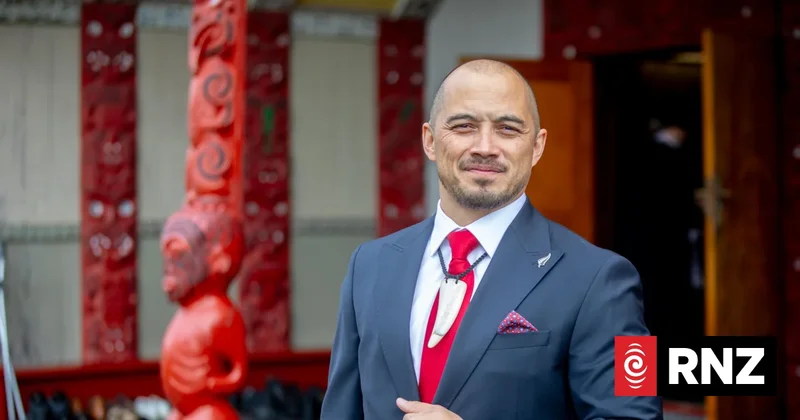
Amorangi, the biennial Māori in Governance Summit, returns to Wellington on Wednesday, aiming to give Māori and non-Māori governors an understanding of tikanga-led governance.
This year's programme features 10 speakers from across the governance spectrum, including Te Pāti Māori MP Hana-Rawhiti Maipi-Clarke, Waitangi Tribunal Chair Chief Judge Caren Fox, Deputy Vice-Chancellor Māori and Kaitiakitanga Rawinia Higgins, and Wellington Rugby Director Erin Roxburgh.
Tapuwae Roa Kaihautū and Labour party candidate Te Pūoho Kātene (Ngāti Toarangatira, Ngāti Whātua, Ngāti Tama) told RNZ Amorangi was created to form a connected community for people involved in governance throughout Te Ao Māori.
He said there was increasing demand for governance development from a tikanga Māori lens, and not just from Māori authorities.
"On Māori boards, what we are seeing more and more is that we want to maintain and paddle our own waka. And so having to appoint boards that can do both in terms of stepping into the tikanga place, stepping into the mātauranga place, but also being effective and astute governors at the same time and not having to feel like you need to sacrifice one in order to prop the other one up.
"And I think what we've understood is that these aren't perfect circles of a Venn diagram, there are overlaps. And so we will take parts of tikanga and mātauranga that apply, but we'll never assume that authority transfers from one world to the other, because in the end, they're their own whare or their own discipline."
Amorangi is hosted by Tapuwae Roa, the pan-Māori charitable trust established by the Māori Fisheries Act in 2005, to pursue tikanga-led social change via targeted funding, investment and delivery of impactful kaupapa.
Kātene said practicing tikanga-led governance while working on Māori boards required finding a way to walk between both Māori and Pākehā worlds and at times bring those two worlds together.
"There's a focus heavily on mandate and the importance of understanding from whence your mandate comes and making sure that whoever gives it to you, whether it's your iwi members, whether it's your appointing body, whether it's your shareholders, that you, in that spot, are earning that mandate. I often like to say that mandate isn't owned, it's leased, and rent is due every day."
Katene said those in positions of power and decision-making authority need to make sure they are cognizant of who gave them that mana.
Thinking of governance through a lens of tikanga could also help people work through systems where they are incentivised to think short-term, he said.
"It gives us another viewpoint particularly to unpick any biases towards recency or towards short-termism. Tikanga is a really good foil to make sure we're making decisions with people at its heart and also with future generations in mind."
The surging Maori economy
In 2024 Amorangi expanded to a hybrid model with both in-person and virtual attendance.
Kātene said this year in-person attendance had sold out, with more than 450 people expected to attend in person, and around 800 participants expected overall.
He said Amorangi was created with a focus on accessibility, so it would be open to professional governors as well people on marae committees, iwi trusts and businesses.
"That rounded, diverse range of perspectives that we bring in, as well as opening the gate, makes this much greater than another event. I think it's something that we can look around to our Māori at the moment and celebrate what makes us special and what value we can add into these spaces, not just for our organisation, but for the wider community."
Amorangi will take place on Wednesday, July 29, at Shed 6 in Wellington.