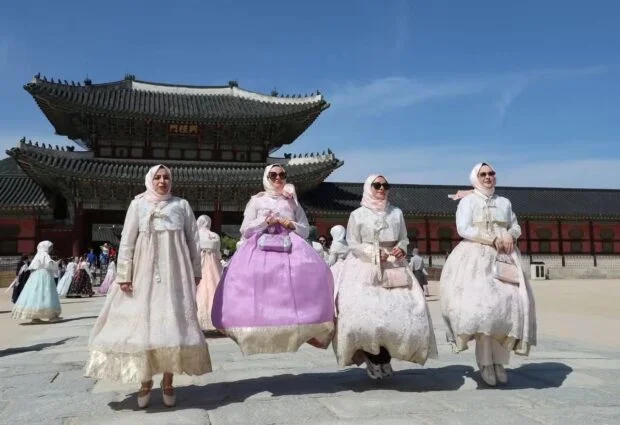
South Korea to crack down on tourist overcharging
South Korea will impose stricter penalties on hotels and restaurants that overcharge customers starting next month, as part of a government campaign to strengthen consumer protection and boost tourism, the finance ministry said Tuesday.
The Cabinet approved amendments to the Enforcement Decree of the Tourism Promotion Act that increase sanctions for businesses found overcharging tourists. The revised rules will take effect on Aug. 4, according to the Ministry of Finance and Economy.
Under the revision, operators of businesses offering stays in “hanok,” traditional Korean houses, that fail to post or comply with price lists will face a five-day business suspension for a first violation, instead of receiving only a warning.
READ: Korean tourists dip in Cebu province
Foreign tourist home-stay businesses in urban areas, which previously had no requirements to post or comply with price lists, will also fall under the revised regulation.
The government earlier implemented similar revisions for general accommodation businesses in mid-July.
In addition to the business suspension for the first overcharging violation, second and third breaches will result in business suspensions of 10 days and 20 days, respectively, up from the previous seven days and 15 days.
Taxi drivers who overcharge passengers will immediately receive a 30-day license suspension, compared with the current rule of issuing only a warning for a first violation.
Drivers committing a second violation will have their licenses suspended for 60 days, while a third violation will result in their licenses being revoked.
The government will continue efforts to address unfair practices in the tourism industry, including introducing penalties for business operators’ unilateral cancellation of reservations without valid grounds, the finance ministry added.
Disclaimer: The comments uploaded on this site do not necessarily represent or reflect the views of management and owner of Cebudailynews. We reserve the right to exclude comments that we deem to be inconsistent with our editorial standards.