Good morning. In his last speech to Labour’s annual conference as party leader, Keir Starmer called for a fundamental shift in the way education in England operates. While saying he would never “denigrate the aspiration to go to university”, he said that aiming to get 50% of pupils into university was wrong and that it was finally time to show equivalent respect to apprenticeships and technical education. “So, today I can announce we will scrap that [50%] target and replace it with a new ambition, that two-thirds of our children should go either to university or take a gold standard apprenticeship,” Starmer said, to loud applause.
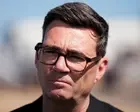
So heaven knows what Starmer is thinking this morning as he hears his successor, Andy Burnham, announce his own plan for “a fundamental change to the education system” that sounds – well, very similar.
Here is our overnight story by Peter Walker and Josh Halliday.
Here is an extract from an article Burnham has written for the Times explaining his thinking. He says:
For too long, we’ve built an education system around the idea that there’s only one route to success: university, a degree, a desk. That opened doors for millions of people, and rightly so. But somewhere along the way, we sent another message too: that if your ambition was to do something that required more technical skills, somehow you were aiming lower.
I think that was one of the biggest mistakes this country has made. In the age of AI, practical and technical skills haven’t become less valuable — they’ve become more valuable than ever. Britain will need brilliant engineers, electricians and cybersecurity experts more than ever before.
Our job — our national task — is to rebuild those ladders of opportunity, rung by rung, step by step, together.
That’s why today we’re putting technical education back where it belongs — not as a second thought, but as a first choice. From the age of 14, we will be giving kids a new option in school: keeping core maths, English and science, but combining them with a real, hands-on technical education. This will include gaining work experience and creating connections with local employers.
And here is the No 10 news release, running to almost 4,000 words.
Life is not fair, and Starmerites will be wondering why Burnham deserves credit for a “change” story that overlaps quite a lot with a headline announcement from his predecessor. Partly it is because, by last autumn, the public had turned against Starmer; Burnham, by contrast, is getting a hearing. But there is also a key difference in what is being proposed. Burnham is linking the need for better vocational education in schools with his belief in localism, his core political philosophy. In his Times article he says:
These new [technical education] routes won’t be designed by Westminster. They’ll be shaped by the people and places they serve. Working with mayors, local leaders, employers and schools, we’ll identify the industries driving growth in local areas and make sure that local kids have a clear route into them.
It is a devolution policy as much as an education policy.
The government news release on this is so long in part because it contains almost 20 endorsements for the policy, from mayors, business groups, union leaders and others. But one organisation not backing it is the Conservative party. It is saying that Burnham’s plans contradict Labour’s Schools Act, which only became law in April.
Laura Trott, the shadow education secretary, said:
We all want to see better opportunities for young people and a boost to technical education, but this announcement is all over the place. Labour have literally just legislated to strip schools of their freedom to choose what’s best for the pupils they’re teaching, yet now they imply it should be locally tailored. It’s not clear whether or not Labour intends to replace GCSEs, which would be a disaster. The focus should be on the knowledge rich curriculum that has helped the most deprived children.
Here is the agenda for the day.
9.30am: Kemi Badenoch holds a press conference, where she will challenge Burnham to introduce emergency legislation to stop serious offenders being included in the prisoner early release scheme due to start in the autumn.
Morning: Burnham is on a visit in Derbyshire, where he is due to speak to the media.
Noon: Labour’s national executive committee meets, with Bridget Phillipson, appointed last night as the new party chair, attending.
2pm: Lucy Powell, the education secretary, is interviewed by Matt Chorley on Radio 5 Live.
As I explained earlier this month, we are no longer going to have comments open below the line on this blog. From today, if you want to contact me, or anyone else writing the blog when I am not here, please email politics.live@theguardian.com. You can use this to flag up corrections, comments for publication, questions or complaints. There is a longer post here about how we hope this will work.