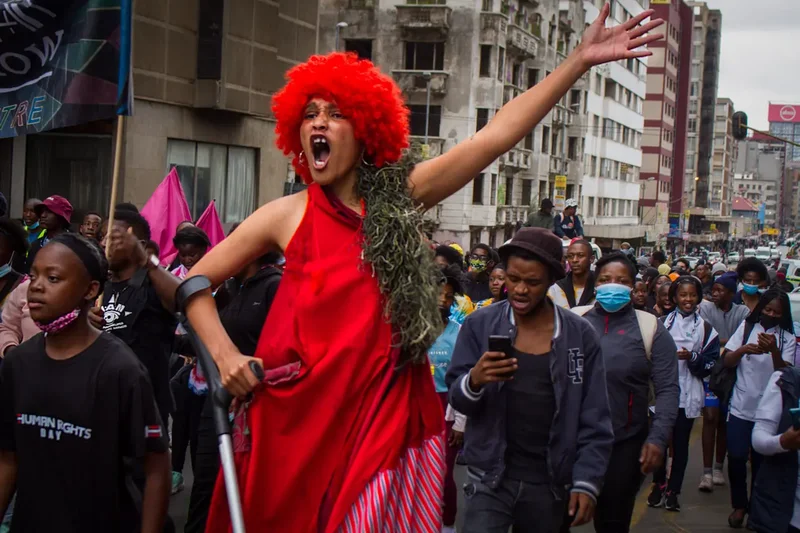
As debates around who belongs in South Africa's cities continue, one Johannesburg arts project is responding not with slogans but with song, costume and collective imagination.
On 8 August, more than 350 children and young people will fill Hillbrow's streets dressed as birds for the seventh edition of Hey Hillbrow! Let's Dlala!. The annual public procession has quietly become one of Johannesburg's most enduring examples of art spilling beyond gallery walls and into everyday urban life.
Presented by The Windybrow Arts Centre and Shade, the theme of this year's procession is “Arise: and coincides with the eve of the 70th anniversary of the 1956 Women's March. Rather than commemorating the historic march directly, the project draws a connection between the women's fight against pass laws and contemporary ideas of movement, belonging and freedom.
Birds become the central metaphor. They migrate without regard for borders, carry messages across distances and occupy spaces that people often cannot. Participants have translated the ideas into handmade costumes, choreography and music that will move through Hillbrow's streets as a living artwork.
The Grey Go-away-bird, or Lourie, provides this year's symbolic anchor. Best known for its unmistakable warning call, the bird is reimagined as a reminder of the power of collective voices to protect, mobilise and challenge. In Hillbrow, the warning becomes something more hopeful: an invitation to imagine a city shaped by cooperation rather than fear.
The parade is the culmination of a two-week residency at The Windybrow Arts Centre, where young participants have worked alongside artists in theatre, textile design, music, street art and movement. The process is as significant as the performance, creating opportunities for children to co-design the work while learning creative skills from established practitioners.
Since its launch in 2017, Hey Hillbrow! Let's Dlala! has sought to reimagine public space through play and performance. In a neighbourhood too often reduced to narratives of crime and decline, the procession offers a different picture of Hillbrow — one defined by collaboration, creativity and the people who continue to shape its future.