The Cauvery Water Regulation Committee (CWRC), which met in Delhi on Tuesday (July 28, 2026), has directed Karnataka to release 4 tmcft of water to Tamil Nadu at a rate of 3,500 cusecs a day for 15 days.
Expressing concern over the CWRC order that has come when the State is gripped by serious drought, Karnataka Water Resources Minister K. Ramalinga Reddy has said the State would examine the possibility of filing an appeal before the Cauvery Water Management Authority (CWMA), which is the apex body that monitors implementation of Cauvery water release, against the CWRC order.
He said he would take a final call on the issue after discussing with Chief Minister D.K. Shivakumar and officials concerned. He maintained that current storage in the four reservoirs of Karnataka’s Cauvery basin was sufficient to take care of only drinking water requirements.
The official data shows that as on Monday (July 27, 2026), the outflow from Karnataka’s KRS, from where water is being released to Tamil Nadu, had stood at 1,743 cusecs.
The Chief Minister had convened a meeting of the State MPs on July 17 in Delhi to seek their co-operation in getting drought assistance from the Centre among other things. Both the Chief Minister and Water Resources Minister are still in Delhi.
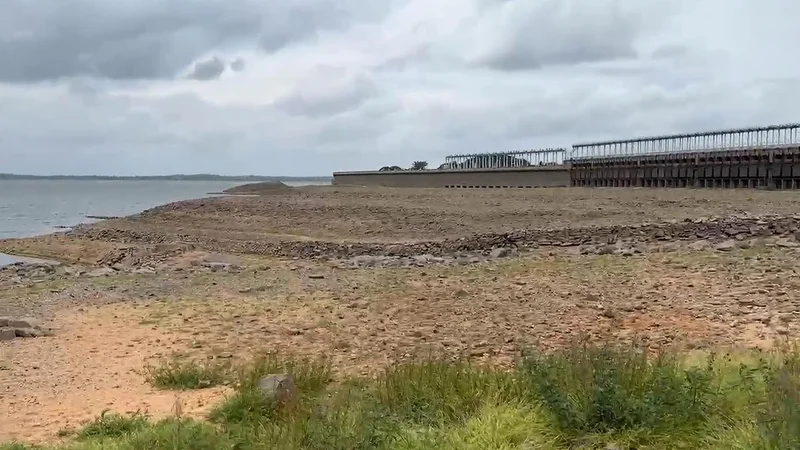
Karnataka relies heavily on the Southwest monsoon as it accounts for about 75% of the State’s annual rainfall. But this time, the southwest monsoon has turned out to be weak as the State is facing a rainfall deficit of about 35%. The Kodagu region that forms the biggest catchment area for the Cauvery which takes its origin in this hilly district, too, is facing a rainfall shortage of 45%.
As per the official data, the cumulative storage in all the four reservoirs of Karnataka’s Cauvery basin accounted for only 54% of their full capacity. As against the full capacity of 114.57 tmcft, the present storage accounted for only 62.31 tmcft. The storage had stood at 110.29 tmcft during the corresponding period last year. The storage in KRS is particularly a cause of concern as it is only at 34% of its capacity.
Earlier, the Cauvery Water Management Authority (CWMA) that had met on July 22 had directed both Karnataka and Tamil Nadu to strictly confine use of their storage to drinking water purposes in the wake of prevailing dry conditions. The CWMA, which is the apex body that monitors implementation of Cauvery water release to lower riparian States as per the Supreme Court’s verdict, had observed that the Cauvery basin is gripped by distress and warned against using Cauvery water for non-drinking purposes.
The CWRC, which assists the CWMA in monitoring the storage, releases and other issues, reviewed the situation on July 28 and ordered Karnataka to ensure release of 3,500 cusecs of water a day for 15 days.
Karnataka has already told farmers in the command areas of Cauvery basin that it would not release water for irrigation purpose.
Published - July 28, 2026 03:32 pm IST