Guyana Gold Record Pace Fuels US$263M Budget Push
Guyana · Business
Guyana gold record declarations in the first half of 2026 reached nearly 240,000 ounces, the strongest half-year performance since roughly 2016, as the South American nation simultaneously pushed a US$263 million supplementary budget through parliament and enacted a law to create a state development bank.
Mining declarations surge to decade-best pace
Guyana’s gold declarations climbed to about 233,000 ounces by the end of June, according to Natural Resources Minister Vickram Bharrat. Other official sources described the total as nearly 240,000 ounces, confirming the best half-year result in roughly ten years.
The government has set a full-year 2026 target of 510,450 ounces. The first-half pace puts the country on track to meet or exceed that goal, barring weather disruptions or operational setbacks in the second half.
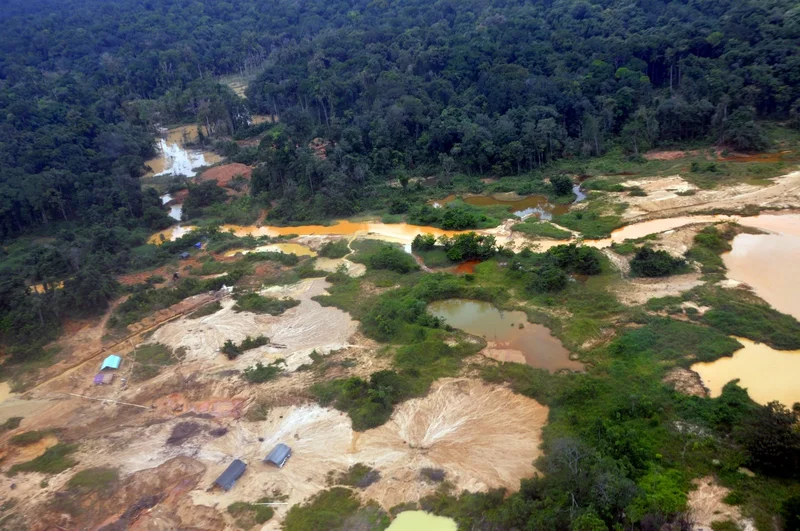
The surge reflects higher output from both small- and medium-scale miners and large international operators. Guyana, located on South America’s northern coast, has long relied on gold as a pillar of its extractive economy alongside oil and bauxite.
Supplementary budget channels oil wealth
Lawmakers approved a G$55 billion supplementary budget, equivalent to approximately US$263 million at the prevailing exchange range of G$208-210 per US$1. The figure is denominated in Guyana dollars, not US dollars, a distinction often blurred in shorthand reporting.
The extra spending is largely funded by oil revenues flowing from the ExxonMobil-led Stabroek block, where production continues to expand. Guyana’s economy has grown at double-digit rates since crude exports began in 2019, giving the government fiscal room that is rare in the Caribbean and South America.
The supplementary allocation will be directed toward infrastructure, health, education, and energy projects. Officials argue the spending is essential to spread hydrocarbon wealth beyond the capital, Georgetown, to hinterland regions where gold and other minerals are mined.
State development bank becomes law
Parliament also passed legislation establishing a new state development bank. The institution is designed to provide financing for development projects and broader economic activity, with a specific mandate to serve sectors and borrowers that struggle to access conventional commercial credit.
Small miners, farmers, and young entrepreneurs are expected to be among the primary beneficiaries. Commercial banks in Guyana have traditionally been cautious lenders, often requiring collateral that small-scale operators cannot provide.
The development bank law is part of a wider push by the Irfaan Ali administration to diversify the economy. While oil dominates export earnings, gold mining remains a major employer, particularly in interior communities such as Mahdia, Bartica, and Port Kaituma.
Gold sector faces familiar headwinds
Despite the record declarations, the gold industry continues to confront smuggling, under-declaration, and environmental scrutiny. Authorities have stepped up enforcement in recent years, but the informal cross-border trade with neighbouring Brazil and Venezuela remains difficult to quantify.
Mercury use in artisanal mining also draws criticism from environmental groups and indigenous communities. The government has promised tighter regulations and alternative processing techniques, though implementation has been slow.
Global gold prices have provided a tailwind, hovering above US$2,300 per ounce for much of the first half. High prices incentivise production but can also fuel illegal activity, a dynamic familiar across the Guiana Shield region.
Investor takeaway: momentum with caveats
For foreign investors and expatriates tracking Guyana, the twin developments signal a government confident in its revenue base and willing to deploy it. The gold record reinforces the country’s position as a significant non-oil exporter, while the development bank offers a new channel for public-private partnerships.
However, currency clarity remains essential when reading Guyana budget figures. A “$55bn” headline without the “G” prefix can mislead international audiences, as the sum in US dollar terms is roughly US$263 million, not US$55 billion.
The second half of 2026 will test whether the gold sector can sustain its pace. Heavy rains, which often disrupt alluvial mining between July and September, are a perennial risk. Still, the H1 data suggests Guyana’s golden run has further to go.
Frequently Asked Questions
How much gold did Guyana declare in the first half of 2026?
Natural Resources Minister Vickram Bharrat reported about 233,000 ounces, while other official sources described the total as nearly 240,000 ounces by the end of June. It was the best half-year performance since roughly 2016.
What is the value of Guyana’s G$55 billion supplementary budget in US dollars?
At an exchange rate of roughly G$208-210 per US$1, the G$55 billion supplementary budget is equivalent to approximately US$263 million. The figure is in Guyana dollars, not US dollars.
What is the purpose of Guyana’s new state development bank?
The bank was created by law to provide financing for development projects and broader economic activity. It specifically targets sectors and borrowers that may have difficulty accessing conventional commercial credit, such as small miners and farmers.
Sources & Further Reading
Kaieteur News · Guyana Chronicle