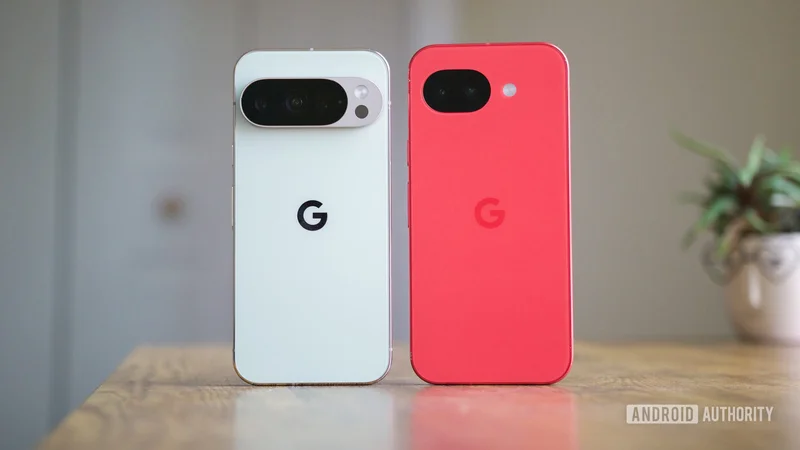
Google’s Pixel phone pricing is about to take a turn for the worse
Jul 28, 2026 — 6:30 AM ET
There’s no doubt that 2026 has been a challenging year for smartphones. Component price increases forced companies into awkward compromises, making them choose between keeping phones relatively unchanged year over year or raising prices for modest upgrades.
Samsung has already had to battle this twice this year, raising the prices of the Galaxy S26 series and — most recently — its foldable models. Motorola’s entire lineup faced price increases, the most aggressive being the Razr Ultra. It kept most of the same spec sheet from last year with a $200 bump.
Google hasn’t been immune to the pressures. The Pixel 10a isn’t significantly different from its predecessor, but Google kept the price the same — a choice I appreciated. Unfortunately, recent interviews and rumors suggest the Pixel 11 won’t have the same luck, and Google’s potential price increases carry with them other unpleasant realities.
Would a price increase scare you away from Pixels?
Pixel 11 price hikes are all but confirmed
9to5Google’s recent interview with Google Vice President of Devices and Services, Shakil Barkat, may be unsettling to Pixel fans, but it shouldn’t be surprising. Pixel 11 price hikes have been rumored for months, and they would follow the trend we’ve seen from other manufacturers. No increase is easy, but Google will be hit particularly hard if the Pixel 11 comes in at the same price as the Galaxy S26.
Google’s done a wonderful job building value in its phones differently from other manufacturers. I’m not someone who hates on Tensor chipsets all day, but it’s hard to argue that they provide the same performance as flagship Qualcomm SoCs. For a little less money, I didn’t mind that, especially since Google’s software experience has been excellent. I also enjoy all the Pixel extras I get, and Google’s low-light photography still outshines the competition.
However, for the same price as its competitors, the Pixel 11’s expectations will be higher — and rightfully so. It’s going to be more difficult to convince buyers to pay more for what is perceived as less, no matter how fantastic the Pixel 11’s user experience is.
The Pixel 11 Pro might be in trouble
Even though I knew the Pixel 11 was getting more expensive, I hoped Google wouldn’t do anything else drastic to the phones. The Pro models have carried 16GB of RAM for the last couple of years. Google loved telling us that it was to ensure Gemini features ran smoothly and to provide some level of future-proofing against updates. Unfortunately, the latest rumors have Google cutting the Pixel 11 Pro to 12GB, even as it increases the price.
That’s disappointing on a few levels, even if Google claims it’s optimizing the latest Gemini models to run on 12GB of RAM. I hate the optics of Google stepping back, and it limits the overhead potential for the future, which has been a selling point.
The decision would also force us back into an uncomfortable position between the Pixel 11 Pro and Pixel 11 Pro XL models.
I appreciated it when Google matched the specs on the Pixel 10 Pro and Pixel 10 Pro XL models. Buyers didn’t have to pay more unnecessarily, almost being penalized for not needing (or wanting) a phone with such a large display. It would be incredibly disappointing for us to reverse that decision, especially given that the devices are even more expensive. I don’t want to be forced into a 6.8-inch display for hundreds of dollars more just to get 16GB of RAM.
The Pixel 10a will be the most tragic
Unfortunately, speculation about price increases didn’t end with Google’s latest flagship releases. Barkat mentioned that “in-market devices” could also see hikes. Since the Pixel 10 series will be replaced by the Pixel 11, only the Pixel 10a remains as a current “in-market” device.
A Pixel 10a price increase would be devastating. I hoped at the beginning of the year that by keeping the spec sheet relatively unchanged, Google could be more aggressive with sales throughout the year.
That did play out for a while. June’s Amazon Prime Day saw some excellent Pixel 10a sales, bringing the price down to $400. If Google pushes the Pixel 10a to $600, it results in a more awkward conversation. The Pixel 10a is currently my favorite pound-for-pound midrange smartphone, but as prices approach flagship levels, more phones enter the mix.
In addition, it makes the minor improvements in the Pixel 10a feel insulting. I could live with a better modem and durability enhancements for the same price as last year — especially after seeing what Samsung and Motorola have done. However, a significant price bump mid-cycle with not much to show for it isn’t what the Pixel 10a needs.
There aren’t many right answers for Google
Google doesn’t have many options that make sense for the Pixel 11. The Tensor G6 will be a huge key to the company’s success. If Google can deliver a custom chipset that rivals the power and performance we’re seeing from the Snapdragon 8 Elite Gen 5, any price increases become less devastating.
However, that’s a huge ask, and Google’s Tensor track record hasn’t been spotless. 2026 is an awful year for smartphone buyers, and it’s about to get a little worse.