- See more Daily Mail on Google - save us as a Preferred Source
Bill Oddie wanted a completely non-religious service and his ashes scattered at his favourite spot in London, where he would sit for hours listening to birdsong.
The comedian-turned-ornithologist died aged 85 yesterday, but he had long planned his own funeral.
Bill spoke to journalist Rob McGibbon in 2012 for his Daily Mail column, The Definite Article.
Discussing his plans for after his death, Mr Oddie said: 'I'm an atheist, so I will have a humanist funeral. I want to come in to Nothing Compares 2 U by Prince and disappear to Cocktails For Two by Spike Jones.'
He added: 'My ashes can be scattered on Hampstead Heath. I love it there', adding his home nearby was his most treasured possession because 'every room is full of memories.'
Bill said that when he died he wanted to be remembered as someone 'who told the truth' and 'made good television programmes that touched people'.
There has been a huge outpouring of grief from fans and colleagues following the announcement of his death yesterday - many of whom said that his TV career had marked their lives.
His close friend Eric Idle revealed he had been 'sick for some time'.
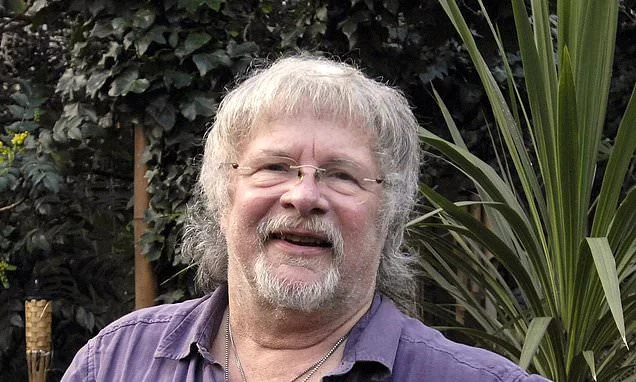
Bill Oddie in the garden of his home in Hampstead - close to the heath where he listened to birds and wanted his ashes spread
The wildlife presenter, conservationist and comedian first found fame as a member of comedy trio The Goodies alongside Tim Brooke-Taylor and Graeme Garden.
He also wrote jokes and music for a succession of hit shows, including satirical TV programme That Was The Week That Was.
Later in life, Mr Oddie won over a new generation of fans through his wildlife television work, while campaigning on environmental issues and raising awareness of mental health, drawing on his own experiences of depression and bipolar disorder.
Oddie, who was born in Rochdale and raised in Birmingham, was beloved by viewers, particularly for his work on BBC nature programmes Springwatch and Autumnwatch, Birding With Bill Oddie and Bill Oddie Goes Wild.
The last photograph of Britain's 'best-loved birder' was posted on Instagram by his youngest child, Rosie, in a birthday tribute to her partner in September 2020. A smiling Bill is seen raising a cup beside his wife Laura and daughter Rosie.
That same year, he almost died after being poisoned by lithium, which he took to manage the mental health problems that led to several admissions to psychiatric hospitals, including after he was replaced on Springwatch and Autumnwatch by Chris Packham in 2008.
Being dropped from the shows pained him so deeply that he could no longer bear to watch a programme he had once loved. He said the BBC's decision, combined with his mother being institutionalised for much of his youth, meant: 'I've lost my family twice.'
Bill Oddie with his wife Laura and daughter Rosie in the last known picture of him in 2020
The Goodies, from left, Tim Brooke-Taylor, Graeme Garden and Bill Oddie, pictured in 1973, at the height of their fame
With Springwatch and Autumnwatch co-star Kate Humble. Being dropped from the shows in 2009, pained him so much he could no longer bear to watch the programmes he loved
The broadcaster's final TV appearance was on Channel 5's Celebrity Britain By Barge in 2020, alongside record producer Pete Waterman and broadcasters Anne Diamond and Jennie Bond.
In paying tribute to the wildlife enthusiast, Chris Packham said: 'A renegade polymath with binoculars and a beard, Bill was invariably funny and occasionally furious.
'He loved birds and loathed those who harmed them . He was delightfully unpredictable, sparky, smart and at times a bit spiky. Critically, he really knew his stuff, and his passion was true – he didn’t just pick up his binoculars on telly, he went birding whenever he could.
'So he was genuine and that’s why we loved him. He never needed a script, and took scant interest in any he was given. He didn’t like rules and often neglected to play by them. This may have frustrated the serious and the worthy, but it always amused his audience – he was an utter joy to be with.
'I recall finding a black woodpecker in a damp Dutch park with him once. He gazed at it intently, sighed, put down his bins[oculars], turned to me and just smiled. A massive grin. No words, just a beautiful childlike bliss.
'That says all you need to know about Bill Oddie. Sadly, we’ve not only lost a goodie, we’ve lost one of the besties.
Oddie is survived by his second wife, Laura Beaumont-Giles, and their musician daughter Rosie, as well as his two daughters, Bonnie, a choreographer, and Kate, an actress, from his first marriage to the late jazz singer Jean Hart.
Kate, going by the surname Hardie, a blend of her mother's surname and Oddie, starred in The Krays alongside Gary and Martin Kemp and in Mona Lisa with Bob Hoskins.
Oddie's agent David Foster said: 'Bill was a multi-talented celebrity – wildlife presenter, broadcaster, comedian, writer, songwriter, musician and conservationist. Yet it was never fame that he valued.
'Instead he encouraged us to respect and protect the environment.
'He taught us the wonder of it. He protested, lobbied and campaigned for it.
'He led the way and people of all ages and backgrounds responded to his call. And such a massive contribution to conservation will never be forgotten.
'As Bill's agent, I witnessed close hand his intelligence and wit. He was my friend and it was an honour and a privilege to represent him for so many years. I will miss him terribly.
'My thoughts and love are with Bill's wife, Laura, and his daughters Bonnie, Kate and Rosie.'
The BBC said: 'We are saddened to hear the news about the death of Bill Oddie. Bill had a long association with the BBC and was a much-loved comedian, naturalist and broadcaster.
'His career spanned generations, from being a member of comedy trio The Goodies right through to embracing his passion for the natural world and establishing himself as one of the UK's best known wildlife presenters.
'Our thoughts are with his family and friends at this time.'
A birdwatcher since childhood, Oddie was a respected ornithologist who became a popular broadcaster, renowned for his passion for nature and his gravelly yet gentle Brummie accent
He was a council member of the RSPB, the Wildfowl and Wetlands Trust and The Worldwide Fund for Nature. He was also president of The Northumberland Wildlife Trust and represented many other nature organisations.
In addition, he wrote a number of books on birds and other wildlife topics.
His comedy career began with the Cambridge Footlights, when he started writing for shows including for David Frost's satirical BBC TV show That Was The Week That Was.
He went on to write and appear on numerous programmes, including the BBC Radio's I'm Sorry I'll Read That Again, which featured many of his comic songs.
He first found fame as a member of The Goodies and the trio earned household name status in Australia and New Zealand, as the television comedy show attracted millions of viewers in its heyday.
His songs led The Goodies to several major chart hits, most notably The Funky Gibbon.
He continued to work with his fellow Goodies on programmes including animated children's show Bananaman, before turning his attention to nature shows.
In a 1964 publicity shot for Man of the Year, an ATV television revue series broadcast to mark William Shakespeare's 400th birthday
The Goodies not only had a popular TV series, they also had several major chart hits, most notably The Funky Gibbon, which was written by Bill Oddie
Mr Oddie's breakthrough came in comedy but he moved into wildlife TV, his great passion
Mr Oddie said in 2020 he was 'knocking on Heaven's door' for almost a year after getting lithium poisoning
Oddie struggled with mental health issues throughout his life and spoke openly about suffering from crippling depression. He was admitted to a psychiatric hospital in 2009 after being dropped from the BBC show Springwatch, of which he was one of the original presenters.
He was finally diagnosed with bipolar disorder, a condition where depressive periods alternate with manic activity.
Speaking in 2014, he said he still felt a lingering sadness that his days on Springwatch were cut short.
He said: 'I very much miss it, but when I do see it, it brings back many happy memories and I like to think I contributed to its success.
'It's still so well loved and helps encourage people to enjoy the natural world. That's all to the good because I fear so many people wear earphones for their phones and music players that increasingly they miss out on everyday joys like birdsong.
'My plea to people would be to "go naked" occasionally – take off those earpieces so you hear nature and, of course, birdsong. You may not realise how precious it is until it's gone.'
In 2020, he almost died after being poisoned by lithium he took to treat his bipolar and stabilise his mood.
In September that year he said he had been 'very ill most of this summer. Lithium toxicity. Almost fatal! I am still here but very confused about most things! But then aren't many of us. IT fuddles my brain. Confusion. Will I return? I Really dunno. I do hope so. Please wish me luck. XX.'
He had tried to take his own life twice and said that his depression was genetic, passed down on his mother's side.
In 2014, he said he was afflicted with another health issue – particularly difficult for a birder – he was going deaf. His eyesight had also started to deteriorate in his 50s.
'I first noticed it when I was out on Hampstead Heath bird watching,' he said.
'I was stood with a friend who said a meadow pipit was going over – it makes a soft "seep" sound – but I couldn't hear it.
'My friend said the call was quite loud and I suddenly realised that my hearing had gone. I hadn't suspected it at all before then, but I went home and tested it by playing other high pitched bird call recordings and I couldn't hear them either.'
Describing his mental health he said: 'I've been fortunate enough that I've been absolutely fine for years now and have had a good stretch.
He added: 'It's undeniable that being outdoors and having an interest in the outdoors is good for mental health in general.
'There's no doubt that being involved with nature is good for you.'