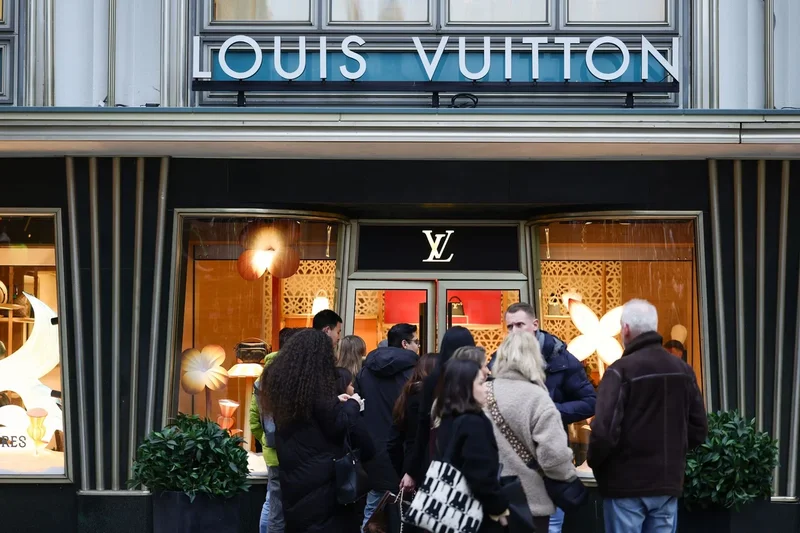
Luxury giant LVMH beat expectations in the second quarter as wealthy Americans kept splurging on Louis Vuitton handbags, Tiffany jewelry and Dior fashion despite global economic uncertainty.
The French luxury powerhouse behind Louis Vuitton, Dior, Tiffany & Co., Bulgari and Moët & Chandon said Tuesday that second-quarter sales rose 3% on an organic basis to €19.5 billion ($22.2 billion), driven largely by booming demand in the United States.
Sales in the U.S. jumped 6%, doubling the pace of the previous quarter, as LVMH said a wave of new wealth fueled by the artificial intelligence and technology boom continued to boost spending on high-end luxury goods.
"Wealth is created, consumer appetite for luxury and for our products in particular is strong," Chief Financial Officer Cécile Cabanis told analysts.
The strongest growth came from LVMH's watches and jewelry division, where sales climbed 11%. Tiffany and Bulgari posted mid-teen gains as wealthy shoppers continued snapping up expensive jewelry despite broader economic headwinds.
LVMH's key fashion and leather goods division, home to Louis Vuitton and Dior, returned to growth for the first time in two years, posting a 1% increase. The company said strong U.S. demand offset weaker spending in Europe, where tourism slowed after the Iran war dampened travel.
Executives said the conflict in the Middle East shaved about one percentage point off growth in the fashion business.
Dior also showed fresh momentum under new creative director Jonathan Anderson, who recently made headlines after designing Taylor Swift's wedding dress.
The results offer fresh evidence that the world's wealthiest consumers continue to spend freely even as many households cut back on discretionary purchases.
Still, investors questioned whether the modest growth is enough to signal a full recovery for the roughly $400 billion luxury industry after two difficult years.
"We wonder if this could be good enough to sustain the share price and get investors to stand up and pay attention," Bernstein analysts said.
LVMH's U.S.-listed shares fell about 1.6% following the results, while the company's Paris-listed stock has dropped roughly 28% this year, making it one of Europe's worst-performing large-cap companies.
RBC analysts struck a more optimistic tone, calling the results "reassuring" because of stronger-than-expected profit margins, while cautioning that tougher comparisons later this year could make it harder to maintain the momentum.
For the first six months of the year, LVMH reported organic sales growth of 2%. Operating profit fell 4% to €8.7 billion, although its operating margin remained steady at 22.5%.
The earnings come as investors await results from rivals Kering and Hermès later this week, which will offer a clearer picture of whether the luxury sector's long-awaited recovery is finally gaining momentum.