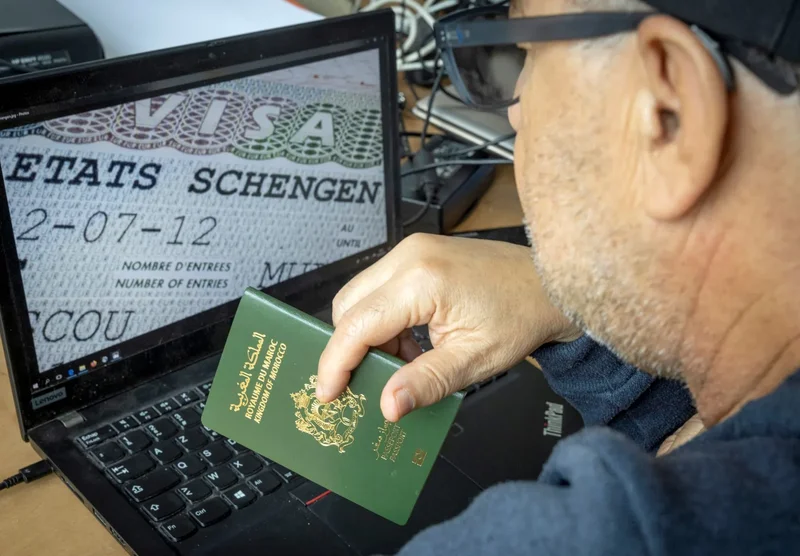
The European Commission defines a Schengen visa as an entry permit for certain non-EU nationals to make a short, temporary visit of up to 90 days in any 180-day period to a country in the Schengen area.
The Schengen area encompasses 26 European countries, which includes Spain. The others are Austria, Belgium, the Czech Republic, Denmark, Estonia, Finland, France, Germany, Greece, Hungary, Iceland, Italy, Latvia, Liechtenstein, Lithuania, Luxembourg, Malta, the Netherlands, Norway, Poland, Portugal, Slovakia, Slovenia, Sweden and Switzerland.
Who needs a Schengen visa?
You may or may not need a Schengen visa to visit Spain. It all depends on what nationality you have.
Countries whose citizens need a Schengen visa are as follows: Afghanistan, Algeria, Angola, Armenia, Azerbaijan, Bahrain, Bangladesh, Belarus, Belize, Benin, Bhutan, Bolivia, Botswana, Burkina Faso, Burma/Myanmar, Burundi, Cambodia, Cameroon, Cape Verde, Central African Republic, Chad, China, Comoros, Congo, Cote D'Ivoire, Cuba, Democratic Republic of Congo, Djibouti, Dominican Republic, Ecuador, Egypt, Equatorial Guinea, Eritrea, Eswatini, Ethiopia, Fiji, Gabon, Gambia, Ghana, Guinea, Guinea-Bissau, Guyana, Haiti, India, Indonesia, Iran, Iraq, Jamaica, Jordan, Kazakhstan, Kenya, Kuwait, Kyrgyzstan, Laos, Lebanon, Lesotho, Liberia, Libya, Madagascar, Malawi, Maldives, Mali, Mauritania, Mongolia, Morocco, Mozambique, Namibia, Nauru, Nepal, Niger, Nigeria, North Korea, Oman, Pakistan, Papua New Guinea, Philippines, Qatar, Russia, Rwanda, Sao Tome and Principe, Saudi Arabia, Senegal, Sierra Leone, Somalia, South Africa, South Sudan, Sri Lanka, Sudan, Suriname, Syria, Tajikistan, Tanzania, Thailand, Togo, Tunisia, Turkey, Turkmenistan, Uganda, Uzbekistan, Vanuatu1, Vietnam, Yemen, Zambia and Zimbabwe.
Obviously if you're from one of these countries and already have residency in an EU country, then you will not need a Schengen visa to enter Spain.
Places whose citizens are exempt from getting the visa include the US, the UK, Uruguay, Mexico, New Zealand, Japan, Canada and Australia. For a full list of the countries, find out here.
Generally it's your nationality that determines whether you need the visa and not your residency, unless you're living in the EU as above. For example, if you have residency in the UK, but you're from Ghana, you will still need a Schengen visa to visit Spain.
**READ ALSO: Which nationalities get the most EU Blue Cards and where do they go? **
Types of Schengen visas and how to apply
There are three different types of Schengen Visas – a single entry visa (valid for one trip), a multiple entry visa (for several trips during its validity) and an airport transit visa if you’re just changing planes in one of these Schengen countries, such as Spain.
If you need a visa, generally you must apply at a consulate where you are legally resident.
If you are visiting Spain, you will apply at the Spanish consulate in your city or the one nearest to you.
If you are visiting several different countries in the Schengen area, you will apply at the consulate of the one you are visiting first or the one where you are spending the longest.
**READ ALSO: Spain's intense summer heatwaves deter tourists from returning **
How much does a Schengen visa cost?
Generally, the costs are as follows:
- €90 for adults
- €45 for children aged 6-12
- €35 for applicants from Armenia, Azerbaijan, and Belarus
- €67.50 for applicants from Cape Verde
What do I need to apply?
- A valid passport, valid for at least 3 months after the date of your departure from Spain or the Schengen area.
- A visa application form
- A passport photo
- Medical insurance – The insurance must cover the costs of repatriation for medical reasons or death, as well as for urgent healthcare and/or emergency hospital treatment for the entire stay in Spain and the Schengen area. Coverage must be of at least €30,000 or its equivalent in local currency.
- Supporting documents – These documents must include proof financial means and accommodation during your stay, and evidence of your intention to return to your home country afterwards.
When you submit your application, you fingerprints will be collected.
How much money to I need for a Schengen visa?
It is estimated that you need at least 10 percent of the minimum wage per person per day, with a minimum of 90 percent of the minimum wage regardless of the duration of the trip.
According to official figures from the Spanish Interior Ministry and Ministry of Foreign Affairs, the amounts needed for 2026 are a minimum of €121.10 per person per day and a minimum overall per person of €1,098.90, no matter how long you plan on staying.
This should be able to cover accommodation, food, transport etc.
What do I need to show the border guards upon arrival in Spain?
If approved, you may need to show extra details at the border when entering Spain, not just your visa.
This could include confirmed hotel bookings, an official letter of invitation (carta de invitación) from a host living in Spain, proof of cash or bank cards, itinerary of travel around Spain or purpose of your trip.
READ ALSO - Q&A: What's Spain's invitation letter for visitors and how do I get one?