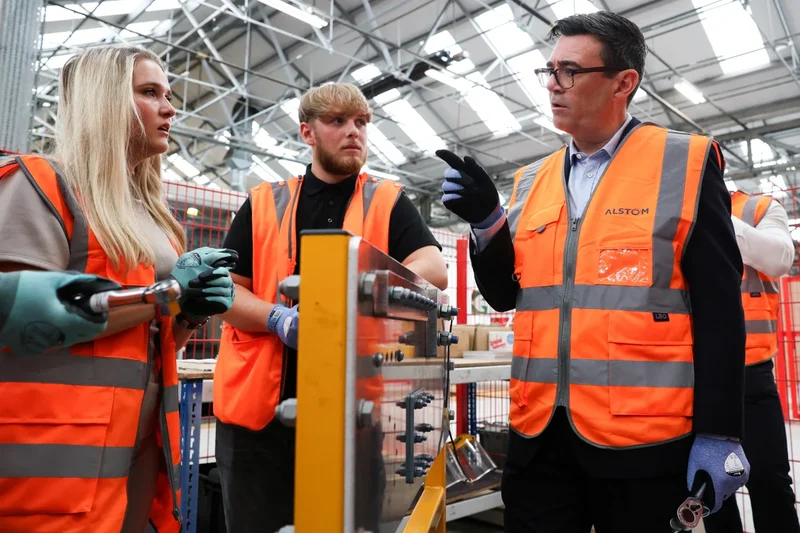
Plans to elevate technical and academic education to an equal standing, championed by Andy Burnham, are destined to "hit the skids" without significant investment in schools, the UK's largest teaching union has cautioned.
The Prime Minister recently unveiled proposals to introduce technical subjects for 14-year-old pupils from September 2028, aiming to combat youth unemployment.
This initiative marks the latest in a series of efforts to achieve parity of esteem between vocational and academic pathways.
Daniel Kebede, general secretary of the National Education Union (NEU), criticised the approach, stating: "Andy Burnham’s first announcement should have been that he will end austerity in education."
“These proposed changes to technical education are welcome, but they will hit the skids unless there is sufficient investment in schools.
“Support and investment for schools, colleges and young people must come first.
“The FE (further education) sector is severely underfunded and the Government have not fully funded teacher pay for next year.
“Where will the teachers, lecturers and physical infrastructure to support these new routes come from without proper funding?”
He said asking schools to keep doing more with less is “not sustainable”.
“This is the approach that cost Keir Starmer and Bridget Phillipson the confidence of the profession,” Mr Kebede added.
School leaders’ union NAHT said schools will need more information about funding.
“This announcement sets out a direction of travel rather than detailed proposals, and schools will need much greater clarity about what it means in practice and over funding,” general secretary Paul Whiteman said.
“It is important that any reforms are developed with the profession, fit alongside wider curriculum and assessment changes, and are realistic about schools’ capacity to build employer partnerships and secure meaningful work experience opportunities.”
General secretary of the Association of School and College Leaders Pepe Di’Iasio called for more detail as he criticised making major education policy announcements in the middle of the summer holidays.
“The Government must work to sensible and achievable timescales before implementing this policy,” he said.
“Bringing local politicians, school and college leaders and employers together is a noble objective, but to do it properly requires time, a national framework to work within, and investment.
“Right now there is little detail about what this will look like in practice.”
The Government has said it will prioritise funding towards high-quality technical education and practical routes into work.
Lee Elliot Major, professor of social mobility at the University of Exeter, said there needs to be a wider culture change around how technical routes are valued.
He told the Press Association: “The real test isn’t whether ministers say technical education has equal status.
“It’s whether schools, employers and universities behave as though it does.
“As long as league tables, parental expectations and recruitment practices continue to reward one narrow academic pathway above all others, parity will remain more aspiration than reality.
“For decades we’ve told young people that vocational routes are equal while quietly signalling that the ‘best’ students should still choose the academic route.
“Until we challenge that hierarchy, technical education will continue to be seen as a second choice.”
A series of governments have over decades pledged achieving parity of esteem between technical and academic routes, from General National Vocational Qualifications under Tony Blair’s premiership to T-Levels under Theresa May and proposed V-levels under Sir Keir Starmer.