Havana’s Grand Theatres Trace a Turbulent Scenic History
Cultural Heritage & Urban Development
Havana’s scenic history is etched into its stages and cinema screens, a journey that begins in colonial plazas and stretches to modernist Miramar, revealing how culture, power, and money shaped the city’s built environment.
A Stage Set in the 16th Century
Cubans have gathered for theatrical performances since at least the 1570s. City council minutes from the period record plays tied to Corpus Christi and saints’ day festivals, making performance a civic ritual long before a dedicated venue existed.
The first formal theatre, the Coliseo—later called Teatro Principal—opened in 1775. It marked the beginning of an institutional relationship between Havana’s urban development and its cultural ambitions, a pattern that would accelerate dramatically in the next century.
The Tacón: Latin America’s Grandest Stage
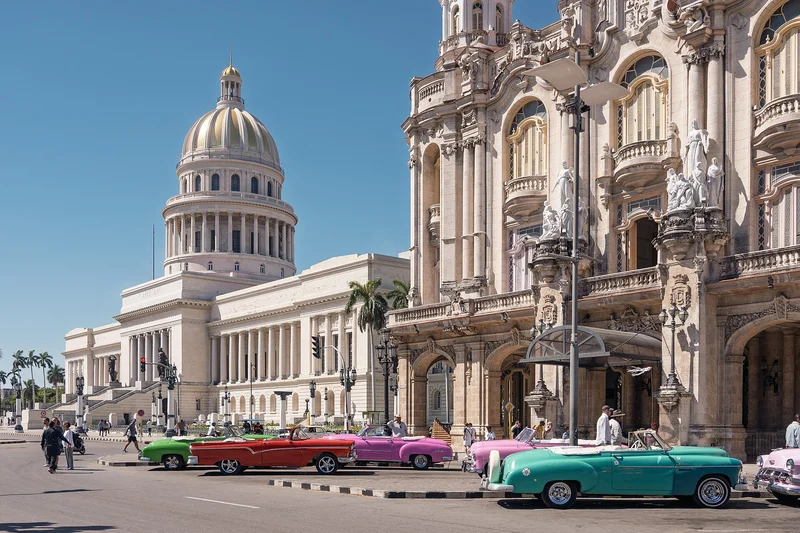
The anchor of Havana’s scenic history is the building now known as the Alicia Alonso Grand Theater. It began as the Teatro Tacón, inaugurated on 15 April 1838 under Captain General Don Miguel Tacón, and was immediately recognised as the largest and most luxurious theatre in Latin America.
The venue occupied a prime block bounded by Paseo del Prado and nearby streets, facing what is now Parque Central. Its stages hosted elite European artists such as Enrico Caruso and Sarah Bernhardt, cementing Havana’s reputation as a major performing-arts capital and a profitable stop on international touring circuits.
In the early 20th century, the Centro Gallego de La Habana acquired the property and demolished the old Tacón structure. The current neo-baroque building, completed between 1914 and 1915 by the firm Purdy & Henderson, rose in its place, adorned with stone and marble allegories of music, theatre, and benevolence.
Alicia Alonso and the Ballet Capital
In 1985, on the initiative of prima ballerina Alicia Alonso, the complex was officially renamed the Gran Teatro de La Habana. Since 2015 it has borne her full name, honouring the dancer who made Cuba a global ballet power.
Today the theatre is home to the National Ballet of Cuba and the main stage of the International Ballet Festival of Havana. The García Lorca auditorium seats about 1,500 spectators and remains one of the most prestigious performance spaces in the Spanish-speaking world, a fact that continues to draw cultural tourists and diplomatic attention to the island.
The Broader Theatrical Landscape of Havana’s Scenic History
A full journey through Havana’s scenic history requires stepping beyond the Gran Teatro. The Martí Theatre, opened as the Teatro Irijoa on 8 June 1884, sits on Calle Zulueta near the Hotel Raquel and holds first-grade heritage protection.
Its neoclassical design and early admission of Black and mixed-race workers made it a progressive force while slavery still existed on the island. The venue became a key home for the Bufo genre, a comic musical theatre form that shaped Cuban popular culture and drew audiences from across the social spectrum.
The Alhambra Theatre, founded on 13 September 1890 at Consulado and Virtudes, was architecturally modest but enormously influential. From 1900 to 1935 it hosted one of the longest continuous theatrical seasons in Cuba, launching new musical genres and elevating comic theatre to what historians describe as invaluable heights.
Cinema Arrives and Reshapes the City
On 24 January 1897, Frenchman Gabriel Veyre brought the cinematograph to Havana and screened the first films at Paseo del Prado #126, right next to the Tacón Theatre. Early shorts with titles like “The Train” and “The Funny Hat” marked the beginning of Cuban film exhibition.
The first purpose-built movie theatre, Actualidades, opened on 18 April 1906 on Monserrate between Neptuno and Ánimas. It is often cited as one of the oldest purpose-built cinemas in Latin America and still stands today, a physical record of the medium’s early commercial promise.
By 1919 Havana had around 42 movie theatres, and Cuba as a whole counted about 300. By the late 1950s, roughly 100 cinemas operated in the capital alone, ranging from small neighbourhood houses to prestige venues like the Yara in Vedado, the Payret on Prado, and the Fausto with its Art Deco remodelling of 1938.
From Pocket Theatres to the Karl Marx
A major shift occurred after 1938, when experimental groups like La Cueva spurred a wave of small “pocket theatres” across Havana. These intimate spaces emphasised modern, experimental work and laid the groundwork for the professionalisation of Cuban theatre.
The post-war period brought a different scale of ambition. The Blanquita theatre, opened in 1949 in Miramar, was originally the largest cinema in Havana with approximately 6,730 seats.
After the 1959 Revolution it was renamed the Karl Marx Theatre and repurposed for live performances and concerts, emblematic of the revolutionary government’s rebranding of cultural spaces.
The expansion of venues from Old Havana into Vedado and Miramar mirrors the city’s spatial growth and changing social geography. For investors and expats, this architectural trail offers a tangible map of where money, power, and audiences moved across a century of urban development.
A Walking Route Through Havana’s Scenic History
Any journey through Havana’s scenic history can begin in Old Havana’s colonial plazas—Plaza de Armas, Plaza de la Catedral, Plaza Vieja—to absorb the city’s 16th-century foundation. From there, a walk along the tree-lined Paseo del Prado passes the Alicia Alonso Grand Theater, the Payret, and the Fausto, facades that speak to late-19th and 20th-century modernity.
The route can extend to Vedado for the Yara cinema, part of the 1945 Warner Radiocentro complex, and onward to Miramar for the Karl Marx. This trajectory traces Havana’s evolution from colonial outpost to cosmopolitan capital, with theatres and cinemas serving as the cultural infrastructure of each era.
Frequently Asked Questions
What is the oldest theatre still standing in Havana?
The Martí Theatre, opened in 1884 as the Teatro Irijoa, is among the oldest functioning theatres in Havana. It holds first-grade heritage protection and continues to operate with modernised technology on Calle Zulueta near Old Havana’s colonial core.
When did cinema first arrive in Havana?
The first film screening in Havana took place on 24 January 1897, when Frenchman Gabriel Veyre showed the cinematograph at Paseo del Prado #126, next to the Tacón Theatre. The first purpose-built cinema, Actualidades, opened in 1906 on Monserrate street.
How many theatres and cinemas did Havana have at its peak?
By the late 1950s, Havana operated around 100 movie theatres, up from 42 in 1919. The city also maintained several major live-performance venues, including the Gran Teatro, Martí, Alhambra, and the 6,730-seat Blanquita, later renamed the Karl Marx Theatre.