France is quite well-prepared for wildfires. The government operates 12 Canadair water bombers and eight Dash firefighting aircraft. In addition, leased aircraft and helicopters are being used.
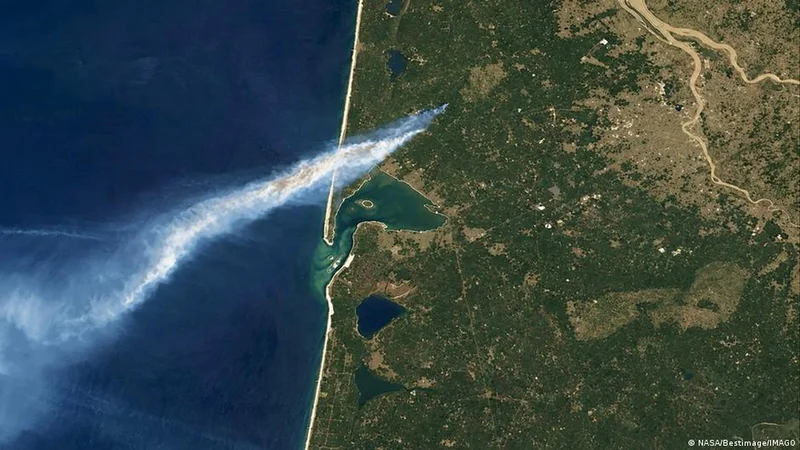
However, the fleet is currently needed simultaneously across many parts of the country. A drought has been intensifying for weeks, and several heat waves with temperatures sometimes exceeding 40 degrees Celsius (104 Fahrenheit) have left the vegetation extremely parched. The devastating wildfire near Bordeaux on the Atlantic coast has already engulfed more than 42,000 hectares of forest and vegetation.
At the same time, fires and follow-up extinguishing efforts in southern and southeastern France are tying up additional emergency personnel. In many places, firefighters are battling the flames in an exhausting, round-the-clock effort. However, strong winds are fanning the fire fronts, making them almost unstoppable, and more than 220,000 people have had to leave their homes and vacation homes so far.
The gravity of the situation is also underscored by the fact that the French government has deployed an A400M military transport aircraft equipped for aerial firefighting for the first time. The A400M can drop around 20 metric tons of fire retardant, more than three times as much as a Canadair.
Nevertheless, the situation is currently so dire that President Emmanuel Macron also activated the EU civil protection mechanism (CPM) and requested assistance from other European countries.
24/7 service at the emergency response coordination centre
To activate the CPM, a country reports its needs to the European Union's emergency response coordination centre, ERCC, in Brussels. ERCC experts assess which of the 37 participating countries can provide assistance.
Initial assistance for France was mobilized within a few hours and has since been significantly expanded. Firefighting aircraft and helicopters from Portugal, Croatia, the Czech Republic, Germany, Turkey, Sweden and Slovakia are supporting France, primarily in the greater Bordeaux area.
At the same time, however, the EU also dispatched six additional firefighting aircraft from Greece, Turkey and Italy to Spain. This means that 13 of the 22 firefighting aircraft available for this summer have already been mobilized for these two countries. The figures also demonstrate how quickly the European reserve can be drawn upon when multiple large-scale wildfires occur simultaneously. According to the European Commission, the resources currently available are therefore likely insufficient to keep pace with the scale of the fires.
Turkey, Norway and others cooperate with EU members
Since the launch of the civil protection mechanism in 2001, the system has been expanded several times. Since 2019, the EU has also launched rescEU, a strategic reserve comprising firefighting aircraft, medical equipment, field hospitals and specialized technology for chemical or nuclear emergencies. In addition to the 27 EU member states, 10 other countries are also participating in the civil protection mechanism, including Norway, Turkey and several Western Balkan states.
For the summer of 2026, Brussels also pre-positioned 777 firefighters from 14 countries in particularly vulnerable regions of France, Spain, Portugal, Italy, Greece and Cyprus. The firefighting aircraft and helicopters of the European reserve are distributed across twelve countries and can be mobilized through the coordination center in Brussels. In addition, firefighting efforts are supported by high-resolution satellite imagery from the EU's Copernicus Earth observation program.
The heart of this cooperation is that one country may be able to spare aircraft or emergency personnel while another urgently needs them. However, the European principle of solidarity reaches its limits in situations where multiple countries are simultaneously affected by extreme weather events, which are likely to occur with increasing frequency due to climate change. In such cases, governments must weigh how much support they can send abroad without jeopardizing their own operational capacity.
Currently, Italy is battling wildfires within its own borders, even though it has not yet activated the mechanism. The European Commission expects an unusually long wildfire season this year. The mechanism was first activated at the end of April and could remain in effect until as late as early November.
Plans for a separate 'EU firefighting fleet'
The current European air reserve for fighting wildfires consists primarily of nationally operated aircraft that are committed as EU resources for a specific period. Meanwhile, the EU is establishing a rescEU fleet — permanently available and fully funded by EU resources — at a cost of approximately €600 million ($682m).
The plan is to acquire twelve new firefighting aircraft, which will be stationed in France, Spain, Portugal, Italy, Greece and Croatia. The aircraft will be operated by the respective member states, but decisions regarding their deployment within the rescEU framework will be made jointly by the European Commission and the participating countries.
Wildfire prevention is key
Europe's wildfire response force can save time in an emergency and relieve the strain on national disaster response teams. However, according to the European Commission, this cannot compensate for a lack of wildfire prevention measures such as the creation of firebreaks and stricter building regulations in high-risk areas.
Furthermore, firefighting aircraft are most effective when fires are detected early. Once fire fronts measuring several kilometers have formed due to heat and strong winds, even additional aircraft from the European Union can often only contain the flames, but not fully extinguish them.
This article was originally published in German.