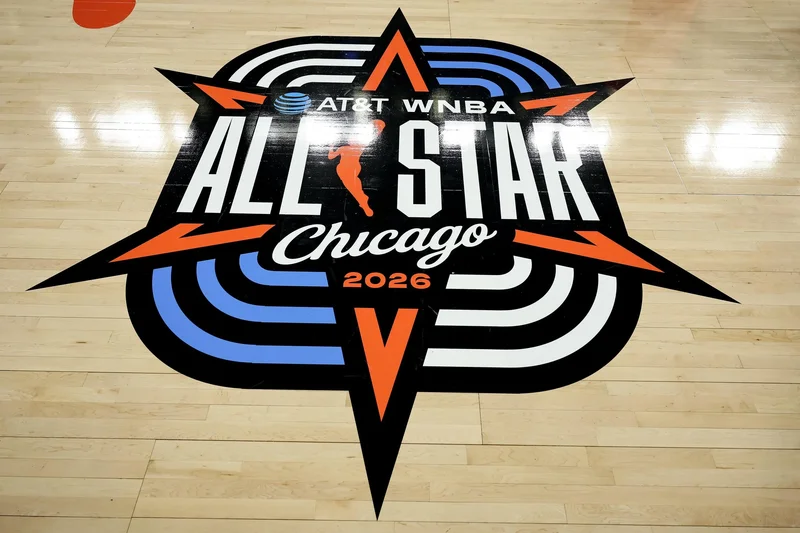
On Saturday night at the United Center in Chicago, 19,783 fans attended the WNBA All-Star game, the largest crowd in event history, surpassing the 2007 record of 19,487 fans. It was also, remarkably, more in attendance than the NBA drew to its own All-Star Game this year, when 15,973 fans attended the NBA event at the Los Angeles Clippers’ Intuit Dome in February. It is the first time in history that the WNBA has outdrawn the NBA at the All-Star Game.
While the Intuit Dome caps out at around 18,000 for basketball and the United Center holds nearly 21,000, even a sold-out Intuit Dome would not have matched Saturday’s crowd in Chicago. And it is worth noting that Chicago didn’t have a single hometown Sky player in the All-Star game.
A Show Worthy Of A Crowd
Team Spoon, which was assembled by Hall of Famer Teresa Weatherspoon in this year's legends-as-general-managers format, beat Cynthia Cooper's Team Coop 129-122. New York Liberty center Jonquel Jones earned MVP honors off the bench with 22 points, 13 rebounds and 8 assists, narrowly missing just the second triple-double in All-Star Game history, and dedicated the award to her late aunt, whose memorial was held that same day.
Caitlin Clark added 17 points which consisted of some deep threes that helped her team amass an early lead. Kelsey Mitchell led all scorers with 28 for Team Coop, while rookie Olivia Miles posted a double-double. And Seattle’s Nneka Ogwumike quietly made history of her own as she passed Maya Moore to become the All-Star Game's all-time leading scorer in her 11th All-Star appearance.
Record Crowd Is No Outlier
If the All-Star attendance record were an isolated data point, some may find the grounds to dismiss it as a one-night event in a big NBA building. Instead, the popularity of the event serves as the hallmark of a first half of a WNBA regular season that has surpassed close to every benchmark the league has collected over the previous decades.
Speaking at the All-Star weekend press conference, Commissioner Cathy Engelbert declared that 2026 is "already the most-watched WNBA season of all time" at the halfway mark. Engelbert noted that the league has reached more than 73 million unique viewers through 117 national broadcasts. For context, according to Engelbert, viewership reached 63 million across all of last season, which was a record at that time as well. So far, twenty-nine WNBA games have averaged more than a million viewers before the All-Star break. Last season, eleven games hit those totals across the entire season. In addition to record viewership, league-wide attendance is also up 16 percent.
Key individual data points:
- The WNBA season opened with 2.49 million viewers for the Wings vs. Fever matchup on ABC, the league's fourth-largest audience of any kind since 2000.
- In mid-July, the Fever vs. Aces matchup drew roughly 2.64 million, and days later the Liberty vs. Fever matchup averaged 2.58 million on CBS with a peak above 3 million.
- Earlier this month, the Toronto Tempo drew 20,996 fans to Montreal's Bell Centre for a game against Dallas, which is a regular-season single-game attendance record.
Investment Leads to Growth
Preferences do not develop in isolation of consistent investment, marketing, promotion, and prime-time broadcast slots. Part of the sustained growth in viewership and attendance across the current WNBA season is due to the continued increases in overall investment and strategic broadcast windows. In its 30th season, the WNBA and its networks have placed a record 216 of its 330 regular-season games on national television, spread across a roster of partners that include: ABC/ESPN, NBC/Peacock, CBS, Prime Video, ION, USA Network and NBA TV.
The league also continues to invest in its most important asset, the players. While the current WNBA season nearly didn’t take place due to a protracted collective bargaining fight that stretched deep into the offseason, the league and the players’ union were able to reach a historic deal featuring major salary increases and a new revenue-sharing structure. Although critics argued that the players may be asking for too much, the players held strong in their bet that the product was worth more than they were being paid. Given that we are now halfway through the most-watched, best-attended season in league history (one that just outdrew the NBA on its own All-Star weekend) it would appear that their bet was absolutely correct.