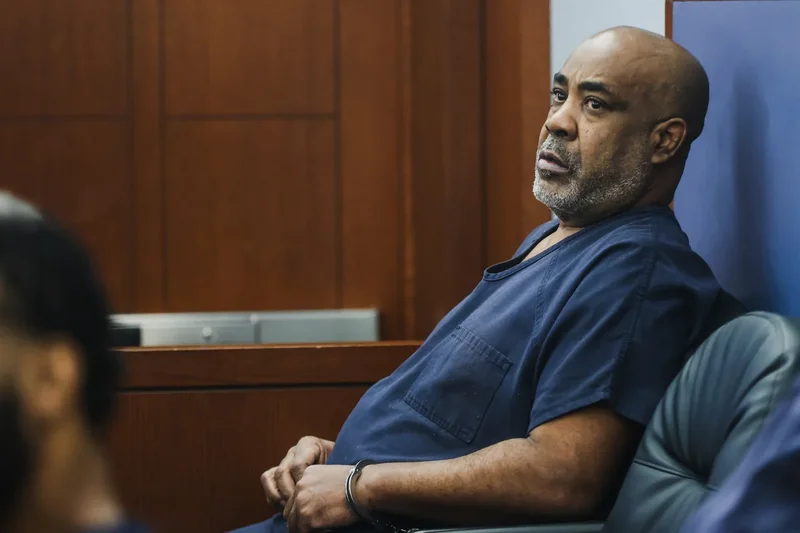
A Nevada judge ruled Tuesday that a 2008 police interview with the man accused of killing Tupac Shakur can be used as evidence in his upcoming trial.
Judge Carli Kierny determined that the recording of Duane “Keffe D” Davis’ interview is admissible in the 63-year-old’s murder trial, which is set to begin Aug. 10.
Davis is charged with murder in connection with Shakur’s 1996 killing and could face life in prison without parole if convicted.
Shakur’s death remains one of the most high-profile unsolved murders in U.S. history. The case remained cold for years until Davis began publicly discussing his alleged involvement, including in a book he co-wrote in which he claimed he was inside the Cadillac and provided the weapon used in the shooting.
Defense attorney Michael Sanft argued that a 2008 interview Davis gave law enforcement was supposed to be confidential and that detectives explicitly told him the interview was not supposed to be used against him.
Prosecutors argued there was no basis to exclude the interview from the trial, which is expected to take about four weeks.
The interview was used in former Los Angeles Police Department Detective Greg Kading’s book Murder Rap: The Untold Story of the Biggie Smalls & Tupac Shakur Murder Investigations. Portions of the recording were also played in documentaries, including the recent documentary Sean Combs: The Reckoning.
Shakur was killed Sept. 7, 1996, in Las Vegas. He and Death Row Records founder Marion “Suge” Knight were sitting at a red light when a white Cadillac pulled up beside them near the Las Vegas Strip, and gunfire erupted. Shakur was shot multiple times and died six days later. Knight survived with minor injuries.
Three others were with Davis in the Cadillac, including his nephew, Orlando “Baby Lane” Anderson, but Davis is the only person still alive. None of the others faced charges in Shakur's killing before they died.
In his memoir, Davis said he obtained a handgun from an associate and tossed it into the back seat of the Cadillac but did not say who fired the fatal shots.
In the 2008 interview, Davis describes how he and his crew saw Shakur that night and pulled up beside them, and said that Anderson “popped them.” Anderson denied involvement in Shakur’s killing at the time, and died two years later in an unrelated gang shooting in Compton, California.