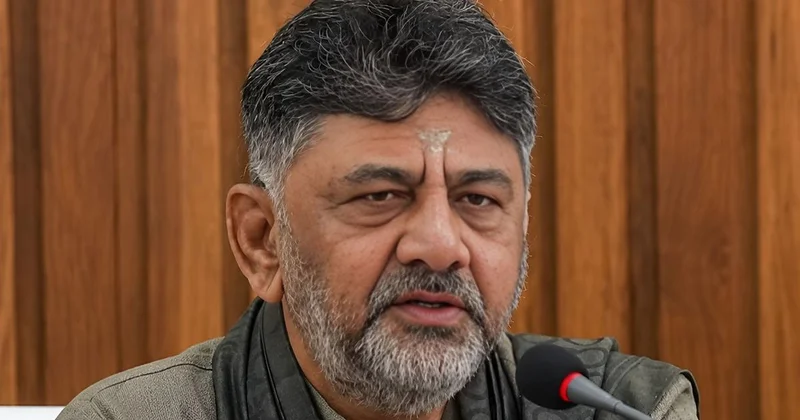
A recurring theme in Karnataka Chief Minister DK Shivakumar’s public statements has been the concept of political will. He has consistently argued that several past governments in Karnataka lacked the determination to tackle the state’s most challenging problems, especially those of Bengaluru.
He has positioned himself as the leader who is finally “fixing” this by addressing every challenge “with purpose and urgency”. This narrative of decisive action and commitment to delivery is central to his political identity and vision for Karnataka’s future.
In Shivakumar’s scheme of things, good governance must come first. The party and the government must keep promises made and maintain the trust people have placed in them. Aachara (conduct) is important, just as roots are vital for the tree. People of Karnataka expect this from their chief minister. To him, every constituency matters. The pride in reaching guaranteed benefits to more than one crore families of the state will be a motivation to do better, he believes.
However, any description of Shivakumar as a political persona can only be an incomplete one. A more rounded and accurate study of the man cannot ignore his vision and ideas on the economy and development for Karnataka, where he has implemented some of his ideas. On the face of it, a large part of his economic thinking aligns with urban and industry-related issues. A deeper analysis, however, indicates a more balanced approach, incorporating and addressing agricultural, rural and welfare concerns.
Shivakumar’s vision for Karnataka’s development is a multifaceted one, centred on addressing pressing issues, especially those plaguing Bengaluru, while simultaneously fostering economic development and social welfare across all regions. On the one hand, a strong emphasis on infrastructure, urban reform, industrial promotion and administrative efficiency characterizes his approach. On the other hand, as Karnataka’s Minister of Major Irrigation (2018-2023), Shivakumar led key initiatives in irrigation and water management – issues that critically impact the state’s agriculture and rural economy. He has often stated his commitment to transforming Karnataka into a global powerhouse by leveraging its human capital and economic strengths.
So, what is it that Shivakumar is nurturing with utmost care and confidence? Karnataka’s economy is one of the most dynamic and robust in India, driven primarily by its dominant services sector. The state’s economic structure is a blend of high-tech industries and traditional sectors, with its capital, Bengaluru, serving as a global technology and innovation hub.
The state’s Gross State Domestic Product (GSDP) is among the highest in India. In recent fiscal years, Karnataka’s GSDP has demonstrated steady growth, though it has seen some fluctuations. For 2023–24, the GSDP at constant prices (2011-12) grew by 6.6%, a bit lower than India’s national GDP growth of 7.3%. However, at current prices, the GSDP growth is estimated to be more than 10%. A key indicator highlighting the state’s prosperity is its per capita GSDP, which is significantly higher than the national average, indicating a higher standard of living.
Karnataka’s economy is heavily reliant on the services sector, which contributes over two-thirds of the GSDP. Information technology (IT), electronics, biotechnology and research and development (R&D) are major contributors to this sector. The IT and software services industry, centred in Bengaluru, is a major driver of economic growth and exports.
The sector’s exports account for a substantial portion of India’s total IT exports. The industrial sector makes up about 20 per cent of the GSDP. It has shown a recovery in recent years, coming out of the post-pandemic slowdown. Key industries include aerospace, defence, automotive and textiles. Karnataka is a significant manufacturing base for major global companies, particularly in the automotive and aerospace sectors. But the outlook for this sector remains bearish, given a slowdown in India’s internal demand, along with shifting geopolitics injecting uncertainty into exports.
The agricultural sector, although vital, contributes the smallest portion to the GSDP – around 13%. This sector’s performance is often susceptible to climate variability, such as drought, which can lead to negative growth rates. Despite this, Karnataka remains a leading producer of cash crops like coffee and spices. Shivakumar’s vision for development is firmly anchored in this economic context and the reality of Karnataka.
Shivakumar’s vision is rooted in a pro-industry foundation, which prioritises job creation and investment. He has consistently assured industrialists that the government will provide full support to those who create employment within the state. He has highlighted Karnataka’s strengths, such as its robust ecosystem of educational institutions and its energy self-sufficiency, as key attractions for businesses. Under Shivakumar’s leadership, the Pavagada Solar Power Plant – the third-largest in the world – became a reality, marking a major milestone in Karnataka’s energy sector.
Shivakumar’s vision extends beyond Bengaluru, with a focus on industrial expansion to other districts. This is part of a broader strategy to ensure that the benefits of economic development are not confined to the capital city. He has also expressed a commitment to creating a hassle-free environment for investors by establishing a special cell to assist them.
Despite its strengths, Karnataka faces several economic challenges. Regional disparity is a significant concern, with economic development largely concentrated in Bengaluru and a few other urban centres. Other regions of Karnataka, particularly those in the north, lag behind. Agrarian distress, exacerbated by erratic rainfall and low crop prices, continues to be a persistent issue.
“We must control migration to Bengaluru. The city is under heavy pressure,” believes Shivakumar. The urban infrastructure deficit, particularly in Bengaluru, is a major challenge. Rapid urbanisation has strained resources and forced deviation from planned expansion, leading to traffic congestion, water scarcity and inadequate public transport. Karnataka’s journey to greater prosperity is also being hampered by an emerging skill gap, where skills provided by educational institutions are failing to match the demands of the modern industrial and service sectors.
Karnataka, particularly its technology hub Bengaluru, is a leader in India’s digital economy. However, this rapid technological advancement has also created significant skill gaps. The demand for skilled professionals in emerging technologies often outpaces the supply of qualified talent. Areas where Karnataka is experiencing significant skill gaps are digital and technology-related skills, specific areas being artificial intelligence and machine learning, data science and analytics, cybersecurity, cloud computing, the Internet of Things, and robotics and automation. Other than the digital economy, significant gaps have emerged in general and cross-sector skills that include soft skills, advanced manufacturing and 3D printing, renewable energy, healthcare and sustainable agriculture. To address these gaps, Shivakumar has roped in industry and academia to focus on initiatives like upskilling, reskilling and creating industry-ready talent through programmes and partnerships.
Excerpted with permission from DK Shivakumar: Congress’s Crisis Manager, Karnataka’s Kingmaker, Rasheed Kidwai, Hachette India.
We welcome your comments at letters@scroll.in.