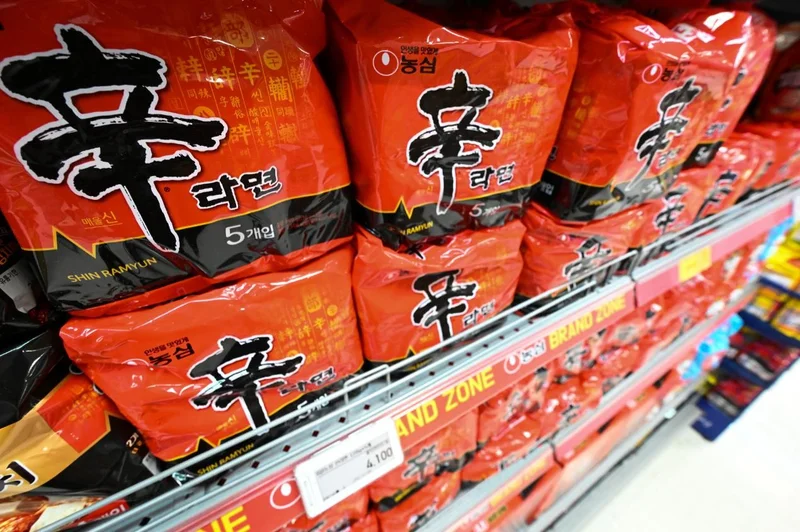
A bowl of instant noodles may seem like an ordinary grocery purchase, but in Seoul it can also offer a glimpse into how people live, shop and eat.
New sales data from Nongshim, Korea's leading producer of instant noodles, suggests that even in a city united by a deep affection for the quick dish, neighborhood demographics and retail environments shape remarkably different buying habits.
The food maker released its 2026 Seoul Nongshim Ramyun Popularity Map, Wednesday, analyzing point-of-sale purchases at large discount stores and supermarket chains across the capital's 25 districts during the first half of the year. The findings reveal that while flagship brands continue to dominate, local preferences often mirror the character of the communities where shoppers live.
Shin Ramyun remained the city's undisputed favorite. The brand ranked No. 1 in 15 of Seoul's 22 districts with large discount stores, underscoring its enduring appeal across generations. Citywide, it also led in Nongshim's overall sales ranking, followed by Chapagetti, Neoguri, Shin Ramyun Gold, Ansungtangmyun, Yukgaejang Bowl Noodle, Baehongdong Bibimmyun, Shin Ramyun Cup, Baehongdong Makguksu and Shin Ramyun Black.
The rankings highlight both familiarity and changing consumer tastes.
Longtime staples continued to dominate the top spots, but Shin Ramyun Gold, introduced in January, climbed to fourth after quickly gaining traction with its spicy chicken broth. Seasonal offerings also posted strong performances, with Baehongdong Bibimmyun and the newly launched Baehongdong Makguksu finishing seventh and ninth, respectively.
Differences were particularly evident in districts where Chapagetti overtook Shin Ramyun. Chapagetti topped sales in a diverse mix of districts — Yangcheon in western Seoul, the northeastern districts of Nowon and Seongbuk, the eastern districts of Seongdong and Gwangjin, and central Yongsan — underscoring that its appeal cuts across neighborhoods with different demographic profiles.
In family-oriented residential districts such as Yangcheon and Nowon, where households of two or more account for a larger share of the population than the Seoul average, Chapagetti appears to have become a popular weekend meal or family treat. In younger districts with large university campuses and office clusters like Seongbuk and Yongsan in central Seoul, and the eastern districts of Seongdong and Gwangjin, the brand's popularity likely reflects the preferences of consumers who customize instant noodles with additional ingredients and creative recipes.
Perhaps the most distinctive shopping pattern emerged in Jung District in central Seoul, home to Myeongdong, Namdaemun Market and Seoul Station. There, Shin Ramyun Gold ranked first, while Shin Ramyun Toomba placed second despite failing to crack Seoul's top 10 overall.
The district's large retailers serve not only local residents but also millions of overseas visitors seeking Korean food products. Nongshim said the results suggest tourists are gravitating toward products that combine familiar flavors with Korea's signature spicy profile. Shin Ramyun Gold blends chicken broth with the brand's trademark spiciness, while Shin Ramyun Toomba pairs cheese and cream flavors with spicy noodles to appeal to global palates.
Retail format also proved significant.
Unlike at large discount stores, where district-level preferences proved variable, supermarket chains recorded a strikingly uniform pattern: Shin Ramyun ranked No. 1 in all 25 districts.
Because neighborhood supermarkets cater to frequent, everyday grocery shopping, consumers there tend to favor trusted, familiar products over experimentation, Nongshim said. The company added that the analysis demonstrates how population composition, commercial districts and retail channels together shape food choices, even for one of Korea's most ubiquitous pantry staples.
This article was published with the assistance of generative AI and edited by The Korea Times.