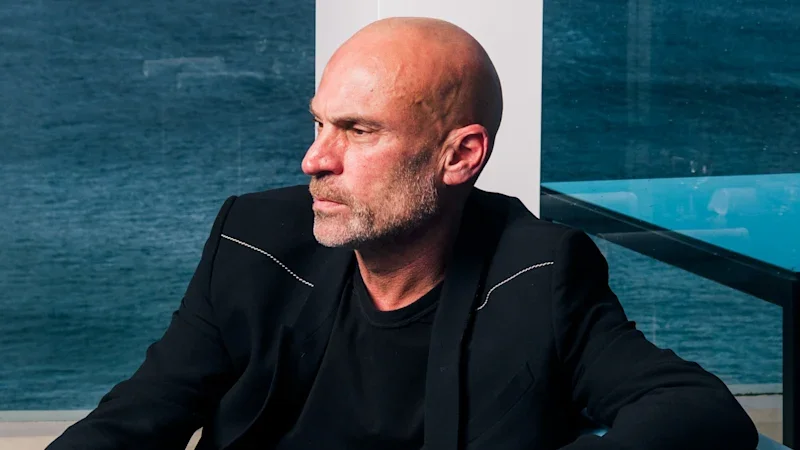
Bondi Icebergs Dining Room founder Maurice Terzini has launched legal action against Nine and his former wife in a court battle set to test the limits of new privacy laws.
In a lawsuit filed in the NSW Supreme Court, Terzini alleges that his ex-wife Emma Addams disclosed private information without his consent to a Nine journalist in a filmed interview ahead of a series of broadcast and print reports.
The information alleged to have been disclosed included text messages between the pair, their finances and their marital discord, according to his statement of claim.
Terzini’s lawyers allege that Addams engaged in a serious invasion of his privacy by misuse of information, as did Nine in broadcasting and publishing the material on 60 Minutes and in The Sydney Morning Herald and The Age in June last year.
“The invasion of privacy was likely to cause very substantial offence, distress and harm to the dignity of a person of ordinary sensibilities in the position of Mr Terzini,” his lawyers say.
Terzini owned and operated Icebergs from its foundation in 2002 until last year, the court documents say, and was “one of Australia’s most prominent and successful restaurateurs”.
Nine’s reports included allegations that Maurice protected his son, Sylvester Terzini, by moving him between his acclaimed restaurants in Sydney and Melbourne after he was accused of sexual and violent misconduct. Sylvester has denied the allegations.
Nine reported that none of the alleged sexual incidents occurred inside Maurice’s venues, but several of Sylvester’s alleged victims first met him at one of the hospitality veteran’s restaurants or connected businesses.
Terzini senior described the allegations in March last year as devastating and said that he would never “intentionally ignore violent behaviour or cover up issues within any of my businesses”.
Addams said during the interview: “I advised Maurice strongly not to have Sylvester in the business. I was ignored.” Maurice did not recall any such warning.
Privacy test case
If the Terzini case proceeds to a trial, it is likely to be among the first test cases in Australia of federal privacy laws that took effect in June last year. The laws allow people to sue for damages for serious invasions of privacy, but there is a wide exemption for journalists.
The damages that may be awarded are pegged to the maximum available for non-economic loss in defamation cases. The figure is adjusted annually but is now $520,000.
The then Victorian Liberal MP Sam Groth and his wife Brittany settled privacy proceedings against the Herald Sun in November last year over articles examining their relationship. The Groth case would have been the first test of the new laws and the exemption for journalists.
The privacy protections cover intrusions into a person’s seclusion or misusing information about them, where their expectation of privacy is reasonable. Public interest in their privacy must outweigh public interest in the information.
Terzini’s lawyers say in the statement of claim that the public interest in his privacy “outweighed any countervailing public interest”.
Journalist exemption
In addition to the public interest balancing act, the exemption for journalists – defined narrowly to exclude citizen journalists or publishers such as WikiLeaks founder Julian Assange – covers professional reporters collecting and publishing “journalistic material”.
What constitutes “journalistic material” is likely to emerge as a key battleground in cases against media companies. It is defined as having “the character of news, current affairs or a documentary” and includes commentary, opinion and analysis.
Breach of confidence
Terzini’s lawyers also seek to rely on the law of breach of confidence, which traditionally covered trade secrets.
Unlike the privacy protections, breach of confidence is not contained in legislation. It has developed incrementally in cases and has provided indirect privacy protection. There is no exemption for journalists under this law.
Earlier this month, a group of sportsmen had a preliminary win when the NSW Supreme Court granted a temporary injunction preventing the ABC revealing texts from their group chat on the grounds of breach of confidence. Screenshots of the messages had been given to the national broadcaster by one of the men’s former partners.
The judge said the screenshot in evidence “demonstrate the group chat to principally contain shared jokes, insults of named other people ... in their sport and crude descriptions of sexual acts and domestic violence”.
The injunction will remain in the ABC case until the final determination of the dispute.
Misleading and deceptive conduct
Terzini is also suing Nine for alleged misleading and deceptive conduct under the Australian consumer law over three advertisements aired before the 60 Minutes report. He alleges the promotions damaged his personal and business reputation.
He is not suing for defamation.
The defendants have yet to file a written defence to the lawsuit. The proceedings have been listed for a preliminary hearing on August 31.