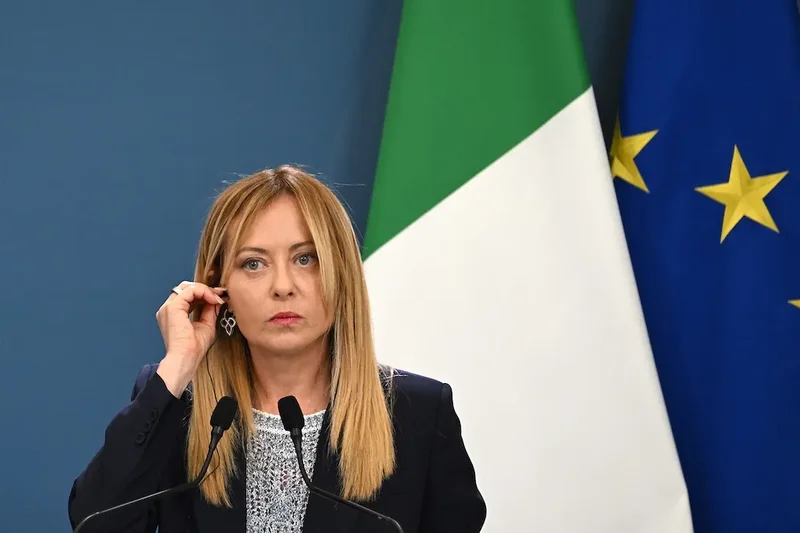
After her own MPs sank a key electoral reform amendment, talk of an early election is growing. Could Italy go to the polls in April?
Italy’s opposition parties called for snap elections last week after a key amendment to Prime Minister Giorgia Meloni’s electoral reform bill was defeated by MPs from her own coalition in a secret ballot.
READ ALSO: Italy's electoral reform clears first vote as coalition splits deepen
Though Meloni had said that she would ‘go to the Quirinale’ – i.e., hand in her resignation to the president – if the measure didn’t pass, her office quickly dismissed the idea after the fact, with the prime minister brushing off the defections as “just a parliamentary incident.”
But even before last week’s events, reports had been circulating that Meloni might call early elections in April.
Italy must hold general elections by the end of next year, and the natural deadline would be in September, when the current government’s five-year term comes to an end.
Though Meloni has broadly managed to keep Italy’s public finances under control, she hasn’t fulfilled several of her campaign promises on pensions and immigration, prompting fears her approval ratings could slide in the lead-up to election season.
“From the viewpoint of a right-wing voter, they failed in many respects”, says Vincenzo Emanuele, an associate professor of political science at Luiss University in Rome.
It's in this context that Futuro Nazionale ("National Future”, or NF), a new radical right party launched by retired army general Roberto Vannacci, has emerged as a challenger to Meloni's ruling hard-right coalition after breaking off from the anti-immigrant League in February.
“Vannacci is growing in the polls every week, and so the more [National Future] stays there, the more it can capitalize from the failures of the government on immigration, the more it can increase,” Emanuele tells The Local.
Meloni has said she won’t partner with Vannacci (or he with her), though the latest polls indicate her coalition won’t have the votes to secure a parliamentary majority without him, either under Italy’s current electoral system or the new one she hopes to pass into law after the summer.
But Nadia Urbinati, a professor of political theory at Columbia University, believes the two are merely playing a “game” and have every intention of joining forces, with Meloni hoping to capitalize on Vannacci’s momentum.
READ ALSO: ‘A Salvini error’: What is Italy’s National Future party?****
“She has a plan, and the plan is to have a team with Venacci, a team in which there are two actors playing two different roles and carrying on the day by covering the entire spectrum, and she thinks the sooner the better,” Urbinati tells The Local.
Another key advantage of holding elections sooner rather than later is that despite being strong in the polls, Italy’s centre-left opposition is fragmented and divided on key foreign policy issues, says Emanuele.
“The earlier the vote, the higher the chances that the centre-left is unprepared, and at the moment the centre-left is unprepared because they still do not have a shared platform and they do not have a leader,” he says.
The best time to call elections would have been after the defeat of her justice reform referendum in March, he argues – but having missed that window, early next year is the next best option.
READ ALSO: 'First real defeat': Why losing Italy's referendum is a major blow for Meloni
“This is a good moment for her, in the sense that although everybody says that she is in crisis, she is not in crisis at all,” says Urbinati. “This is the time to force the situation.”