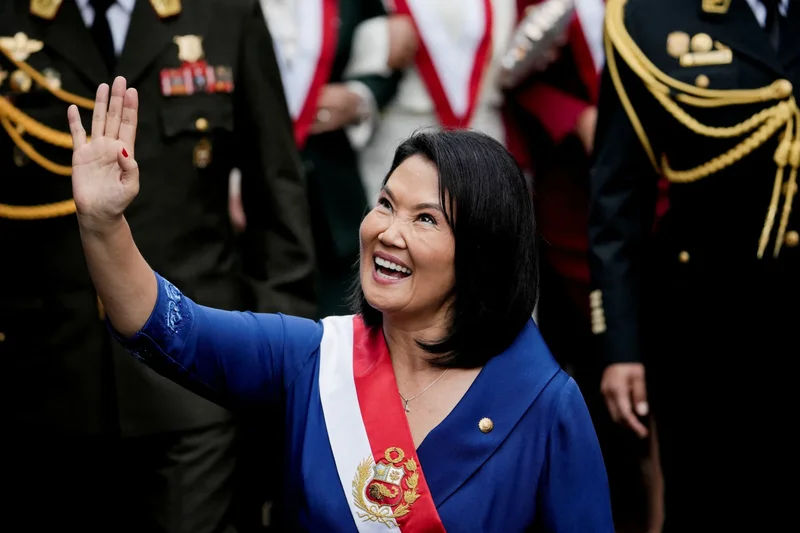
Peru Raises Minimum Wage to US$365 in Fujimori’s First Act
Peru · Politics
Peru’s new president spent her first national address handing out money. Whether the country can afford it is the question that will define her term.
Keiko Fujimori stood before Congress on July 28, Peru’s independence day, and delivered the speech every Peruvian president gives on that date. Hers was unusual for how much of it was priced in soles.
The minimum wage goes up to S/1,300 a month, about US$365. That is a jump of roughly 15 percent from the S/1,130 floor it replaces.
Pensión 65, the transfer that keeps Peru’s poorest older citizens fed, doubles to S/700 per two-month cycle. In monthly terms that is a rise from around US$49 to US$98 for people who often have no other income at all.
Why an outsider should care
Peru has burned through six presidents since 2016. Each arrived promising stability and left amid impeachment, resignation or arrest.
Fujimori won in June by 49,641 votes, one of the narrowest margins in the country’s modern history. She takes office with no comfortable mandate and a Congress that has already shown it will spend her political capital for her.
For anyone with money, staff or supply chains in Peru, the relevant question is not whether these promises are generous. It is whether they are payable.
The arithmetic problem
The president of Peru‘s Fiscal Council put it bluntly in the days around the address: the coffers will not stretch that far. That is an unusual thing for a technical body to say about a brand-new government.
The concern is structural. A minimum-wage rise lands on private payrolls, but Pensión 65 and a metro-building programme land on the treasury, and Peru’s tax take is among the thinnest in the region relative to the size of its economy.
Roughly seven in ten Peruvian workers are informal. A higher legal wage floor does not reach them, and in some cases pushes employers further away from formalising the jobs it is meant to improve.
The rail promise
Lima is one of the largest cities in the Americas without a functioning metro network. Line 1 opened in 2011; Line 2 has been under construction since 2014 and is still incomplete.
Fujimori promised to finish Line 2 and execute Lines 3, 4, 5 and 6. Delivering even one of those within a five-year term would be a departure from every recent Peruvian government’s record on large infrastructure.
The campaign version of Fujimori was a fiscal conservative who warned against exactly this kind of spending. The governing version has moved, and markets noticed the shift before economists did.
What to watch
The test is the budget bill, not the speech. Peru’s fiscal rules cap the deficit, and a government that wants to raise transfers and build rail simultaneously has to either lift revenue, borrow, or quietly drop something.
Watch also whether the minimum-wage decree actually issues. Peruvian presidents have announced wage floors in July that arrived, in law, considerably later or not at all.
Frequently Asked Questions
How much is Peru’s new minimum wage in dollars?
S/1,300 a month, roughly US$365 at current rates, up from S/1,130 or about US$318.
What is Pensión 65?
A Peruvian state cash transfer for citizens over 65 living in extreme poverty. It doubles from S/350 to S/700 per two-month period.
Can Peru afford these measures?
Peru’s Fiscal Council has publicly warned that it cannot at current revenue levels. The government has not yet published the financing detail.
When did Keiko Fujimori take office?
She was inaugurated on July 28, 2026 after winning the June election by 49,641 votes.