About 11.30am on Monday, the ICAC counsel assisting Dr Peggy Dwyer, SC, was busy outlining the anti-corruption watchdog’s jaw-dropping exposé into the factional workings of senior figures in the NSW Liberal Party and their alleged highly lucrative links to fugitive property developer Jean Nassif.
At the same time, a few blocks away at Parliament House in Macquarie Street, Liberal leader Kellie Sloane’s office hit send on its own showstopping press release: “NEW DATA RAISES FRESH CONCERNS ABOUT NSW SKILLS PIPELINE.”
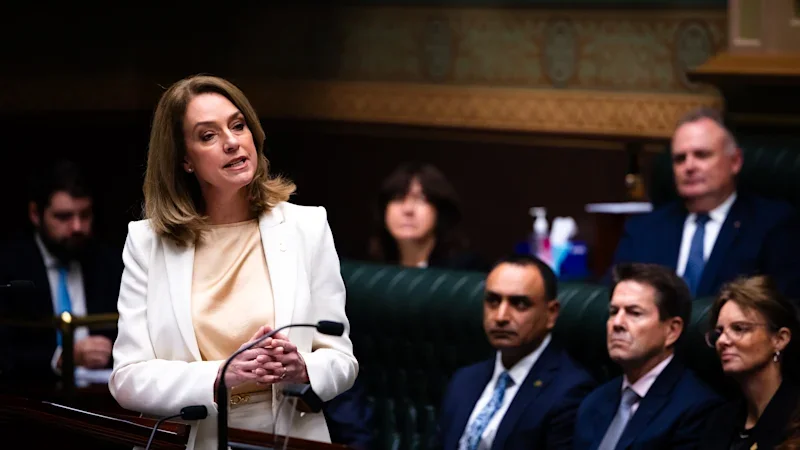
It was a busy day for Sloane, who spent the morning speaking to commuters at the metro stop at Crows Nest, announced an artificial intelligence policy at lunch, and then met opponents of the carve-up of the Moore Park golf course in the afternoon. The message was not subtle: We’re posting through it.
Sure, the ICAC might be busy airing sensational allegations that a group of well-connected young turks from the right faction of the Liberal Party received $2 million from Nassif to stack branches and preselect candidates who would be sympathetic to his developments. And sure, Nassif may have bragged to his developer buddies that he had “hands on the state government” and would “step on [the] neck” of the then-building commissioner, David Chandler, by having “one of my girls” appointed as NSW fair trading minister to remove him.
But the Liberal leader is clearly determined to project an image of getting on with the job, despite the scandals enveloping her party. You can understand why.
Operation Rosny, as the ICAC inquiry is codenamed, is slated to run for eight weeks. It has the potential to swamp the Liberals just months away from the election next March, at a time when the party is already struggling with dire poll numbers. Sloane can hardly spend two months on an apology tour.
But there is a risk to the Keep Calm and Carry On schtick. When she appeared on Sydney radio station 2GB the morning after the inquiry began, the impression Sloane gave was of someone only vaguely interested in an unpleasant event happening far away. It was “pretty awful listening”, she said. It was before her time, though, and “honestly, I’m learning about it as everyone else is”.
While the Liberal leader had spoken to Eleni Petinos, the opposition’s spokeswoman for sport named in Dwyer’s opening address to the inquiry, incredibly, Sloane had not asked her whether she had done anything wrong. In fact, Sloane said she had not spoken about “the detail of the allegations with anybody”.
“I wish ICAC the very best in rooting out any corruption,” she said.
This is remarkably detached language from the leader of a party staring down the barrel of a seismic corruption scandal even as the Liberals are profoundly unpopular with voters.
Sloane, as she said, has the advantage of being a relative political neophyte with very little factional history. That she isn’t, at the least, loudly declaring her disgust at the allegations already aired only three days into the hearing – and promising a zero-tolerance approach to any corruption allegations, and vowing to root out bad eggs in her party – is perplexing.
Instead, beyond the 2GB interview, Sloane has avoided the media during the inquiry’s first week. It was already notable how few press conferences she holds (far fewer than any opposition leader I can think of), but offering the ICAC best wishes in rooting out corruption in the party you lead and then exiting stage left seems, well, odd.
This isn’t even abstract. For years, the ICAC has been urging state governments to adopt a series of reforms over lobbying rules after a 2021 review found significant problems with the regime covering lobbyists.
“New legislation, or significant reform of the [Lobbying of Government Officials] Act, is required to safeguard the public interest against the inherent lobbying risks of corruption and undue influence,” the commission wrote in its Operation Eclipse report five years ago. The review made more than two dozen recommendations, including new obligations for public officials who are lobbied and a ban on “undocumented or secret” meetings. The Minns Labor government has failed to implement any of the recommendations, despite repeated entreaties from ICAC Chief Commissioner John Hatzistergos.
More than a year ago, NSW Special Minister of State John Graham said that Labor would have more to say about Operation Eclipse reforms “shortly”. Last month, Graham said lobbying reforms were “imminent”.
A generous reading of the delay is that the government was waiting for any new concerns that Rosny will throw up before making changes. A more sceptical reading is that it wants to maximise the political advantage of its reaction to Rosny being seen as Labor cleaning up NSW politics in the lead-up to the election. It is aware, after all, that voters are deeply dissatisfied with institutional politics as usual.
The Liberals should be out of the gate now, promising an overhaul of lobbying rules and, while they’re at it, a beefed-up Electoral Commission with the resources and remit to stop the next group of hapless hacks before they live out their own Coen Brothers-esque coming-of-age saga.
Michael McGowan is state political editor.