- Published
Drought has been declared across more than half of England as hot, dry weather takes its toll on the country's water supplies.
The announcement means there have been three droughts in the past five years - 2022, 2025 and now 2026.
Photos from across the country have captured some of the dry conditions - including receding rivers, parched parks and sportspeople trying to play on.
There is no single definition of drought, but it usually refers to a period of prolonged unusually dry weather that can have impacts on people, nature and the environment.
A lack of rainfall has meant rivers have lowered, including the River Thames, exposing the riverbed in London.
The river height marker was left completely dry at a ford on the River Redlake in Bucknell, Shropshire.
The riverbed of the River Wye in Hereford was seen bare after weeks without rainfall.
Some areas of the country have now entered their fourth heatwave of the year.
Beauty spots and parks have been left yellow and parched, including London's Greenwich Park, Primrose Hill, Hackney Marshes, Peckham Common and Leyton Flats.
The announcement of a drought on Wednesday means there have been three droughts in the past five years â 2022, 2025 and now 2026.
While droughts happen naturally, scientists say that climate change is raising the risks, with higher summer temperatures drying out soils more quickly. This can lead to more severe and longer-lasting droughts.
The sight of scorched brown leaves has become a familiar view.
Hollow Pond in East London was seen diminished in size.
And golfers at Woldingham Golf Club found their normally lush course had turned to patches of green.
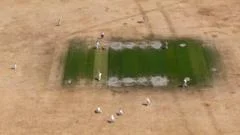
Similarly, a shrinking island of green was played on by cricketers as Maidenhead & Bray club took on Boyne Hill in the village of Bray in Berkshire.
Reservoirs have also shrunk, including the Walthamstow Wetlands.
And Howden Reservoir in the Upper Derwent Valley in the Peak District has receding shores.