The food & beverage industry has spent decades chasing the next big thing. Consumers are increasingly drawn to the last thing they trusted, forcing companies to rethink a core assumption: Innovation doesn’t always mean leaving the past behind.
For years, nostalgia was a seasonal play. Brands brought back an old flavor, relaunched a retired package, generated a few headlines, and moved on. Today's environment is different. Inflation, economic uncertainty, and an overwhelming number of choices have made familiarity a business asset, not merely a nice-to-have.
Consumers aren't rejecting new ideas. They're rejecting unfamiliar ones that lack meaning. Recent consumer sentiment research from McKinsey continues to show shoppers balancing caution with value-seeking behaviors, creating advantages for brands that already have consumer trust.
The companies gaining traction understand that trust travels faster than novelty. Instead of asking consumers to abandon what they know, they're building on what shoppers already value. The shortest path to a purchase is often through a memory.
Familiarity Wins
The rise of "grandmacore," highlighted by Food Institute, demonstrates a broader desire for comfort and emotional reassurance. In a crowded marketplace, familiar products often require less explanation and persuasion.
Food and beverage companies view heritage as a liability. Older brands can appear dated or overly reliant on legacy consumers. In reality, heritage may be one of the industry’s most difficult competitive advantages to replicate. Competitors can copy ingredients, packaging, or pricing, but they can't easily recreate decades of emotional connection.
The strongest brands understand the difference between preserving the past and activating it. They don’t rely on nostalgia alone; they use familiarity as a springboard for future relevance.
Why Nostalgia Strategy Pays
Few companies illustrate this better than Spangler Candy. The maker of Dum Dums, candy canes, and Circus Peanuts has operated for more than a century. Its value extends far beyond name recognition. Those products are tied to childhood memories, family traditions, community events, and everyday rituals.
That emotional equity builds up over time. Consumers aren't just buying candy. They're reconnecting with experiences they already associate with comfort and reliability. Products become brands. Brands become memories. Memories become competitive advantage.
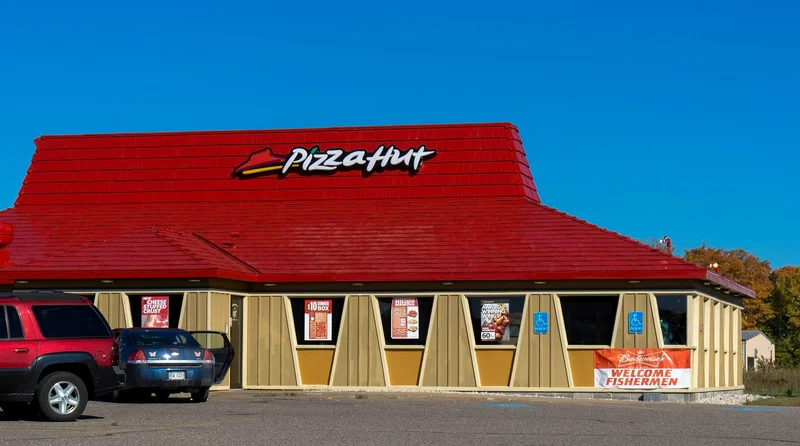
Pizza Hut demonstrates the next evolution of nostalgia strategy.
The company isn't selling 1995. It's reviving the feeling consumers associate with it. As Food Institute noted, Pizza Hut has embraced elements of its earlier identity, including the iconic red-roof aesthetic many consumers love and remember. With this play, they can revive a familiar experience.
For many consumers, Pizza Hut wasn’t just about pizza. It represented family nights or birthday celebrations. The most valuable item on the menu may have been the memory attached to it.
The nostalgia strategy goes beyond restaurants. Oreo offers another example. The brand regularly launches limited-edition flavors and collaborations, yet the foundation rarely changes. Consumers know exactly what they’re getting. New products feel approachable because the core stays familiar.
That's where "newstalgia" becomes especially relevant. According to Innova Market Insights, consumers increasingly gravitate toward familiar experiences presented in fresh ways. The opportunity lies in connecting the old and the new. The strongest innovation gives consumers a new reason to revisit what was once familiar.
Emotional Equity Matters
Nostalgia strategy can influence business performance. Brand loyalty is expensive, but nostalgia allows companies to leverage trust they already earned. Consumers who understand a brand’s identity often require less convincing during the purchase process and may be more receptive to line extensions and product launches.
Emotional equity can also reduce the risk of commercialization. Rather than introducing entirely unfamiliar concepts, companies can modernize products and experiences consumers already trust. That can improve the odds of adoption while allowing brands to extract greater value from existing equity.
Pricing resilience is another benefit. Consumers who feel connected to a brand may be less likely to treat it as a commodity and more likely to stay loyal when costs rise.
As customer acquisition costs increase and attention becomes more fragmented, familiarity carries measurable economic value. A Food Insight survey reinforces a broader reality: food choices aren't entirely rational. Taste, price, convenience, and health matter, but so do routine, identity, and emotional connection.
Executives often ask what consumers want next. A more valuable question may be: What does our brand already own emotionally?
Memory Becomes Advantage
The companies that succeed won't simply relaunch old products and hope consumers care.
Memories open the door, and execution keeps customers coming back. Products must still deliver on quality, convenience, transparency, and value.
The science behind nostalgic food experiences also deserves attention. Food Institute’s analysis of neurogastronomy highlights the connection between flavor, memory, and emotion. That's not soft insight. It has consequences for product development, packaging, merchandising, and customer engagement.
The winners will avoid nostalgia theater. The goal isn’t to recreate yesterday. It’s to remind consumers why yesterday still matters. Rather than reviving the past because it looks good on social media, they’ll identify which elements of the past still hold commercial value today.
For years, food companies assumed competitive advantage meant creating something consumers had never seen before. The brands that win tomorrow may be the ones that remember yesterday the best. In a marketplace overflowing with choices, familiarity has become surprisingly scarce. That’s why nostalgia strategy has become a competitive advantage.