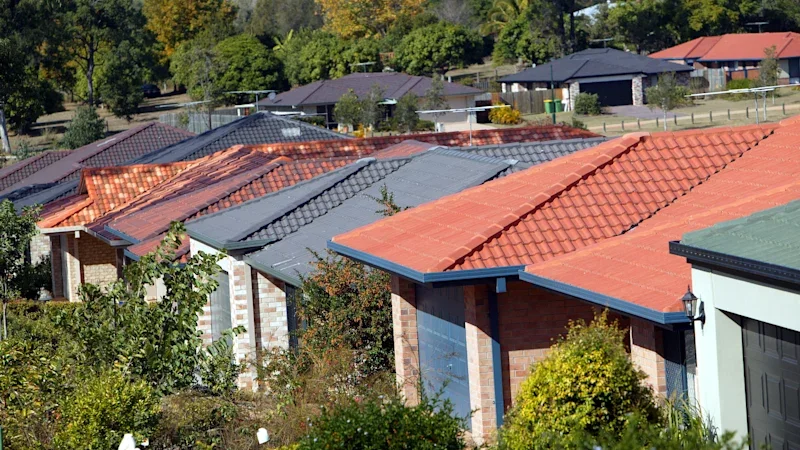
The evidence is overwhelmingly in – home loan applications haven’t just dropped, they have fallen off a cliff.
Thanks to the Reserve Bank’s interest rate rises and the federal budget tax policy, prospective home borrowers have been caught in a pincer squeeze, spooked out of taking out loans to buy housing. Add to that the fact that house prices are declining, and it’s easy to understand their reluctance.
National Australia Bank was the latest of the four banks to provide a taste of the size of this cliff, telling investors that Australian home loan applications were down 15 per cent in the June quarter compared to the March quarter.
Last month, Westpac revealed a 20 per cent fall in its housing investor loan applications over the three-week period following the May budget.
So, buckle up for the mortgage pricing war that will inevitably follow as the banks attempt to woo customers.
There is already evidence that all big four banks have begun tinkering with lower rates on new loans. Last week NAB joined the other three, cutting the interest on fixed-rate investor and owner-occupier loans.
As large as the fall in home loan approvals appears to be, the reality is even worse. Statistics can be misleading.
The other bank industry response could be to loosen the risk criteria for providing loans. MST Financial’s bank analyst Brian Johnson says Westpac has already halved deposit requirements for some investor loans from 10 per cent to 5 per cent and increased the interest-only term from 10 years to 15 years for investors.
Meanwhile, as large as the fall in home loan approvals appears to be, the reality is even worse. Statistics can be misleading.
Let’s take NAB’s 15 per cent decline in applications. This figure covers all mortgage lending and not just loans to property investors – which were the category of borrowers heavily stung by the government’s capital gains and negative gearing treatment.
If NAB was quoting just the fall in investor loans, the number would have been higher.
And NAB was comparing the March quarter, which only included booming growth until the RBA’s first interest rate rise in early February. If this comparison was taken from the peak lending period to lending levels today, the slump would have been way greater.
Indeed, work done by investment bank Barrenjoey shows that since early February, investor home lending has sunk by 35 per cent in dollar terms.
This is a far more accurate representation of the reality all banks are facing as they head into their reporting or trading update season in a couple of weeks.
Barrenjoey’s senior banking analyst Jon Mott and Johnson have both been tracking the decline in fresh mortgage borrowing and believe it will continue to get worse in the near term.
“Based on every data point, every week it’s just getting worse,” Johnson says.
The most tragic element is that would-be first home owners, whose inability to get a foothold in the housing market was the inspiration for the government’s tax changes, have also stayed away in droves.
From peak to now, the decline in first home owner mortgages is sitting at 23 per cent. Like everyone else, first home buyers don’t want to catch the falling property market knife.
The second tragedy is that first home buyers waded heavily into the market last year after the government expanded its 5 per cent deposit scheme. Since that time, home values have fallen and will have resulted in a decent-sized portion of first home owners falling into negative equity. This means their loan is now larger than the value of their house.
As house prices continue to fall, this situation gets worse.
The government had the best of intentions when it sought to dampen runaway house prices and allow less affluent people to get a foothold in the market.
Now everyone is feeling the backlash of the policy’s unintended consequences – particularly the banks.
The Business Briefing newsletter delivers major stories, exclusive coverage and expert opinion. Sign up to get it every weekday morning.